
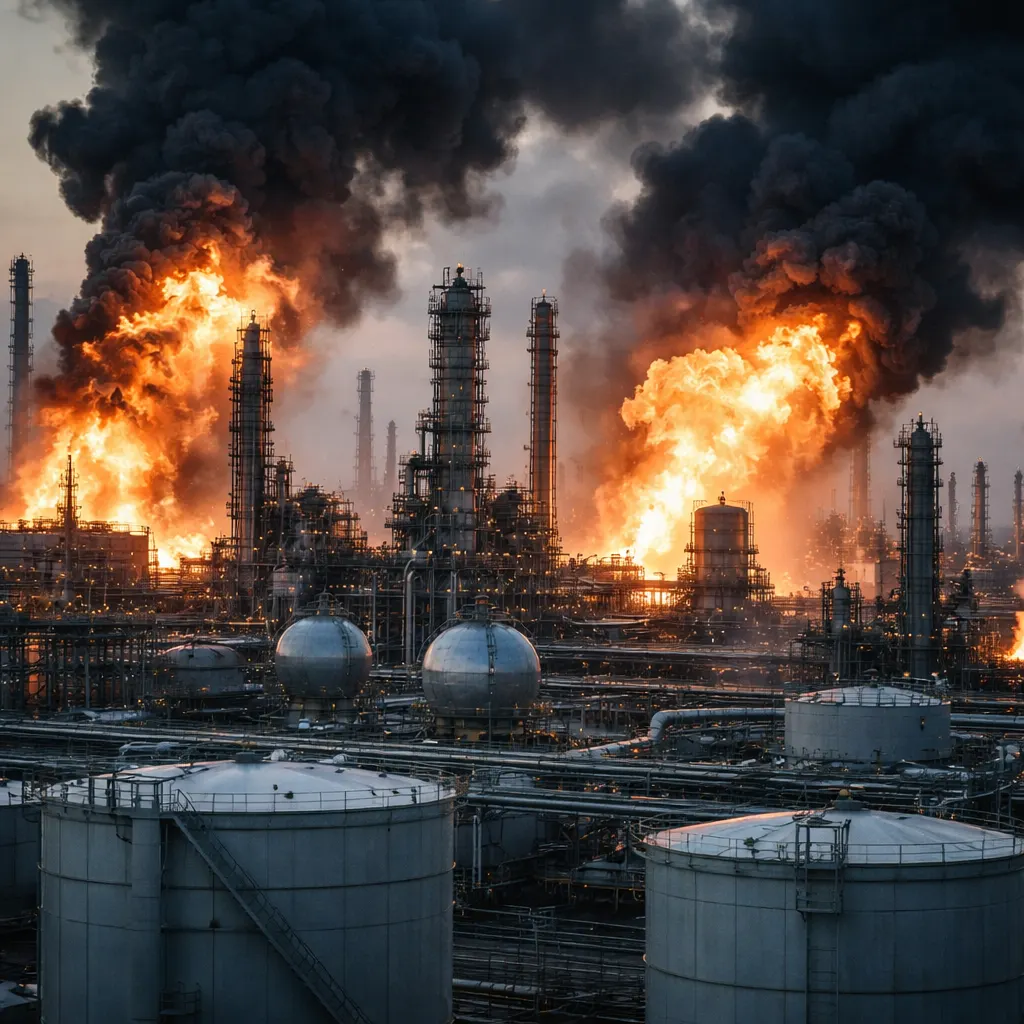
Ukrainian forces have disrupted operations at nine of Russia's 35 major refineries since late October, targeting facilities that account for nearly 30 percent of Moscow's total refining capacity, according to a military situation report published November 11 by the Hudson Institute. The strikes, which reached targets as far as 1,100 miles from Ukraine's borders, came after the breakdown of agreements meant to stop attacks on energy infrastructure. The report finds that drone and missile warfare dominated combat operations last week, while fighting on the ground remained largely static with no major shifts in territory.
The targeted refineries possess a combined processing capacity of roughly 300,000 metric tons—or 2.2 million barrels—per day, though actual production losses are estimated at up to 200,000 metric tons daily, down from Russia's late October processing rate of approximately 700,000 tons per day. Russia launched at least 6,100 Shahed-type one-way attack drones against Ukraine in October 2026 alone, with Ukrainian air defenses intercepting or suppressing around 5,200 of them for an 84 percent success rate but failing to stop nearly 1,000 drones. On the night of November 9–10, Russian forces fired one Iskander-M ballistic missile and 162 unmanned aerial vehicles at Ukraine, including nearly 100 jet-powered Shahed-type drones that accounted for roughly 60 percent of the total attack package. Ukrainian forces struck nearly 18,000 Russian targets in the first week of November, including approximately 5,500 Russian military personnel, and demonstrated the ability to hit more than 2,600 Russian targets in a single day.
The report states that by striking Russia's refining infrastructure, Kyiv seeks to undermine one of the Kremlin's critical revenue streams, strain Russia's domestic fuel supplies, and complicate its military logistics operations. Ukrainian forces also hit the Morozov Plant near St. Petersburg on November 9, reportedly damaging three production workshops at the facility, which is operated by Russia's state-owned defense conglomerate Rostec and specializes in explosives and solid rocket propellants for programs including the Topol-M strategic missile and the Iskander-M missile system. According to the Hudson Institute, the attacks highlighted Kyiv's efforts to disrupt Russia's missile production at its industrial source, while Moscow continued to target Ukraine's electricity grid, heating networks, and other essential energy facilities.
The report warns that Russia's Defense Intelligence of Ukraine has revealed new details about the Geran-5 K5-K, a jet-powered drone with a 620-mile range, a 200-pound thermobaric warhead, and cruising speeds exceeding 280 miles per hour that bridges the gap between low-cost attack drones and conventional cruise missiles. The platform could further strain Ukrainian air defenses, particularly as Russia's growing reliance on faster unmanned strike systems—demonstrated by the unusually high proportion of jet-powered drones in recent salvos—continues to challenge Ukraine's interception capabilities. The report emphasizes that Ukraine's campaign underscores the growing importance of critical energy infrastructure in the war, as both sides target the industrial and economic foundations that sustain prolonged combat operations.