
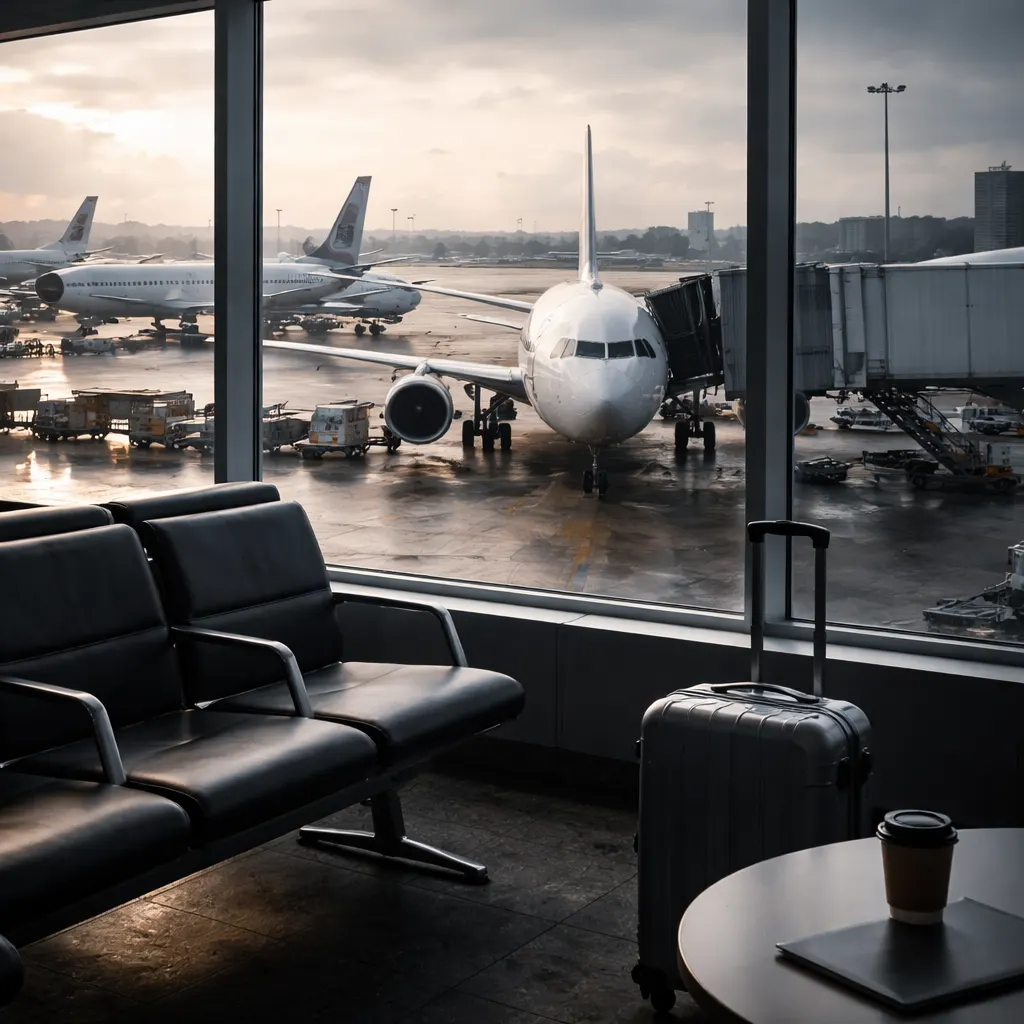
The Federal Aviation Administration halted all domestic flights nationwide Friday afternoon after communications systems at regional air traffic control centers failed, marking only the second total ground stop since the Sept. 11, 2001 attacks. The agency cited "extraordinary circumstances" and safety concerns as reasons for the unprecedented action. Homeland Security Secretary Markwayne Mullin said the disruption stemmed from a telecommunications outage, with no evidence yet pointing to a deliberate attack.
At least 600 flights were diverted by 5:50 p.m. Eastern time, with 496 returning to their departure airports and 104 rerouted to alternate destinations, according to aviation analytics firm Cirium. More than 11,000 flights carrying over 1.5 million passengers were scheduled to depart U.S. airports after 4 p.m. Eastern, raising the prospect of widespread cancellations and additional diversions through late Friday night. Major airports receiving diverted aircraft included Chicago O'Hare, Denver International, Dallas Fort Worth International, and Ronald Reagan Washington National. The last nationwide ground stop occurred in January 2023 when a critical FAA computer system malfunctioned.
Transportation Secretary Sean Duffy said the agency was investigating a communication problem affecting the 22 regional air traffic control centers responsible for directing aircraft traveling between airports across the country. Secretary Mullin told reporters that "everybody's safe" and reassured the public there was "no reason to be concerned about your loved ones if they're flying." Aviation safety expert Steve Arroyo, a former United Airlines pilot, said the situation resembled a regional air traffic control communication failure in September that disrupted hundreds of Northeast flights, except this time on a national scale.
The breakdown highlights the fragility of aging infrastructure that air traffic controllers depend on daily. Congress approved $12.5 billion last year to modernize outdated systems, and crews have been replacing miles of old copper wiring with fiber optic lines and upgrading antiquated radio equipment at airports nationwide. But Secretary Duffy has stated that another $30 billion will be required to finish the overhaul, and the White House has begun pushing Congress to authorize the funding. Arroyo explained that without reliable communication ability, aviation authorities have no choice but to keep planes grounded rather than risk launching aircraft they can't contact. Investigators will examine whether the failure has any connection to the FAA's nationwide deployment of a new artificial intelligence system designed to detect issues and redirect flights, though that system operates from a single location near Washington, D.C., and only sends recommendations to regional centers.
Friday's ground stop differed from the post-9/11 shutdown because aircraft weren't ordered to land immediately and pilots likely maintained communication with ground controllers at airports, according to Arroyo. The disruption left thousands of travelers stranded or scrambling for alternatives, with passengers at Chicago O'Hare learning of delays only when they looked up at departure screens showing flight holds across the board. There's no timeline yet for when normal operations will resume, leaving weekend travel plans in limbo for passengers heading home, to weddings, or other commitments.