
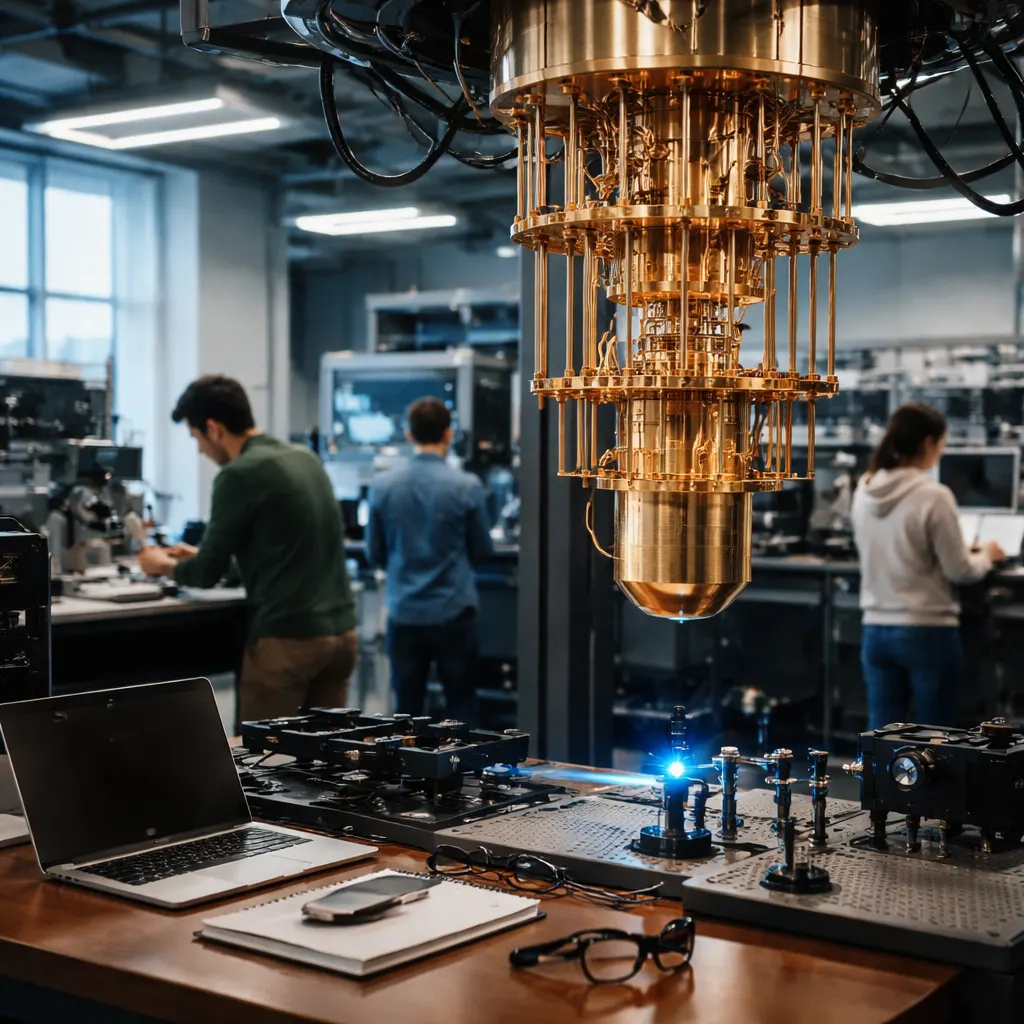
Florida Atlantic University's Center for Connected Autonomy and Artificial Intelligence has secured a $3 million grant from the U.S. Department of Labor to build a quantum-ready workforce across Florida. The five-year initiative will create educational pathways introducing students to quantum technologies starting at the early-college level and extending through graduate programs, combining classroom instruction with hands-on training in quantum sensing and communications.
The program will train more than 100 students between October 2026 and September 2031, according to the university's announcement. Working alongside Infleqtion Inc.'s Colorado Quantum Innovation Center, FAU plans to obtain Rydberg-atom quantum radio-frequency sensing and communications equipment paired with an optical atomic clock, making it the first university in the nation to house this technology. The equipment will support a new research and training program for upper-level undergraduate and graduate students, who will gain direct experience through a newly developed course in quantum sensing and communications. The funding comes through the U.S. Department of Labor's Strengthening Institutions Program, which supports eligible institutions in improving academic quality, institutional management, and fiscal stability.
The initiative builds on FAU's existing work in networked artificial intelligence, robotics, autonomous systems, and advanced wireless communications and sensing technologies, extending the center's capabilities into quantum workforce development. According to Dimitris Pados, director of the Center for Connected Autonomy and Artificial Intelligence, "By giving students direct access to emerging quantum sensing and communications technologies, we can connect fundamental concepts with hands-on engineering experience." Stella Batalama, dean of the College of Engineering and Computer Science, noted that building a workforce to support quantum technologies is "just as important as investing in the technology itself." The award comes as FAU prepares to host a D-Wave Advantage2 quantum computer, providing on-site access to advanced quantum computing infrastructure and positioning FAU as Florida's first quantum university.
The program addresses a critical gap between quantum theory education and the practical engineering skills needed as quantum technologies transition from research labs to real-world applications. Quantum technologies are reshaping approaches to sensing, communications, and information processing, but preparing workers requires more than theoretical knowledge, according to the report. The early-college-to-graduate pathway is designed to help students build progressively advanced knowledge and skills as they prepare to enter the quantum workforce. Infleqtion CEO Matthew Kinsella emphasized that getting the latest technology into the hands of future quantum innovators is essential for building a quantum-ready workforce, noting that the partnership gives students the opportunity to develop practical skills and explore new applications in quantum sensing.
The grant positions Florida Atlantic to play a central role in developing the highly skilled talent Florida will need to advance quantum technologies and strengthen its leadership in this emerging field. With this funding, FAU completes what Pados calls "the quantum trifecta: quantum computing, quantum sensing, and quantum communications research and training." The university's strategic investments in research, education, and infrastructure aim to drive innovation in next-generation computing, bringing together faculty, students, and industry partners through the FAU Center for Quantum Technologies. The initiative represents a bet that connecting quantum education directly to engineering skills will prepare students to turn quantum capabilities into real-world solutions as the field rapidly evolves.