
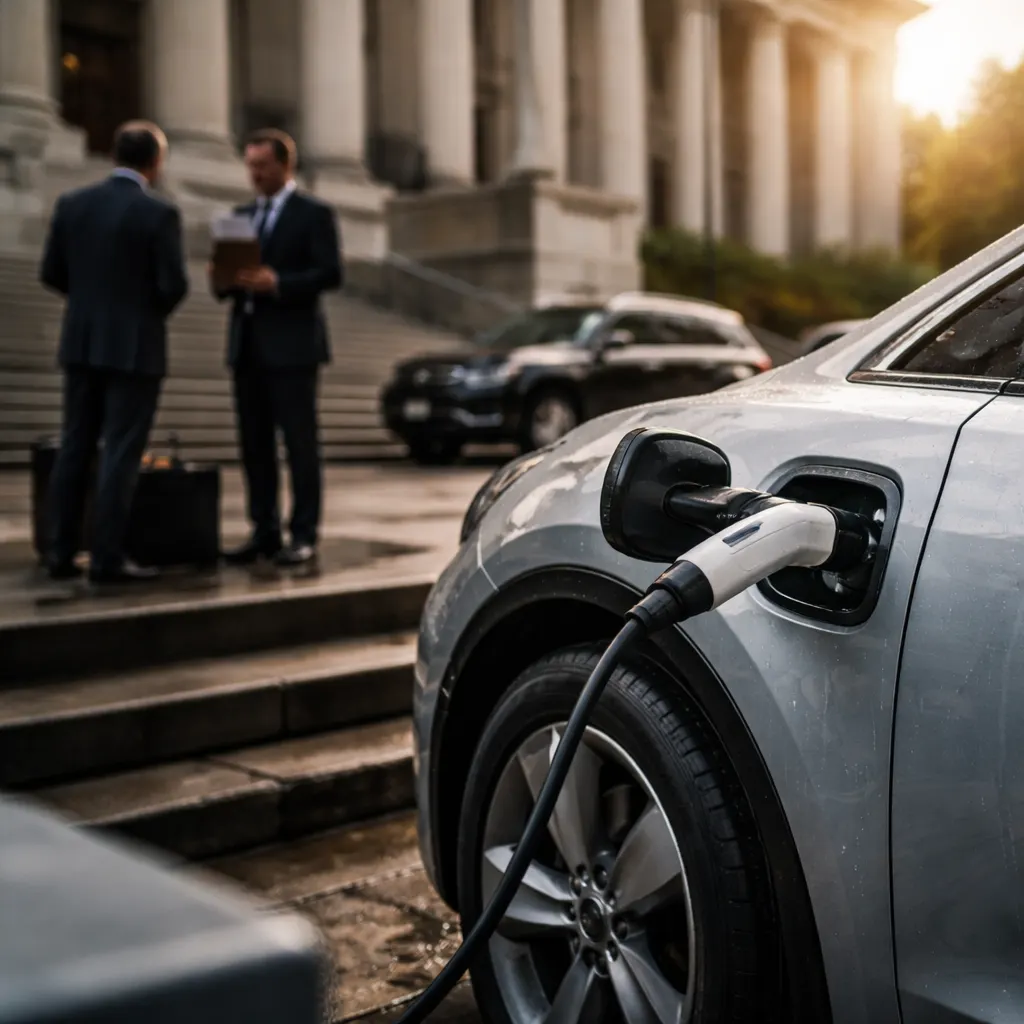
State legislators in Washington are preparing to introduce a "highway use fee" that would charge drivers with fuel-efficient vehicles additional annual fees when they renew their car tabs, according to a report published by The Urbanist. House Transportation committee chair Jake Fey is set to file the bill ahead of the 2027 legislative session, which begins January 11, as lawmakers search for a more sustainable funding source to replace Washington's declining gas tax revenue. The proposal marks a shift away from a per-mile road usage charge that had previously been seen as the primary path toward a long-term gas tax replacement.
Gasoline consumption in Washington State peaked in 2018 and is never expected to return to that level again, with projections instead showing a steady decline. The state's motor vehicle fuel tax, currently set at 56.5 cents per gallon, generates around $1.5 billion annually but revenues are expected to fall in coming years despite a six-cent gas tax increase in 2025 that included a future 2% annual inflation adjustment. Transportation revenues are currently projected to be $599 million lower through 2031 compared to the budget approved in March. This fall, lawmakers issued $500 million in bonds to keep the 520 bridge replacement project on track, plus another $800 million for overdue bridge and highway upkeep.
Under the proposed highway use fee, drivers would face an additional charge when renewing their car tabs if their vehicle's published fuel economy standard exceeds a certain threshold. The more fuel-efficient the vehicle, the higher the fee would be. The proposal is modeled on Virginia's existing system, which sets the threshold at 25 miles per gallon and generates approximately $100 million per year with fees ranging from around $7 for a 25-mpg vehicle to roughly $75 for some of the most fuel-efficient hybrids. Only vehicles weighing 10,000 pounds or less would be covered, exempting freight vehicles. Fey said a highway use fee could be in place by late 2028 if approved next year, calling it "a bit of a modernization of our transportation system revenues" during a presentation at the Puget Sound Regional Council. It remains unclear how Washington would adjust existing hybrid and electric vehicle fees, which currently stand at $225 for all vehicles with an electric range of at least 30 miles.
Fey framed the proposal as addressing fairness concerns around who contributes to maintaining transportation infrastructure, noting that lower-income drivers who can't afford newer, fuel-efficient vehicles end up paying more in gas taxes than wealthier drivers with highly efficient cars. The highway use fee represents a less complex alternative to a per-mile road usage charge, which raised privacy concerns and would have required significantly more administrative infrastructure to implement. However, the annual fee is a blunt instrument that doesn't scale to actual mileage driven or create incentives to drive less, unlike a per-mile charge that would reward drivers who use state roads sparingly. Major debates are expected over how revenues would be distributed, particularly whether cities and counties should receive a portion of the funds similar to current gas tax allocations.
The highway use fee is unlikely to generate revenue on par with the gas tax but could serve as a stopgap as major highway projects approach, including replacement of the westbound US 2 trestle in Everett and I-5 through the Nisqually Delta near Olympia. Fey is planning to advance the proposal with support from Rep. Julia Reed, vice chair of the House's transportation committee, and Senator Javier Valdez. If state transportation revenue continues to primarily fund major highway projects at the expense of maintaining existing infrastructure, lawmakers may find themselves back in the same position within a few years, searching for new revenue tools to keep pace with demands.