
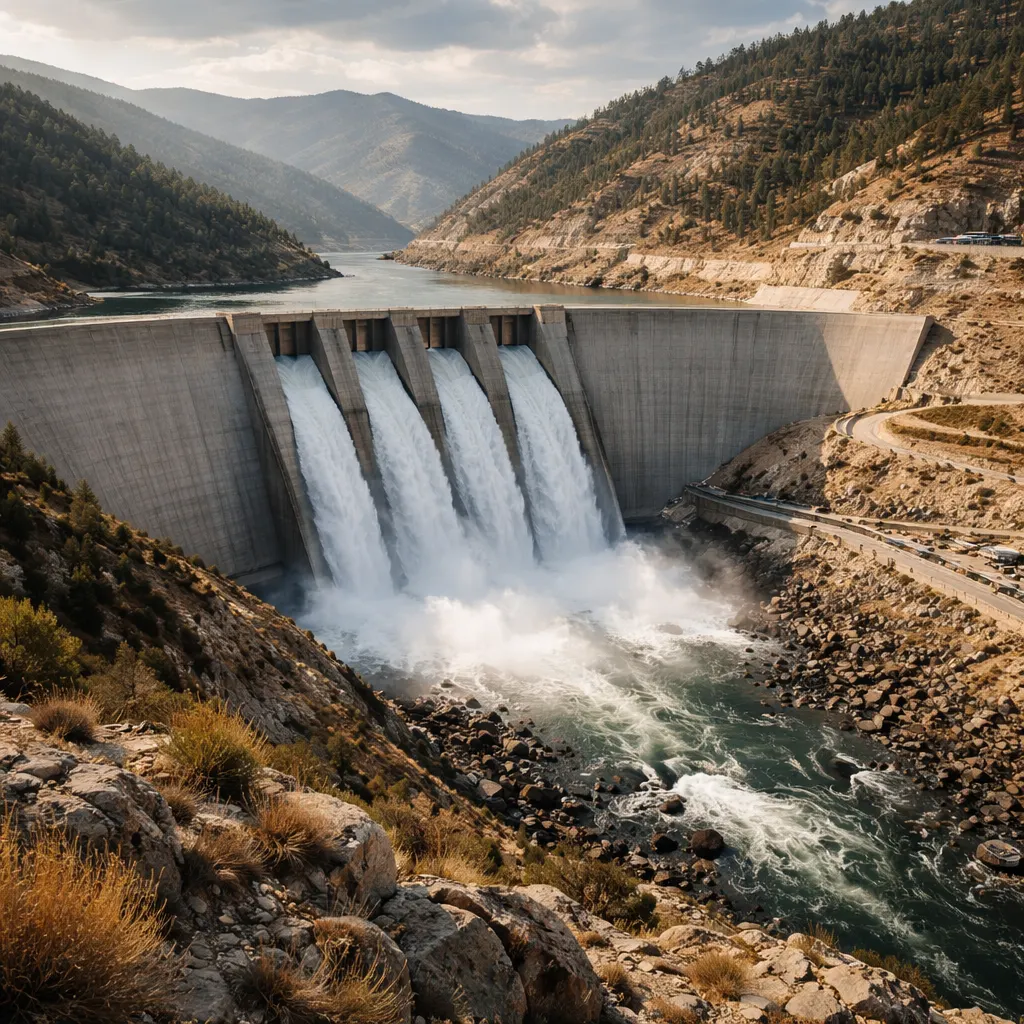
California regulators have unanimously approved permits for a major dam project that will add up to 1.5 million acre-feet of new water storage, the first large-scale reservoir to come online since the late 1970s, according to a commentary published by the Pacific Research Institute. The Sites Reservoir project on the west side of the Sacramento Valley calls for two 300-foot dams and nine smaller ones ranging from 20 to 100 feet high, with construction slated to begin next year and finish in 2034. But the new supply will cover only a fraction of California's looming water shortage, which could reach between 4.6 million and 9 million acre-feet annually by 2050 without additional action.
The project was approved by voters through Proposition 1 in 2014, when two out of three Californians backed issuing more than $7 billion in bonds to expand the state's water supply. It took 12 years from voter approval to regulatory green light — a stark contrast to the six-year construction of the 233-mile Los Angeles Aqueduct after city voters approved it in the early 20th century. Senate Bill 72 set a goal of adding 9 million acre-feet of new water supplies by 2040, but the Sites Reservoir will deliver only about 1.3 million to 1.5 million acre-feet. The state serves more than 39 million residents and 70,000 farms that depend on consistent access to water.
Outgoing Senator Anna Caballero, the Merced Democrat who introduced SB 72, warned that California faces annual water shortages of 4.6 million to 9 million acre-feet by 2050 "without state intervention." Environmental critics argue the project "threatens the health of the Sacramento River and San Francisco Bay-Delta" and will "raise river temperatures and worsen downstream water quality," preferring that California continue with limited supplies. PRI fellow Steven Greenhut countered that "environmental justice" begins when more water is made available for everyone, noting that "communities cannot flourish without abundant water," especially in lower-income areas.
The commentary points to decades of mismanagement and politics that have turned water into "liquid gold" in a state that shouldn't be experiencing repeated water crises. California's perpetual water shortages stem from what the author calls a "scarcity mindset" that has also affected electricity and petroleum supplies, despite the state consuming more of these resources than any state except Texas. The 12-year delay between voter approval and regulatory permission exemplifies the difficulty of building public infrastructure in California, raising concerns that the project could follow the same troubled path as the state's perpetually stalled high-speed rail initiative. Voters likely supported the bond measure out of frustration with ongoing droughts, water-use restrictions, and some of the country's highest water prices.
Even with the Sites Reservoir moving forward, the gap between new supply and projected need remains enormous. The project won't be operational for more than seven years, and its 1.5 million acre-feet contribution leaves a shortfall of 7.5 million acre-feet against the state's 2040 target. The commentary emphasizes that policymakers must do the work to close this gap, arguing that California's economy and entire future depend on reliable and affordable water access. The state needs to embrace the "abundance mindset" of earlier generations that made it a destination, rather than the scarcity approach that has turned it into a departure point for residents fleeing poor public policy.