
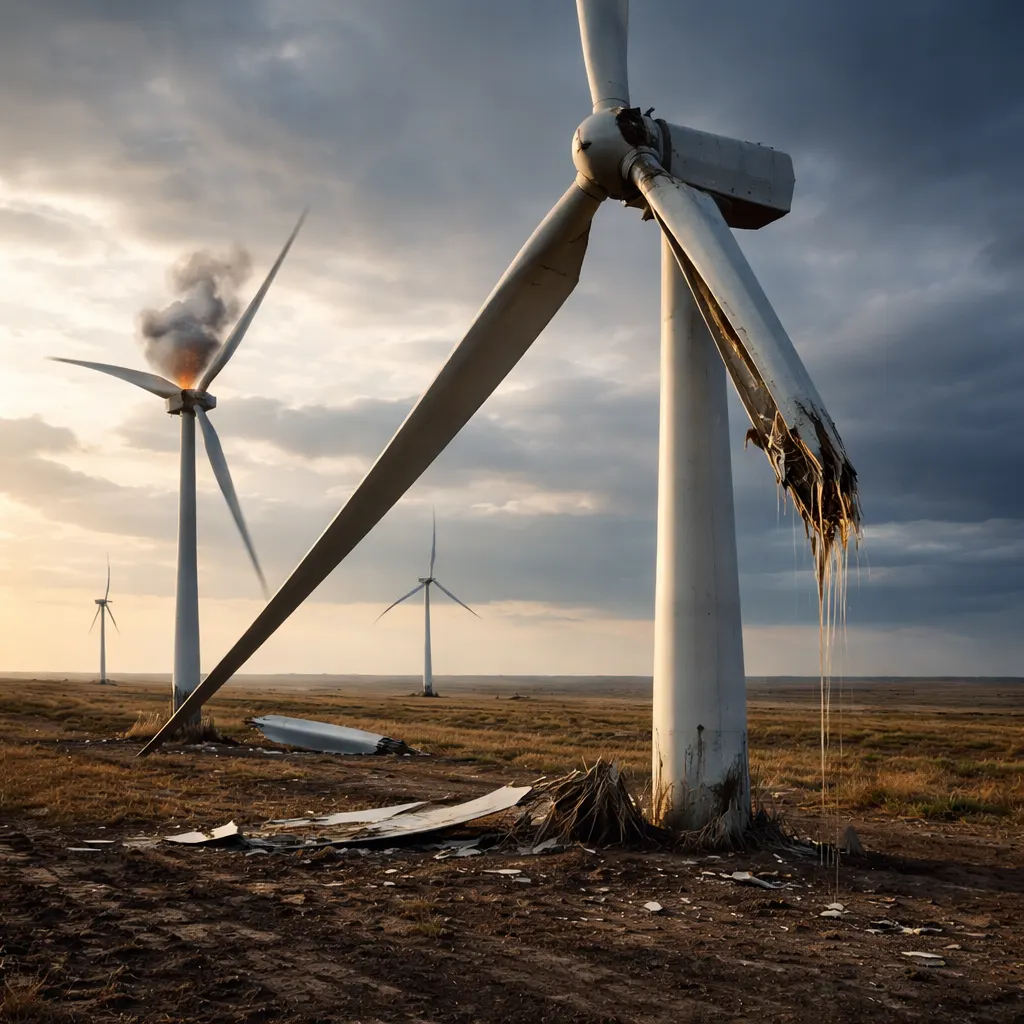
The wind energy sector is facing a structural crisis as turbines age far faster than promised and recycling infrastructure can't keep pace with mounting waste, according to an analysis published by Energy News Beat. The report warns that the United States alone faces an $89 billion land reclamation bill as thousands of turbines reach the end of their useful lives, with most lacking the financial bonds needed to cover cleanup costs. Early European fleets are showing rapid performance decline well short of the advertised 20–25-year lifespan, while composite blade waste is projected to hit 43 million tonnes globally by 2050.
Europe ended 2025 with 304 gigawatts of wind capacity—265 GW onshore and 39 GW offshore—and 34 GW of that fleet is already more than 20 years old, a figure expected to reach 65 GW by 2030. Germany operates roughly 29,200 onshore turbines totaling about 70 GW, while the United Kingdom has more than 32 GW split evenly between onshore and offshore, with approximately 9,200 onshore and nearly 2,900 offshore turbines. In the United States, the Wind Turbine Database listed 77,379 turbines as of June 2026; roughly 7,500 are 20 or more years old, and another 17,500 are 15–19 years old. Cumulative U.S. decommissioned turbines already exceed 12,800. Annual decommissioned blade material in Europe is estimated at about 20,000 tonnes in 2025, rising toward 55,000 tonnes by 2030. Recycling costs run $1,000–$2,000 per tonne versus $60–$150 per tonne for landfill where still permitted.
The report cites a 2012 analysis by Professor Gordon Hughes of the University of Edinburgh that found average UK onshore load factors had fallen roughly 33 percent by year 10, with leading-edge erosion, gearbox wear, and rising maintenance costs making many sites uneconomic after about 12 years. The report notes that Germany, Finland, the Netherlands, and Austria moved in early 2026 to restrict landfilling of decommissioned blades, and the European industry imposed a self-ban on blade landfilling from January 1, 2026. According to the analysis, "a 2025 state-by-state assessment graded 30 states D or F for wind and solar" financial assurance requirements—far weaker than oil-and-gas well bonding. The report warns that "we cannot find 1% that has bonds in place, and companies will just declare bankruptcy, leaving the landowners with worthless land."
The problem stems from subsidy design and performance decay that operators didn't anticipate. The federal Production Tax Credit historically ran for ten years, and Lawrence Berkeley National Laboratory analysis found output dropped 3.6 percent between years 10 and 11 as owners deferred maintenance once the credit expired. UK benchmarks put decommissioning costs at £100,000–£250,000 per turbine, covering dismantling, foundation and cable removal, and site restoration; U.S. estimates for turbine removal alone range from $35,000 to $100,000, with full restoration adding tens of thousands more. Blade composites remain a net cost of several thousand dollars each because salvage value from steel, copper, and aluminum can offset 60–70 percent of costs when metal prices are high, but blade recycling isn't reliably covered. Across tens of thousands of aging European turbines, the aggregate bill is measured in billions of euros, much of it unfunded at the project level. The Inflation Reduction Act extended credits, but subsequent legislation created a construction-start cliff that leaves many new projects missing 2026–2027 deadlines and losing eligibility.
The report concludes that policymakers and operators who treat 20–25-year lives as a planning assumption rather than an upper bound will confront both an environmental cleanup bill and a reliability gap. When subsidies expire, operators face a commercial choice—spend on aging machines whose output is already declining or walk away. Premature or unfunded decommissioning can leave restoration costs with landowners or ratepayers, while reduced output from aging, under-maintained turbines raises the need for backup generation or new capacity, increasing system costs. Transparent accounting of full-cycle costs—installation, operation, decline, dismantling, and disposal—is now essential if wind is to remain a durable part of the energy mix rather than a deferred liability.