
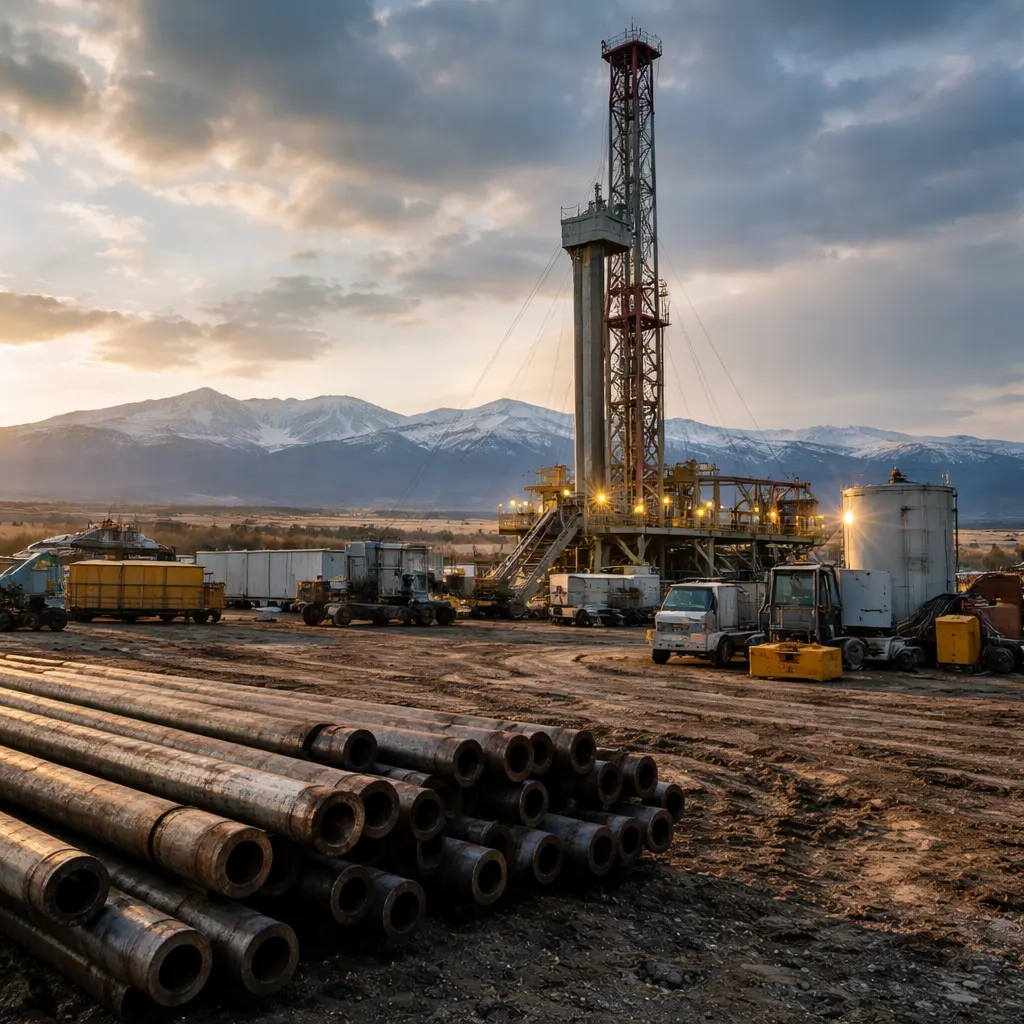
West Texas Intermediate crude is trading near $101 a barrel and national gasoline sits at $4.44 a gallon, yet Colorado operators filed just 335 drilling permits over the past two years, according to a September 17, 2026 analysis published by Energy News Beat. In the last 90 days, companies spudded 138 wells and brought 103 wells into first production over the past six months, while the drilled-but-uncompleted backlog sits at 759 wells. The report concludes that high crude prices are no longer enough to revive Colorado's drilling activity because the real constraint has shifted from economics to time, regulatory process, and political uncertainty.
The state's well starts peaked at 4,470 in 2008, stayed above 2,000 through most of the Niobrara shale expansion, then collapsed with the 2015–16 price crash, the report finds. Activity recovered in the late 2010s but fell again after Senate Bill 19-181 passed and never returned to pre-2019 levels. By 2026, year-to-date well starts through early August totaled just 363, a pace that would finish far below mid-2010s levels even with a fourth-quarter surge. Permit approvals show an even sharper break: 14,937 well permits were approved from 2015–18, compared to just 3,980 from 2022–25. Oil and gas locations approved within 2,000 feet of homes dropped 88 percent, from 719 to 87, over those same periods. In 2025, operators drilled 775 wells but plugged 1,383, creating a net reduction of 608 active wells.
Production has held up better than well counts because laterals grew longer and remaining inventory is high-grade. Colorado crude output climbed from 67,000 barrels per day in 2006 to a peak of 527,000 barrels daily in 2019, then settled in a 421,000–475,000 barrel-per-day range from 2021 through 2025. A 2025 Common Sense Institute analysis estimated that if Colorado had maintained its growth trajectory after 2020, the state would have produced 16.6 million additional barrels of oil plus incremental gas, worth roughly $1.3 billion. The report notes that average time from Oil and Gas Development Plan submission to hearing reached 257 days in 2024 and 297 days in 2025, with industry estimates for a complete package of state and local approvals now running 12 to 18 months. By comparison, Texas processes standard drilling permits in roughly two to four business days.
The report attributes the slowdown to a regulatory framework built on SB19-181, which changed the state commission's mission from promoting development to regulating it for public health, safety, the environment, and wildlife protection. The subsequent 2,000-foot statewide setback from homes, schools, and childcare centers became among the nation's strictest. Local governments gained explicit surface-siting authority, and continuous monitoring, methane reduction, and leak-detection requirements followed. House Bill 19-1261 and later climate laws set statewide greenhouse-gas cuts leading to net-zero by 2050, with oil and gas intensity targets embedded in later commission and air quality rules. That architecture shows up in permit timelines that companies now describe as "more selective," with filings that are "10 times more in-depth than they were pre-SB181," according to former commission chair Jeff Robbins. The operator roster has consolidated sharply: the number of independent companies drilling at least 10 wells annually in the basin fell from 19–20 in 2019 to six in 2025, as majors like Chevron absorbed Noble Energy and PDC Energy, Civitas rolled up and merged into SM Energy, and Occidental sold DJ Basin mineral assets for $905 million.
The report draws a stark contrast with Texas and California to illustrate three divergent energy policy paths. Texas issued 3,232 permits over the trailing 24 months, nearly 10 times Colorado's 335, while maintaining 5.76 million barrels per day of crude output in 2025. California approved 1,853 permits over 24 months but spudded only four wells in the last 90 days, with most permits covering reworks and enhanced recovery on a century-old well stock rather than new shale drilling. The consumer price gap is equally sharp: residential electricity in California costs 34.74 cents per kilowatt-hour compared to 17.13 cents in Colorado and 15.94 cents in Texas, while regular gasoline in California runs $6.08 per gallon versus $4.37 in Colorado and $3.93 in Texas. The report concludes that the state with the fastest permit system delivers the cheapest energy, while the one with the longest climate-and-land-use review process has the most expensive, with Colorado moving toward California's activity profile.
Colorado's experiment was to remain a responsible producer under a net-zero statute, but the 20-year record through mid-2026 shows the state is still producing yet no longer replenishing its well inventory. The remaining operators—Chevron, SM Energy successors, and a short list of private companies—are harvesting the best remaining locations and rationing capital against delay. Production has plateaued rather than crashed, allowing supporters of the 2019 reforms to argue the regulatory wars are over while critics contend the next decade's inventory is being consumed without replacement. The report's bottom line: when the binding constraint shifts from oil price to approval time and political risk, high crude prices alone won't restart the drilling machine.