
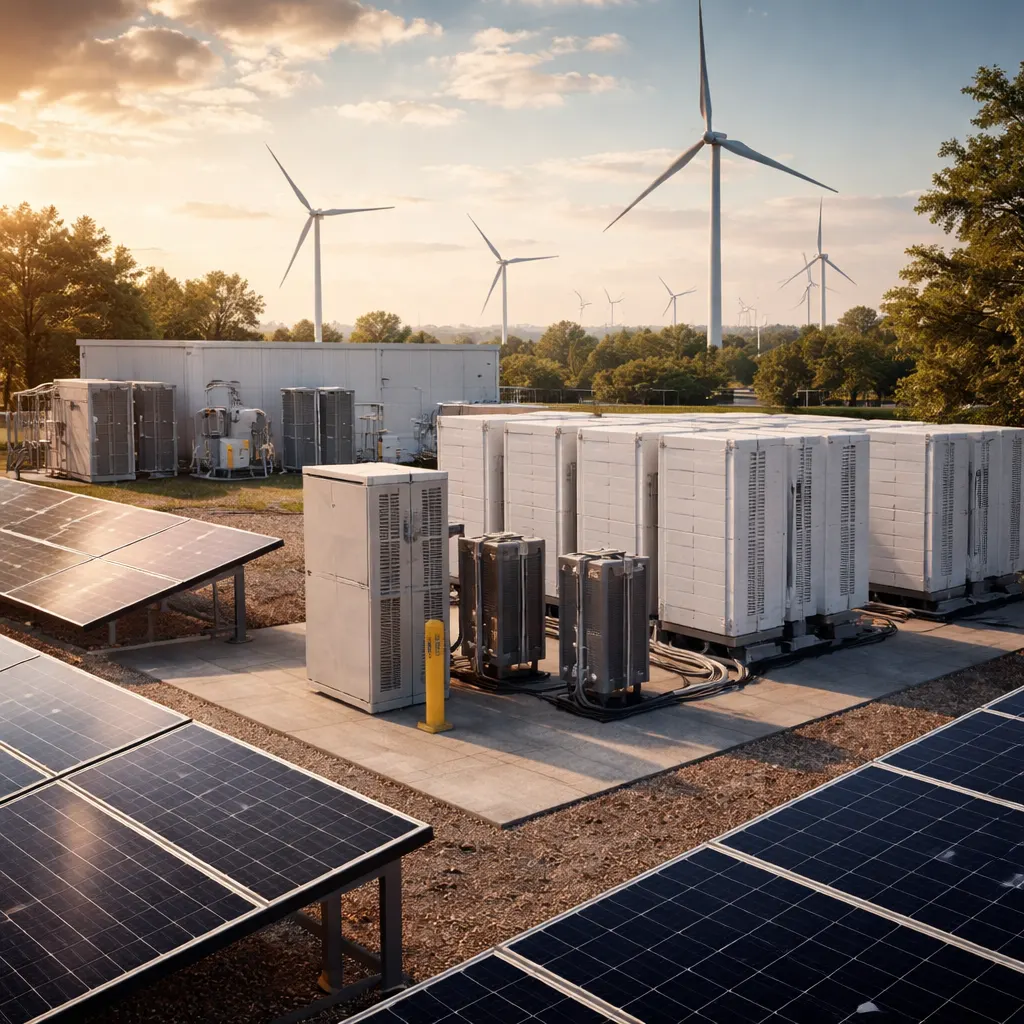
Microgrids can do more than serve as emergency backup systems, according to experts at the Building an Advanced Energy Ecosystem Conference in Albuquerque last week. The distributed energy resources inside these systems can help utilities handle peak demand events and address voltage problems during regular grid operations, Jackie Baum, senior team lead for distributed energy resource integration at the Electric Power Research Institute, told attendees. But turning microgrids into everyday grid tools will require the industry to stop treating each installation as a unique custom project.
Data centers with electricity demand exceeding 50 megawatts are pushing microgrid installations toward much larger sizes, Baum said, with some projects now big enough that they need a connection to the transmission system rather than just distribution lines. Public Service Co. of New Mexico, which acts as New Mexico's balancing authority, has roughly 40 MW of flexibility under its balancing requirements, while some proposed data centers could hit 300 MW, according to Jon Hawkins, associate director of grid modernization at the utility. The Department of Energy defines microgrids technically as systems with clearly defined electrical boundaries that operate as a single controllable unit, either connected to or separated from the main grid.
The central challenge is making microgrids reliable enough for utilities to count on them, including knowing when their resources will be available and how they'll affect the wider system, Baum said. Hawkins put it bluntly: "If you've seen one microgrid, you've seen one microgrid," noting that every installation arrives with a different combination of loads, generation and control systems. Unlike solar panels or battery storage, microgrids lack the same standardization, making interconnection approval a longer and more complex process at PNM. EPRI is addressing these obstacles through IEEE standards development, running industry forums to identify field challenges and collect best practices, and publishing strategies and methods for modeling, testing and commissioning microgrids, Baum told Utility Dive.
The shift from one-off pilots to production-ready systems is already underway. Sandia National Laboratories is constructing four scenario-based grid engineering facilities to test power electronics, controls, storage units and inverters before they're deployed in the field, according to Stan Atcitty, senior scientist and power electronics lead at Sandia. Once the labs are operational, researchers plan to subject commercial equipment to faults, cyberattacks and extreme operating conditions so utilities and developers can depend on proven models and toughened designs—a step panelists described as crucial to reducing microgrid risk. Project finances increasingly depend on how much value microgrids deliver beyond emergency backup, with panelists pointing to value stacking—using distributed resources for both backup and daily grid services—and state interconnection policies as factors that lower net costs.
Kit Carson Electric Cooperative CEO Luis Reyes told the conference his rural cooperative is developing five microgrids, including battery-based installations and a clean hydrogen project. He pointed to a seven-day natural gas disruption in 2011 that left New Mexico communities without service during harsh winter weather, an event residents felt meant the region had been "sacrificed" to maintain gas supply for the Super Bowl in Dallas. A later investigation by the New Mexico Public Regulation Commission blamed the emergency on rolling electrical blackouts and frozen equipment rather than deliberate curtailment for the event. For Reyes, the lesson was clear: maintaining quality of life in rural areas depends on localized infrastructure, not distant sources vulnerable to system-wide failures.