
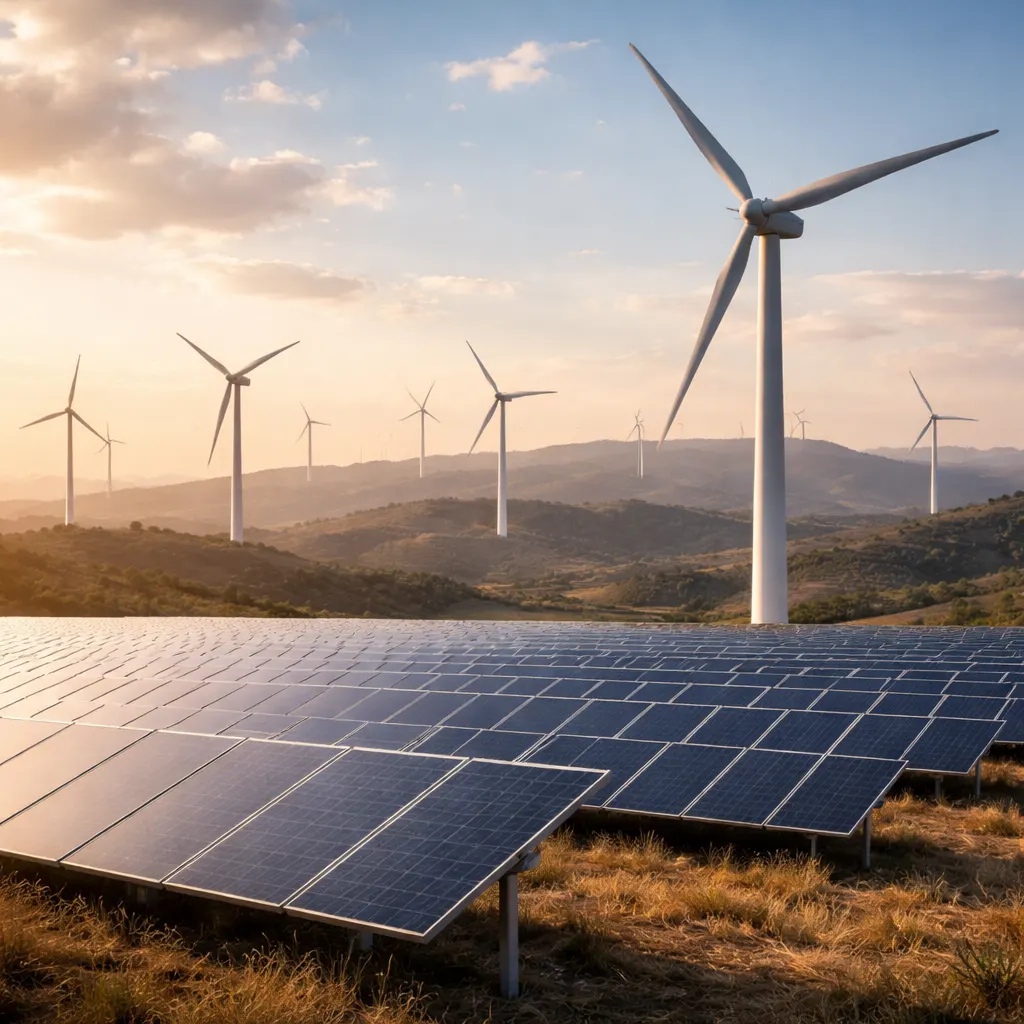
The United States installed nearly 5 GW of land-based wind capacity in the second quarter of 2026, but the pipeline for future wind projects fell 4% amid regulatory hurdles and growing cost pressures, according to the American Clean Power Association's latest market report. The cost difference between wind and solar has reached a historic peak, with wind now commanding a $22.39 per megawatt-hour premium over solar — a 36% gap that marks the widest spread on record. Despite headwinds facing wind development, the overall clean power pipeline has crossed 200 GW and climbed 11% year over year in the first half of 2026.
Average national power purchase agreement prices in the second quarter of 2026 stood at $83.79 per megawatt-hour for land-based wind and $61.40 per megawatt-hour for solar, the report found, citing figures from LevelTen Energy. Wind PPA costs jumped 5.5% from the previous quarter and 17.5% compared to a year earlier, while solar prices dropped 4.8% from the first quarter of 2026 but remained 6.7% above year-ago levels. New offtake announcements for clean energy climbed 23% year over year and 10% quarter over quarter, driven largely by data center demand. Utilities led all buyer categories by contracting 15,048 MW of capacity — primarily through power purchase agreements — which represented 71% of offtake deals, while commercial and industrial purchasers secured 3,590 MW as the second-largest group.
At least 44 GW of wind projects are "stuck" in review at the U.S. Department of Defense, according to calculations by the American Clean Power Association. John Hensley, the organization's senior vice president of markets and policy analysis, told Utility Dive that a judge recently ordered the department to restart those reviews after what appeared to be a pause. "Time will tell how the Department of Defense reacts to that judgment," Hensley said, adding that if reviews resume as they operated previously, "there is a large volume of projects sitting behind that bottleneck." He noted that as the volume of viable wind projects shrinks over time, they can command premium prices in the marketplace, "especially when everybody is pretty desperate for power on a quick timeline."
The report attributes the widening price gap to multiple factors, including regulatory bottlenecks that have constrained wind development while solar supply chains face separate pressures. Hensley said he expects the gap between solar and wind PPA prices will begin to narrow within the next few months, as solar costs are likely to rise following an August 6 executive order that imposed a 15% duty on polysilicon derivative imports. While markets like California and Texas are "working well" to connect clean power to the grid, transmission bottlenecks and congested interconnection queues remain widespread problems nationally, with PJM identified as a major chokepoint. Google alone accounted for 54% of corporate PPA announcements in the second quarter, part of a broader pattern linking clean energy demand to data center load growth that also includes Meta and Oracle.
Texas currently operates the nation's largest storage fleet at 17,404 MW and 28,326 MWh, but battery storage projects there "have significantly lower storage durations compared to other states due to the structure of the ERCOT power market," the report noted, with online projects averaging just 1.6 hours. Hensley anticipates storage duration will converge across markets in coming years as the arbitrage opportunities that drove two-hour battery deployment in Texas get "competed away" and demand grows to carry solar into evening hours or shift overnight wind to early morning. He pointed to Google and Xcel Energy's collaboration on a 100-hour storage project using Form Energy batteries as an indicator that utilities and grid operators are exploring longer-duration options as costs decline. The surge in power demand tied to data centers, combined with the regulatory release of stalled wind projects, could reshape the competitive dynamics between wind and solar if the Defense Department bottleneck clears.