
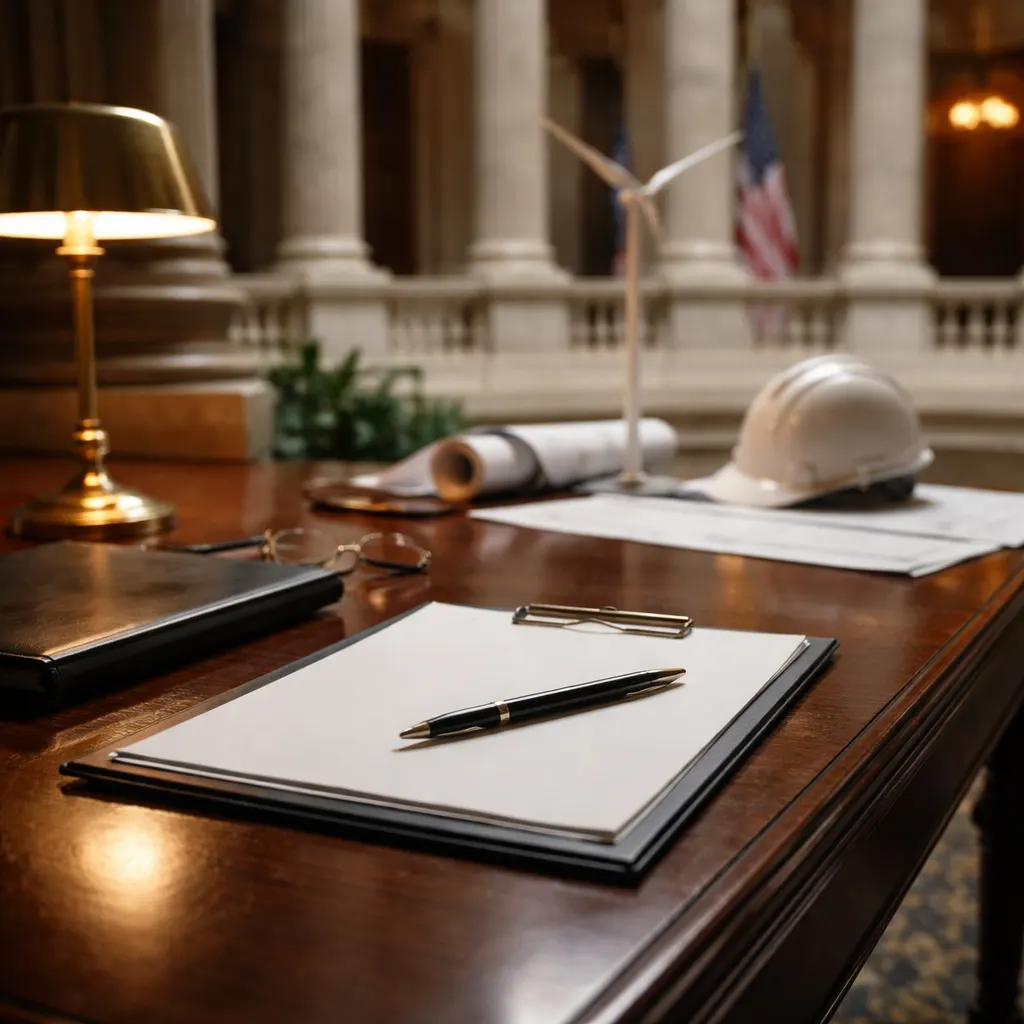
A bipartisan group of senators announced a sweeping legislative deal on Wednesday that would dramatically reshape how America builds energy infrastructure by restricting citizens' ability to endlessly sue projects they oppose and giving Washington new authority to advance critical multistate developments even when individual states stall. The Bipartisan American Affordability and Jobs Act, or BAAJA, could transform the nation's energy construction landscape for decades, particularly for interstate transmission lines that have languished in regulatory purgatory for years. The legislation illustrates a stark tradeoff: making room for clean energy may require simultaneously opening the door to more oil and gas infrastructure in a nation already rich with it.
The proposal targets a permitting system that has produced absurd delays, exemplified by the Grain Belt Express, an 800-mile high-voltage transmission line that's been trying to get built for 16 years despite receiving its first approval in 2013 and likely won't open until 2029 at the earliest. When finished, the line will enable Kansas to deliver five times as much wind power into Missouri as it currently does. The state generates over half its energy from wind and ranks third nationally for wind power production. But the project broke ground only this year after being buried under regulatory obstacles across multiple jurisdictions and a relentless barrage of legal challenges that immediately froze progress whenever a new injunction was filed.
The legislation would establish new protections that legally bar presidents like Trump from interfering with already-permitted energy projects or targeting specific energy types, a ban that would equally prevent a Democratic president from stopping an approved gas pipeline or petroleum refinery. The Biden administration's moratorium on permits for new natural gas export facilities, for instance, would be prohibited under the bill. Legal challenges would still be permitted if filed within 150 days of an approval, but federal agencies currently controlled by Trump would shoulder a much heavier responsibility for deciding damage thresholds. The bill would also weaken long-standing regulatory standards that have, for example, given Americans input over developments that might pollute their water supplies and helped tribes safeguard sacred heritage sites.
The deal emerged after months of deadlock caused by the Trump administration's refusal to promise Democrats the president would stop attacking wind turbines and other clean energy developments, but lawmakers recently reached a fragile compromise based on what Sen. Sheldon Whitehouse called "a very reasonable opening proposal" from the White House. Clean energy advocates recognize the paradox they face: renewable projects are more likely to be slowed by environmental reviews than fossil fuel developments because they typically demand more land and represent the majority of new energy construction. Yet many worry about gutting protections that emerged in the 1970s precisely because American communities routinely found themselves crushed—both literally and figuratively—by developers obsessed with speed who left oil spills, river fires, and fractured neighborhoods behind.
The bill's success hinges on whether the compromise proves worthwhile. With American electricity costs climbing to alarming levels and a data center expansion threatening to overwhelm the power grid, the proposal signals that at least some lawmakers are finally paying attention. Environmentalist Bill McKibben framed the central question bluntly: it's not whether grid expansion and permitting reform would help convert more of the energy system to renewables—that's foundational—but rather "how many pounds of flesh the fossil fuel industry would demand in return, and how close to vital organs that flesh would be located." Democrats will need Republican support if they want Americans to actually see solar power, the cheapest energy source ever, reflected in lower power bills. For most of the country, if not the planet itself, that shift can't arrive fast enough.