
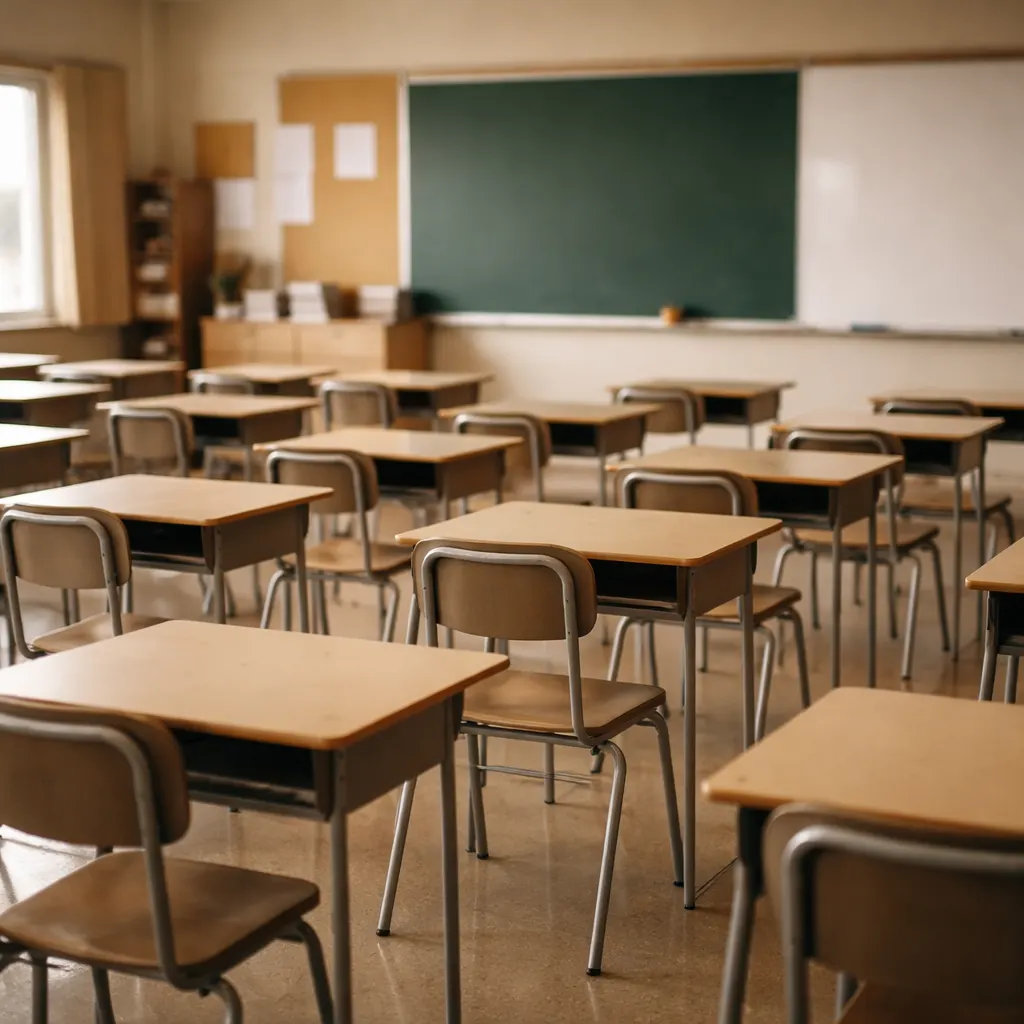
Nearly 938,000 seats sat empty in nine of the nation's 12 largest school districts during the 2025-26 school year, according to a new analysis published by Reason Foundation in its education newsletter. These districts used only about 71% of their available space on average, the report shows, as declining birth rates and shifts toward homeschooling, charter schools, and private schools leave public school buildings increasingly vacant. The analysis examined enrollment data from the country's largest urban school districts to illustrate how empty classrooms are creating financial strain and forcing conversations about school closures.
The scale of underutilization varies dramatically across districts, with some facing particularly severe challenges. Chicago Public Schools identified 50 schools, representing 11% of its district, as severely underutilized, meaning 33% or less of the building was in use. An extreme case is Frederick Douglass Academy High School in Chicago, which enrolled just 30 students this year despite having capacity for 900 students. In Los Angeles Unified School District, about 65% of the district's 738 schools are enrolled at 60% or less of their available capacity. Similarly, roughly one in four Houston Independent School District schools use half or less of their space. The report notes that since 2020, public school enrollments nationwide have dropped by 1.4 million students, and U.S. births have fallen 18% since 2007, suggesting student counts won't rebound anytime soon.
Half-empty buildings cost districts as much to maintain and operate as fully utilized schools, regardless of how few students attend, the report finds. Civic Federation President Joe Ferguson noted that Chicago's contract with its local union requires staffing Frederick Douglass Academy with 30 employees, creating a 1:1 staff-to-student ratio and costing the district at least $94,000 per student—five times the usual per-student allocation. The report concludes that "policies like this don't best serve students and are untenable for school districts and taxpayers."
The report argues that the financial pressure stems from fixed costs colliding with shrinking revenue. When buildings remain open with far fewer students, districts still face the same maintenance, heating, and staffing expenses, yet receive less funding tied to enrollment counts. Many states use "declining enrollment provisions" that base funding on outdated student counts rather than current numbers, effectively paying for "ghost students" who've left the system. Because layoffs and school closures are painful, administrators often postpone decisions as long as possible, allowing costs to compound. The report suggests states should publish data on underutilized buildings to increase transparency and eliminate funding formulas that reward districts for students who no longer attend.
The report recommends that policymakers adopt policies ensuring facilities slated for closure continue benefiting local students, pointing to Indiana and Florida as models where charter schools can purchase, lease, or co-locate in underutilized district buildings. States should base education funding on current or prior-year enrollments to ensure budgets reflect actual student counts, the analysis concludes. With public school enrollment declines and districts' financial situations unlikely to improve, the report warns these challenges must be addressed despite the difficulty school closures pose for students and communities.