
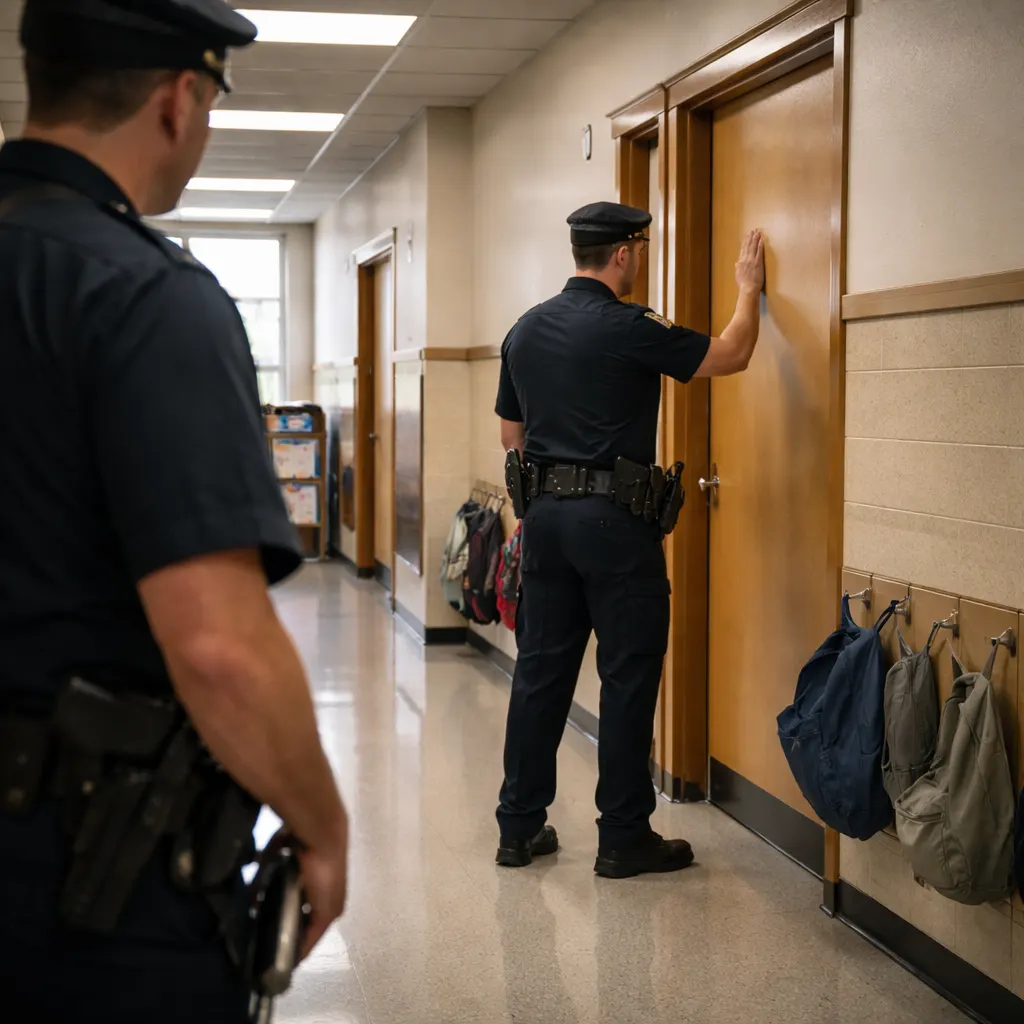
A school district in Milton, Massachusetts, hired off-duty police officers to investigate whether students actually lived within town boundaries, with most checks targeting African-American children, according to recent reporting highlighted in an analysis by The 74. The case illustrates a broader problem across the country, where districts enforce strict residency rules that prevent families from accessing better schools, sometimes resulting in criminal prosecution of parents who try to get their children into higher-performing schools. The practice reflects what the analysis calls an "archaic system" that contradicts public education's founding mission to serve everyone.
The Milton investigations focused heavily on Tucker Elementary, located just blocks from Mattapan, a predominantly African-American Boston neighborhood where local schools struggle with poor performance. At Tucker Elementary, 54% of students read at grade level, compared to only 21% at Chittick Elementary Schools less than a mile away in Mattapan. Last year, the Reason Foundation awarded Massachusetts an F grade for its public school open enrollment laws, ranking the state among those with the country's most restrictive address-based assignment systems. Massachusetts districts can choose not to participate in cross-district open enrollment, face no requirement to publish information about available seats, and offer no appeals process for students denied transfers.
The analysis references a previous report titled "When Good Parents Go to Jail," which documented cases where well-meaning parents faced prosecution and even imprisonment for violating residency laws while seeking better educational opportunities for their children. Districts nationwide conduct surveillance and residency investigations, hiring private investigators or assigning the work to staff members—in one California district, the job belongs to an employee officially titled "homeless services liaison." The analysis notes that if districts insist on enforcing these policies, using trained law enforcement officers may actually represent a best practice compared to relying on private investigators or entry-level employees.
The article argues that strict address-based assignment systems inevitably raise racial equity concerns, particularly when high-performing schools sit near neighborhoods where families can't afford housing and local schools fail students. The Milton situation demonstrates this dynamic: families in Mattapan naturally look for alternatives when their neighborhood schools produce such poor reading outcomes. The analysis points out the historical irony that Massachusetts, where Horace Mann proclaimed public schools would serve as "the great equalizer" giving all children access to the American Dream, now operates one of the nation's most exclusionary systems. These outdated policies effectively punish low-income families for being unable to buy homes in affluent areas with better schools.
The analysis recommends Massachusetts follow models from states like Arizona and Wisconsin, which require all districts to admit out-of-district children when space exists and ensure that a substantial portion of per-student funding follows the child to the new school. Without such reforms, the state's public schools won't be "truly open to the public," and low-income families will remain trapped by geography rather than liberated by education.