
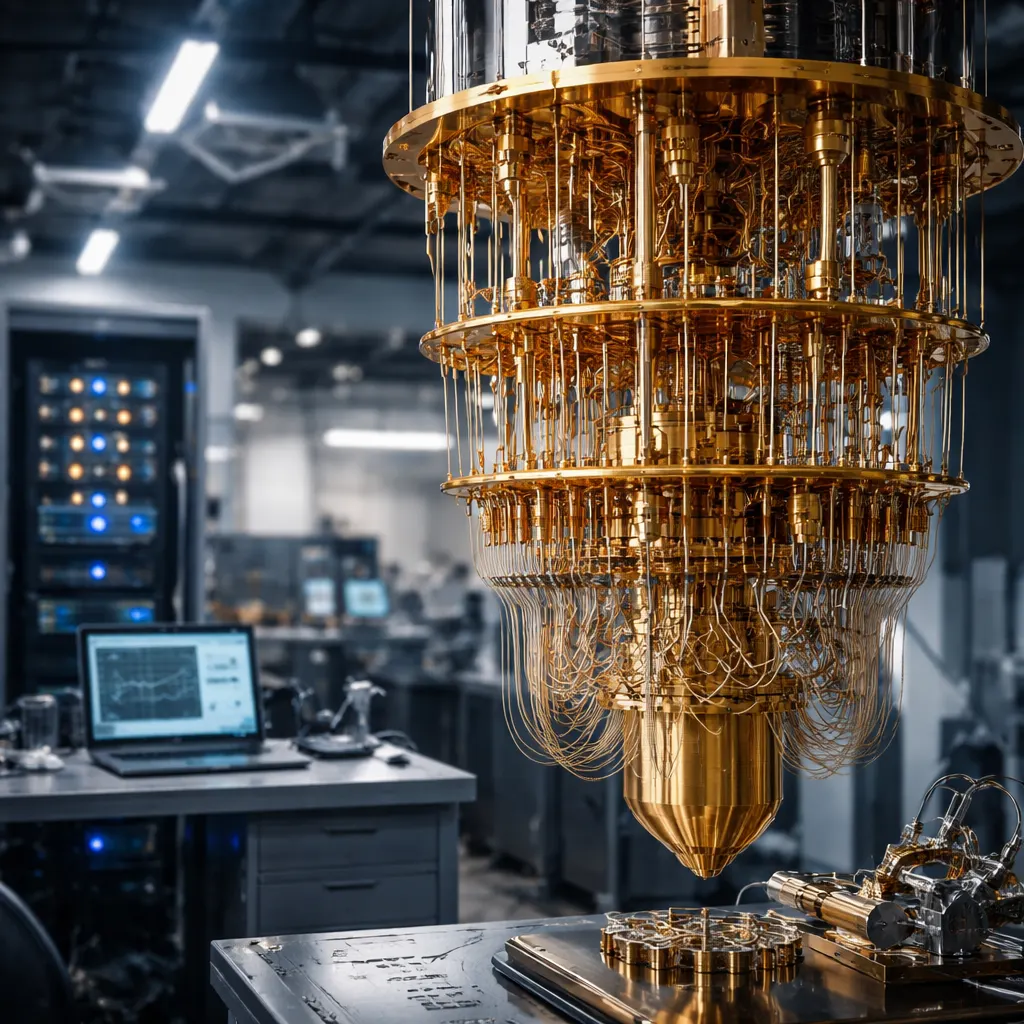
Fault-tolerant quantum computing could arrive in the early 2030s, years ahead of conventional forecasts, with sweeping implications for cryptography and strategic competition. That's according to "The Quantum Revolution: A Guide for Allied Policymakers," a report published in July 2026 by the Hoover Institution's Allied Coordination Working Group. The report argues that US leadership in the quantum era won't come from dominance in any single technology but from orchestrating resilient alliance networks across three distinct quantum races.
The report breaks quantum technologies into three fields advancing at different speeds. Quantum volume has grown tenfold annually since 2018, and if current trends hold across qubit count, coherence, fidelity, and error correction, the inflection point for fault-tolerant quantum computing will arrive sooner than most experts expect. Quantum sensing is closest to deployment, particularly for jam- and spoof-resistant positioning, navigation, and timing systems, but the US lead in sensing has narrowed considerably since 2022. Meanwhile, the quantum landscape is irreducibly multipolar: the US leads in quantum computing platforms, China leads in quantum communications deployment, and Europe and Japan anchor critical component supply chains in cryogenics, lasers, optics, and detectors. No nation, including the United States, is self-sufficient.
The report finds that quantum sensing is "the near-term workhorse" and "requires urgent attention" given the erosion of America's advantage. The authors write that policymakers should resist treating "quantum" as a single domain, since quantum computing, sensing, and communications "are advancing on distinct timelines and pose distinct strategic questions." On cybersecurity, the report states that post-quantum cryptography, not quantum key distribution, is the practical hedge against "harvest-now, decrypt-later" risks, because quantum key distribution remains range-limited, expensive, and dependent on vulnerable classical layers.
The report's analysis emphasizes that the quantum revolution isn't a bilateral US-China contest but a competition across fragmented supply chains and capabilities. Because no single country controls the full technology stack—from dilution refrigerators to photon detectors to quantum error correction algorithms—allied coordination becomes the determining factor. The US federal government's target of migrating to post-quantum cryptography by 2035 should be treated as a floor, not a ceiling, the authors argue, given the accelerating pace of quantum computing development. If the tenfold annual growth in quantum volume continues, adversaries could break current encryption standards well before mid-decade, leaving sensitive data harvested today exposed years earlier than planned.
The report recommends that allied democracies stop viewing quantum as a single technological frontier and instead coordinate on three separate strategies: accelerating quantum sensing deployment to preserve military advantages, hardening networks with post-quantum cryptography ahead of the 2035 timeline, and building diversified supply chains that don't depend on any one nation. The bottom line: the quantum era is arriving faster than governments are preparing for it, and only countries that can orchestrate alliances across the technology stack will lead it.