
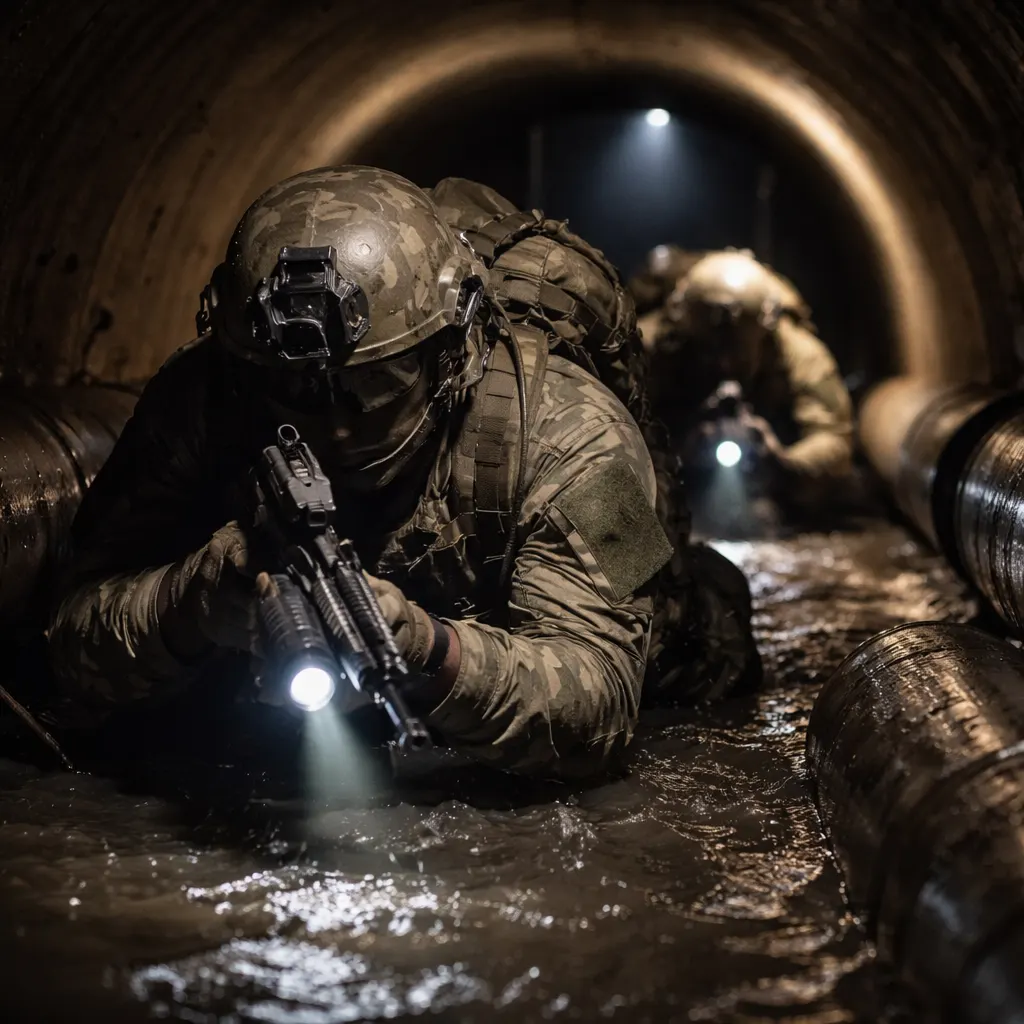
Ukrainian forces have advanced more than nine miles through gas pipelines beneath the Kupiansk front in a subterranean offensive designed to cut off Russian infiltration routes, according to a military assessment published October 28 by the Hudson Institute. The report details Ukraine's Operation Veles, described as the most significant tunnel warfare campaign of the ongoing conflict, where troops are fighting inside passages barely four feet in diameter to deny Russian forces a concealed route across the Oskil River. Front lines remained largely unchanged over the past week despite an intensifying Russian ballistic missile campaign.
The report documents that daily tactical engagements fell below 200 for most of the week, a departure from months of more frequent combat. Pokrovsk absorbed the heaviest fighting. Ukraine's Main Directorate of Intelligence estimates Russia faces no shortage of ballistic missiles, cruise missiles, or drones for air raids, with production continuing through Chinese machine tools and dual-use components from Western sources. Ukrainian forces reported interception rates reaching up to 80 percent against Russian jet-powered drones at times, though the report notes that larger datasets collected over several months will be needed to confirm these figures. President Volodymyr Zelenskyy stated that more than 100 Russian personnel had been killed in the underground campaign and over 30 captured, though these numbers haven't been independently verified.
The operation targets the Shebelynka–Ostrohozk gas pipeline, which Russian forces have used since summer 2025 to reach the western bank of the Oskil River and infiltrate wooded areas north of Kupiansk while avoiding Ukrainian surveillance and fire. According to the Hudson Institute report, Ukraine's 2nd Khartiia Corps and other combat formations are now fighting inside these narrow passages, where firefights can occur at close range and there's little room to move, engage enemies, or evacuate wounded soldiers. The report describes Ukrainian forces deploying sappers, engineers, mini unmanned ground vehicles, and elite troops from the 425th Separate Assault Regiment in coordinated assaults. Ukrainian personnel have constructed sandbag barricades, installed machine guns, demolished selected pipeline sections, maintained underground ventilation, and sustained communications with command hubs while monitoring Russian forces at distances as short as approximately 65 feet.
The report explains that modern surveillance and precision strike capabilities are renewing the military importance of subterranean warfare, as drones make it increasingly difficult for ground forces to assemble or move supplies without detection. Tunnels and pipelines offer opportunities to preserve concealment and complicate enemy targeting, especially on static battlefield lines where familiar infrastructure can be adapted for sustained military use. Beyond infiltration, protected underground passages can support resupply, casualty evacuation, and troop rotation, though these functions require ventilation, reliable communications, secure access points, and sustained engineering work. Russian troops have reportedly bypassed damaged pipeline sections by cutting new openings and resuming movement, forcing Ukrainian forces to repeatedly intercept them before they enter or after they emerge from underground routes.
Looking ahead, the report warns that Russia's new Filin cruise missile could place additional strain on Ukraine's air defenses if Moscow achieves mass production. The ground-launched weapon has a reported range of roughly 760 miles, flies at very low altitudes, and carries a 110- or 220-pound warhead using 3D-printed parts, Chinese-made inertial navigation equipment, and electronics common to other Russian weapons. The report recommends monitoring for larger and more frequent combined salvos, strikes against Ukraine's energy infrastructure, and evidence of the missile's accuracy and resistance to electronic warfare in coming weeks to assess whether the Filin is becoming a reliable, scalable weapon—or whether its advertised capabilities exceed its battlefield performance.