
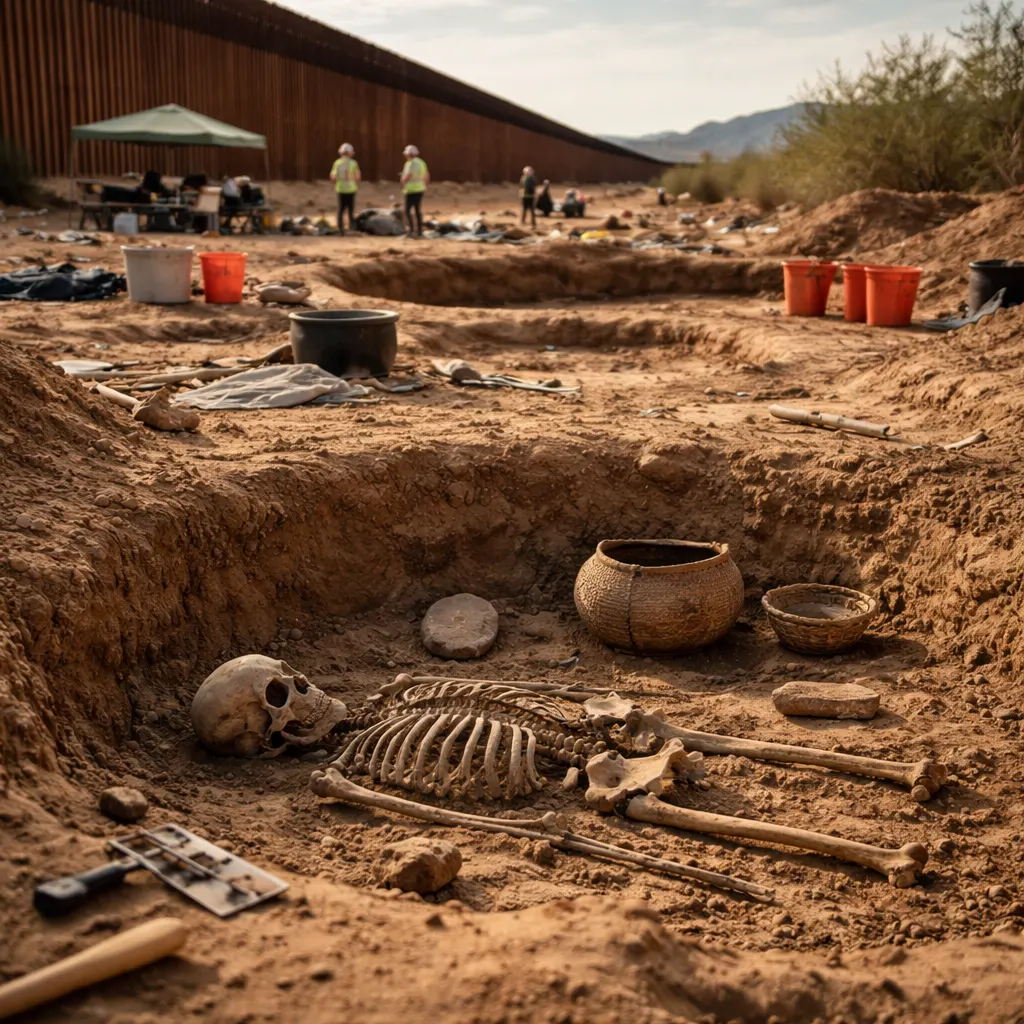
Native American remains were discovered on Sept. 8 in Organ Pipe Cactus National Monument during construction of a second border wall, according to ProPublica, which confirmed the previously unreported finding through the National Park Service. The agency said the University of Arizona verified the remains as human and consistent with tribal cremation practices. The discovery came just 15 days after 89-year-old Hia-Ced O'odham elder Lorraine Eiler publicly warned that bulldozers would disturb the final resting places of her family and tribal ancestors if wall construction moved forward.
The park service informed Eiler of the discovery through a cultural affairs specialist with the Tohono O'odham Nation and the Organ Pipe superintendent's office. An archaeologist found the remains near the base of a still-standing saguaro cactus in an area where Customs and Border Protection contractors had cleared a wide path of vegetation parallel to the international border. The University of Arizona's bioarchaeology curator, James T. Watson, analyzed the remains in the field and determined they were cremated in a manner matching precolonial practices in the region dating back 1,500 years. Eiler's family decided against immediate reburial, fearing ongoing construction will unearth more sites. Six days after the discovery, CBP was notified, and its cultural resource specialists examined the area but found no additional remains, the agency said.
The Native American Graves Protection and Repatriation Act requires agencies to halt any activity that led to an inadvertent discovery of Native American remains on federal land until tribal communities are consulted, with work suspended for at least 30 days. However, the Department of Homeland Security waived NAGPRA in 2019 when it set aside more than 40 environmental and cultural protection laws—including the National Environmental Policy Act, the Endangered Species Act, and the Clean Water Act—to accelerate border wall construction in Organ Pipe. The waiver authority, granted to DHS through the Real ID Act after the Sept. 11 attacks, has been invoked 66 times over two decades, with 60 instances occurring under President Donald Trump's administrations. A park service report from 2024 noted that a cemetery at Quitobaquito Springs in the monument holds the remains of at least two families, including Eiler's, with 34 graves. Across the region, remains of 5,500 ancestors that were displaced have been made available for return to the Tohono O'odham Nation, according to ProPublica's NAGPRA database.
The discovery reflects broader tensions between DHS and tribal communities in the Sonoran Desert. In April, border wall contractors bulldozed through the Las Playas Intaglio, a large, well-marked earthen etching believed to be at least 6,500 years old, which CBP called accidental. Soon after, the department awarded a $1.3 billion contract for a 62-mile border wall across the entire Tohono O'odham Nation reservation, prompting the tribe to sue in federal court and erect "no trespassing" signs. DHS has responded by deploying masked federal agents as escorts for work crews and conducting aerial surveillance of tribal members. The 2019 waiver for Organ Pipe remains in effect years after the original project's completion, and a second waiver issued last year by then-Secretary Kristi Noem exempts DHS from many of the same laws. Tucson-based lawyer Dinah Bear, who served 25 years as a senior attorney in the White House's Council on Environmental Quality, noted there's no end date to the waivers' effectiveness and nothing tying them to a particular project. U.S. Rep. Adelita Grijalva is preparing legislation to void existing waivers that have allowed DHS to disregard laws protecting tribal sovereignty and sacred sites, while construction continues across the border.