
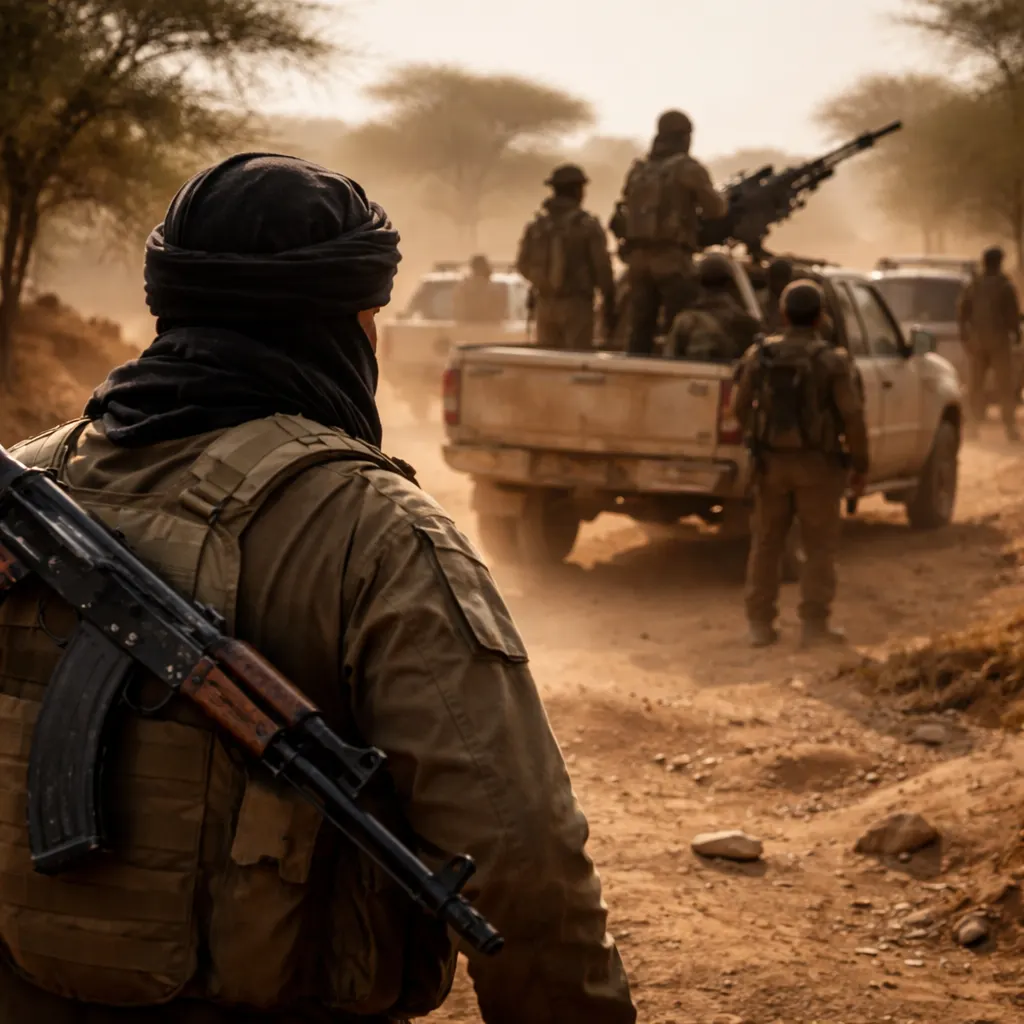
The Islamic State's affiliate in West Africa has evolved from a localized insurgency into a potentially significant international threat with growing capability to support attacks in Europe, according to a report published by the Hudson Institute in 2026. The analysis, written by researchers Paweł Wójcik and Lucas Webber, traces how the Islamic State's Sahel Province (ISSP) has built logistics networks stretching from Mali to Morocco and Spain, raising concerns about foreign fighter flows and external operations. The report argues that Europe, particularly Spain and Morocco, will likely face greater risk of violence directed or facilitated by ISSP in coming years.
ISSP's strength has grown dramatically since its formation in 2015, with UN estimates placing its force at 2,000–3,000 fighters by June 2024, according to the report. The Armed Conflict Location & Event Data Project documented a sharp rise in armed incidents involving the group, from a handful in 2017 to dozens in 2018–2019 to over 100 annually from 2020 onward. The Africa Center for Strategic Studies found that deaths in Mali and Burkina Faso tripled between January 2022 and August 2023 as ISSP and its rival al-Qaeda affiliate JNIM expanded their areas of operation. By May 2026, ISSP confirmed it had extended operations into northwestern Nigeria via the Niger border, a development the group had deliberately kept quiet to maintain operational security. Spanish and Moroccan authorities arrested a three-person Islamic State cell in March 2026 that was providing logistical and financial support to ISSP while the cell's leader reportedly planned lone-actor attacks in Spain.
The report finds that ISSP has developed governance structures modeled on the former Islamic State caliphate in Iraq and Syria, including tax collection, market management, and sharia enforcement through Hisbah morality police. According to the authors, Moroccan intelligence revealed in February 2025 that ISSP's founder, Abu Adnan Walid al-Sahrawi, had constructed an external operations wing before his death in a French airstrike in 2021, with a Libya-based commander subsequently managing what authorities called an "External Operations Committee." The report states that ISSP has claimed to distribute over 27,000 pamphlets on jurisprudence and creed alongside audio recordings for illiterate populations in its territory. Moroccan intelligence also disclosed that over 130 jihadists had left Morocco for Islamic State affiliates in the Sahel and Somalia in recent years as of January 2025.
The authors argue ISSP's growing threat stems from three factors: its integration with al-Furqan, a regional Islamic State office overseeing West African operations; coordination with the powerful Islamic State West Africa Province (ISWAP) in Nigeria; and repurposing of historical trans-Saharan smuggling networks for global operations. Military coups in Mali (2020–2021), Burkina Faso (2022), and Niger (2023) created security vacuums that allowed jihadist expansion, the report explains. The expulsion of French forces from Mali in 2022 and U.S. forces from Niger in 2023 removed crucial intelligence and surveillance capabilities, while new military regimes embraced indiscriminate violence against ethnic minorities suspected of jihadist ties, worsening grievances against the state. According to the researchers, Libya serves as a multifaceted logistics hub where Islamic State cells engage in dollar trading, TikTok recruitment, and smuggling jihadists between the Middle East and Africa. The report notes that ISSP's January 2026 attack on Niamey's airport, which destroyed several aircraft, appeared to show coordination with ISWAP based on fighter accents in attack videos and the use of armed drones.
The report recommends sustained counterterrorism focus to contain ISSP's transnational ambitions, highlighting the Morocco-Spain bilateral relationship as the most important mechanism currently preventing attacks, with 31 joint operations since 2014 resulting in 150 arrests. The authors argue U.S. airstrikes in northwestern Nigeria in December 2025 demonstrate continued capacity for targeted action despite loss of the Agadez base, though they stress any long-term strategy must address Libya's role as a logistics corridor. The researchers conclude that while ISSP isn't yet an international threat comparable to the Islamic State at its mid-2010s peak, "the barriers to broader internationalization are lower than they were a few years ago" and foreign fighters moving across African networks can't be guaranteed to remain on the continent. The question, they write, is whether counterterrorism architecture can maintain effectiveness as the threat matures—an answer rooted in policy choices and collective understanding of this evolving risk.