
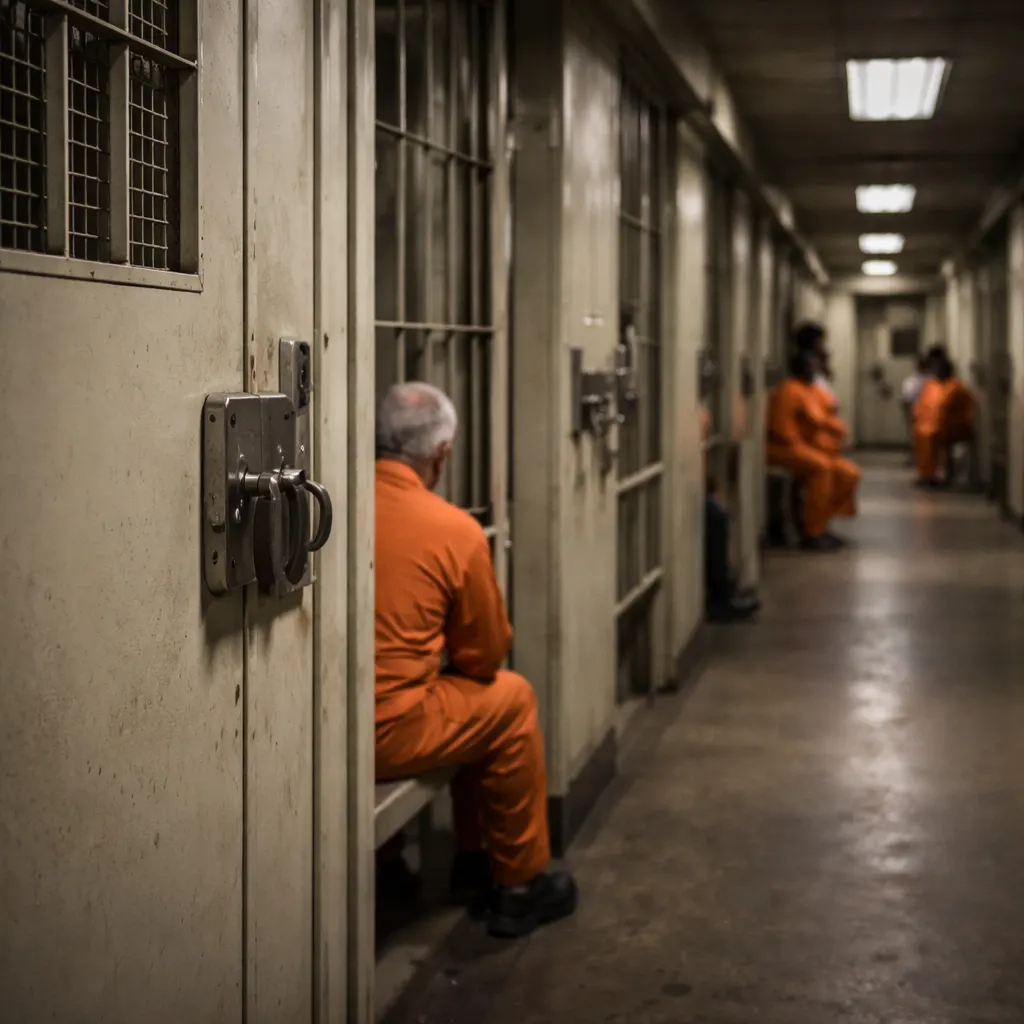
Wisconsin locked up a record 2,899 people in state prisons for Operating While Intoxicated (OWI) offenses in 2024, enough to fill the state's two largest prisons, according to a new analysis from the Wisconsin Policy Forum. The report, published in 2025, reveals that the state's OWI prison population has more than quadrupled since 2000, when just 667 people were incarcerated for these offenses. This surge has been driven by tougher penalties for repeat offenders and a sharp increase in prison admissions, even as overall OWI arrests have fallen by more than half over the same period.
The report documents dramatic shifts in who's being imprisoned for drunk driving. Adults aged 55 and older have seen their OWI incarceration rate more than triple since 2010, reaching 4.2 per 10,000 residents in 2024. By that year, nearly twice as many adults over 55 were imprisoned for OWIs as adults under 35. The racial makeup has also changed significantly: Black residents' OWI incarceration rate hit 8.3 per 10,000 in 2024, more than double what it was in 2010 and now twice the rate for white residents. American Indian adults faced the highest rate at 18.4 per 10,000, four times the white population's rate. Women now make up 11.4% of those incarcerated for OWIs, up from 6.4% in 2000, with their incarceration rate rising nearly 50% since 2010. Meanwhile, OWI offenders now represent 11.8% of Wisconsin's total prison population, up from just 3.3% in 2000.
Prison admissions for OWI offenses reached an all-time high of 1,313 in 2023, making up 16.2% of total admissions that year, even as total arrests for drunk driving dropped to 18,637 in 2025 from 36,726 in 2002. The report finds that sentences also lengthened in the decade before the pandemic, with 44.1% of those admitted in 2018 receiving sentences longer than two years. Wisconsin law enforcement made 31.1 OWI arrests per 10,000 residents in 2024, 50% higher than the national average of 21.5. Black Wisconsinites were arrested at a rate of 46.0 per 10,000, compared to 28.7 for white residents. Between 2015 and 2023, 1,716 Wisconsinites died in crashes involving a driver with a blood alcohol concentration above 0.08%, with alcohol-involved crashes accounting for 31% of all traffic fatalities in 2023, above the national rate of 29%.
The Wisconsin Policy Forum's analysis traces the rise in OWI incarceration to two distinct periods. The first steep climb occurred from 2000 through 2009, potentially influenced by the 2003 reduction in the legal blood alcohol limit from 0.10% to 0.08%. After plateauing through the 2010s, a second sharp increase took place from 2020 to 2024, which the report attributes to a backlog of court cases during the pandemic, behavioral changes, and policies that increased penalties for fourth and subsequent offenses. Wisconsin stands out nationally for treating first OWI offenses as civil rather than criminal matters, making it the only state where a first offense alone never results in jail time. However, for fourth and subsequent offenses, Wisconsin's penalties are among the most severe in the region, with escalating charges that continue through a tenth offense. The report notes that while fewer Wisconsinites are drinking overall, those who do drink heavily are consuming significantly more than before, with binge drinking and high-intensity drinking on the rise, particularly among older adults and women.
The report concludes that Wisconsin faces these trends in a context of "a long-standing culture of binge drinking" that costs the state substantially through lost productivity, criminal justice expenses, and healthcare costs. The authors note that "in tandem with incarceration trends, this suggests Wisconsin may be making fewer arrests for less severe drunk driving incidents but a greater number of arrests for more severe or repeat offenses." Importantly, the Wisconsin Department of Transportation found that 64% of alcohol-impaired drivers in fatal and serious injury crashes in 2017 had no previous OWI history, yet recent policy changes have focused primarily on repeat offenders. The report lays out potential policy options for lawmakers who want to address drunk driving without further increasing incarceration, including raising alcohol taxes, expanding OWI courts, improving substance use programs in prisons, lowering the legal BAC limit to 0.05%, and enhancing alternative transportation options. With fatal crashes involving alcohol remaining steady at more than 170 lives lost each year and prison overcrowding worsening, the report makes clear that the status quo carries steep costs of its own.