
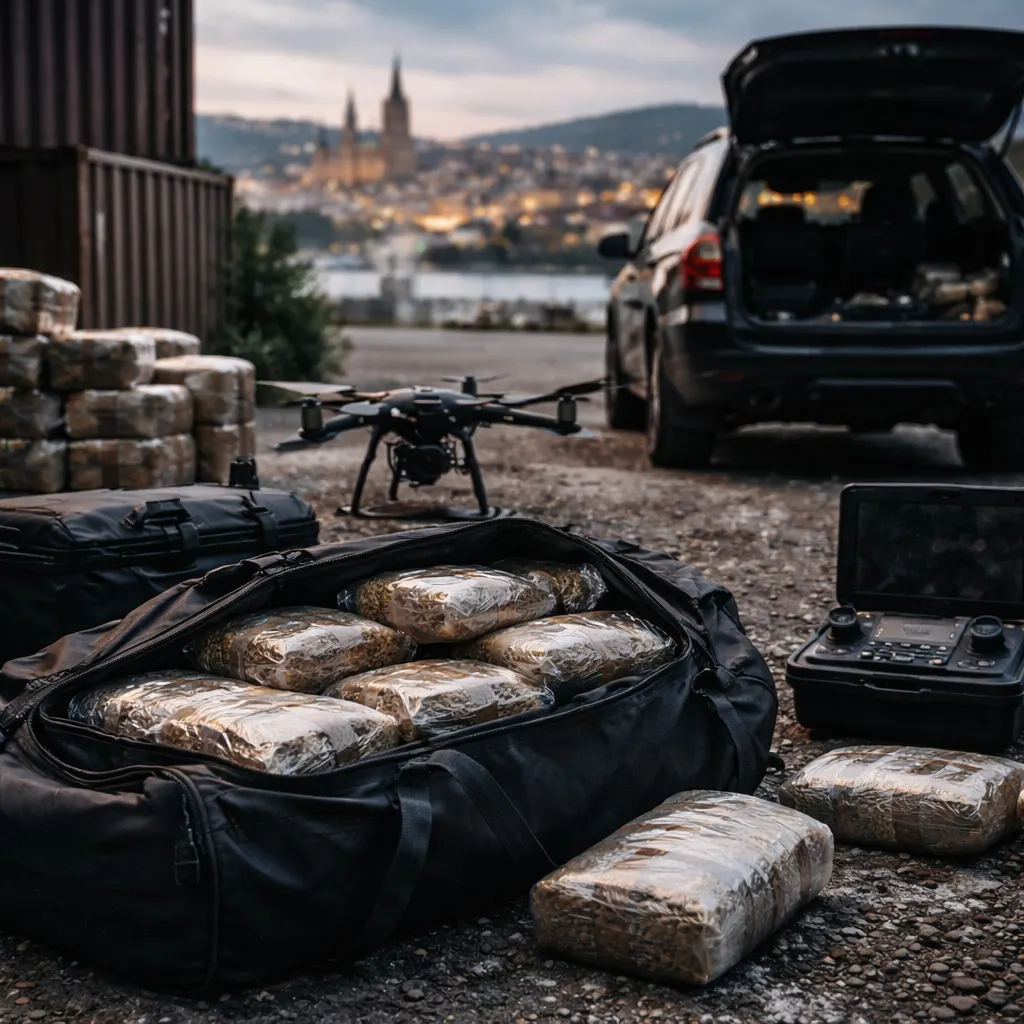
A new geopolitical realignment across Latin America is forcing major drug cartels to abandon traditional trafficking corridors and shift toward European markets, drone warfare, and legitimate business fronts, according to a report published by the Texas Public Policy Foundation. The analysis describes how the Shield of the Americas coalition—a regional intelligence-sharing alliance that excludes Mexico, Brazil, Cuba, and Nicaragua—has created what the report calls the Donroe Doctrine in action: U.S. dominance applied to migration control, Chinese influence, and narcotics trafficking. The combined pressure is reshaping how the Sinaloa Cartel, CJNG, and Colombian and Venezuelan networks operate.
Cuba's collapse as a functioning state has eliminated a critical logistics hub for trafficking organizations. The report notes that roughly one-fifth of Cuba's population has departed since 2021, the electrical grid fails regularly, the peso holds no value, and the government focuses primarily on imprisoning dissidents. Secretary of State Marco Rubio has characterized the regime as already fallen, and the report concludes that Havana no longer serves as a dependable partner for intelligence or supply chain coordination. Meanwhile, Mexico's President Claudia Sheinbaum maintains direct communication with Washington but refuses to join the regional coalition, citing concerns about U.S. military action on Mexican territory. If Flávio Bolsonaro prevails in Brazil's runoff election, Sheinbaum would lose her last major leftist ally in the region, raising the political price of providing safe haven to cartel leaders.
Cartels have responded by treating Europe as their primary market for synthetic drugs, the report finds. In August, Spanish authorities dismantled a CJNG-linked operation that transported roughly two and a half tons of methamphetamine hidden in vanilla extract and processed it at a laboratory in Lleida. Earlier Sinaloa shipments concealed inside marble statues met similar fates. Mexican authorities have arrested groups of former Colombian soldiers—nine out of 12 in one Michoacán case were ex-military—following mine attacks that killed Mexican troops. These individuals are hired for their expertise in ambush tactics, explosives, and drone operations, not as loyalists to any former government. French and U.S. defense sources have documented Mexican and Colombian nationals entering Ukraine's International Legion with fraudulent documents, seeking assignment to First-Person View drone units. One individual using the alias Águila-7 drew instructor suspicion in Lviv for technical skills inconsistent with a supposed humanitarian volunteer. A prosecutor's office in Tijuana has already suffered a strike from nail-packed drones, and border sightings number in the tens of thousands. The February closure of El Paso airspace, the report notes, represented public acknowledgment of an operational problem that existed for years.
The report projects three major shifts as cartels adapt to intensified pressure. First, organizations will expand into seemingly legitimate enterprises: avocado orchards, fuel theft, mining extortion, chemical import companies, European logistics firms, and real estate laundering. Synthetic drug production can relocate to any jurisdiction willing to ignore it, unlike coca cultivation tied to specific geography. Second, violence will intensify in contested territories. Leadership disruption and route competition historically trigger spikes in ambushes rather than peaceful consolidation. Armored vehicles, landmines, and FPV drones reduce the cost of eliminating rivals and local police, with Michoacán, Jalisco, and border cities expected to see escalation. Third, cartels will invest more heavily in bribing and extorting officials on both sides of the border. When geographic sanctuaries disappear, a compromised port inspector, financial regulator, or federal agent becomes far more valuable.
The ultimate test, according to the report, is whether the Shield of the Americas coalition can raise operational costs faster than cartels and their corrupted political sponsors can adapt. The organizations are already trading some territorial control for access to laboratories, drone technology, and officials who can be purchased or intimidated. Latin America's electoral shift toward conservative governments, the U.S. maritime interdiction campaign, European methamphetamine seizures, the foreign-fighter drone pipeline, and Mexico's shrinking circle of diplomatic allies have created an environment where trafficking networks operate as businesses under sustained pressure. The question isn't whether cartels will adapt—they already are—but whether the coalition can maintain the squeeze.