
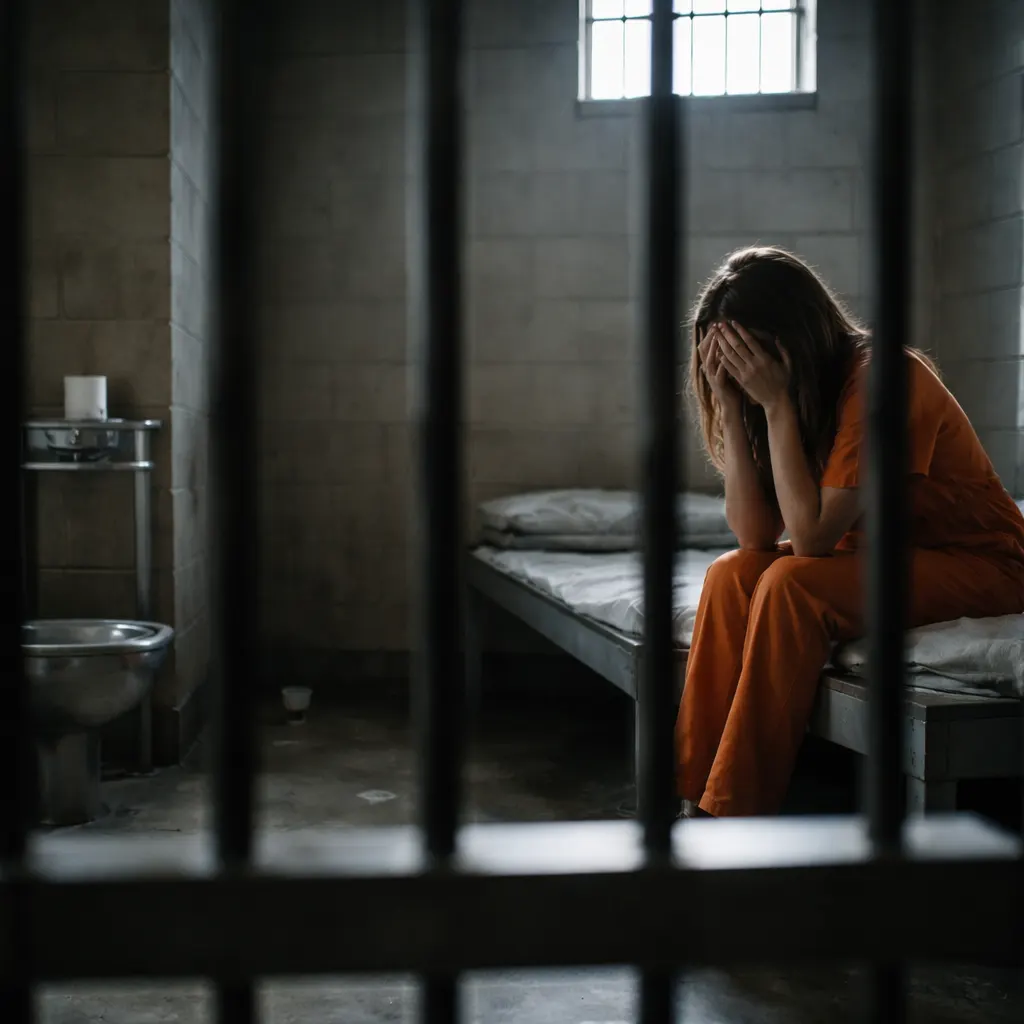
A nonprofit attorney examining jail records in Caddo County, Oklahoma found more than 140 people booked solely on cost arrest warrants between November 2023 and March 2026, with one woman held for 95 hours after being arrested the Friday before Martin Luther King Jr. Day in January 2025. The records, documented by attorney Ed Wunch in a review reported by Oklahoma Watch on October 7, 2026, show the county has continued jailing people over unpaid court fines and fees despite a 2023 state law designed to curb the practice. Average custody time was 33 hours, though several people spent more than 72 hours behind bars, and the typical payment within five days of booking was roughly $24.
The findings come as Oklahoma lawmakers struggle to assess whether counties have adopted new protections mandated by House Bill 2259, which took effect in November 2023 and aimed to make debt collection more efficient while preventing unnecessary arrests. Preliminary data from the Administrative Office of the Courts shows Tulsa County carried out just two cost arrest warrants during fiscal year 2026, while Oklahoma County stopped jailing people over court costs in 2019. In Caddo County, court clerks issued cost or willfulness hearing summons less than 14 days before hearing dates in 15 cases, falling short of a two-week notice requirement in state law. Missing a cost hearing can trigger an arrest warrant, and advocates say the compressed timeline makes compliance difficult for people who've moved or lack reliable transportation.
"There are so many things I'm finding in these records that are just pretty horrendous, to think that this is theoretically the justice system," Wunch said, adding that even brief jail stays for unpaid court costs can result in job loss and make future payments harder. Oklahoma County District Judge Natalie Mai calculated the average cost of a jail stay at $66.49 per day in April 2024, raising questions about taxpayer expense. A report issued last week by Oklahomans for Criminal Justice Reform noted that rural counties tend to assess more fines and fees than urban areas, with policy counsel Michael Olson writing that "counties with weaker tax bases lean harder on criminal legal system revenue, and that dependency tracks directly with more warrants, more enforcement and more incarceration."
The lack of comprehensive data prompted lawmakers to pass House Bill 3321 in May, directing a Cost Administration Implementation Committee to collect information on arrests tied solely to cost warrants and detention lengths. The committee must deliver a preliminary report by December 31, with a more detailed annual report due November 15, 2027. The Oklahoma State Bureau of Investigation is finalizing software updates that will allow sheriff's offices to accurately report cost arrest bookings, though committee chair Timothy Tardibono warned the initial report may include only one or two months of data. Rep. Mike Osburn, who sponsored the legislation and will leave office in November, said he's confident the Legislature will act if the data shows frequent arrests, noting that jailing someone for unpaid court costs "seems counterintuitive" because "if they are arrested and they're in jail, they're definitely not working, so you're definitely not getting paid."