
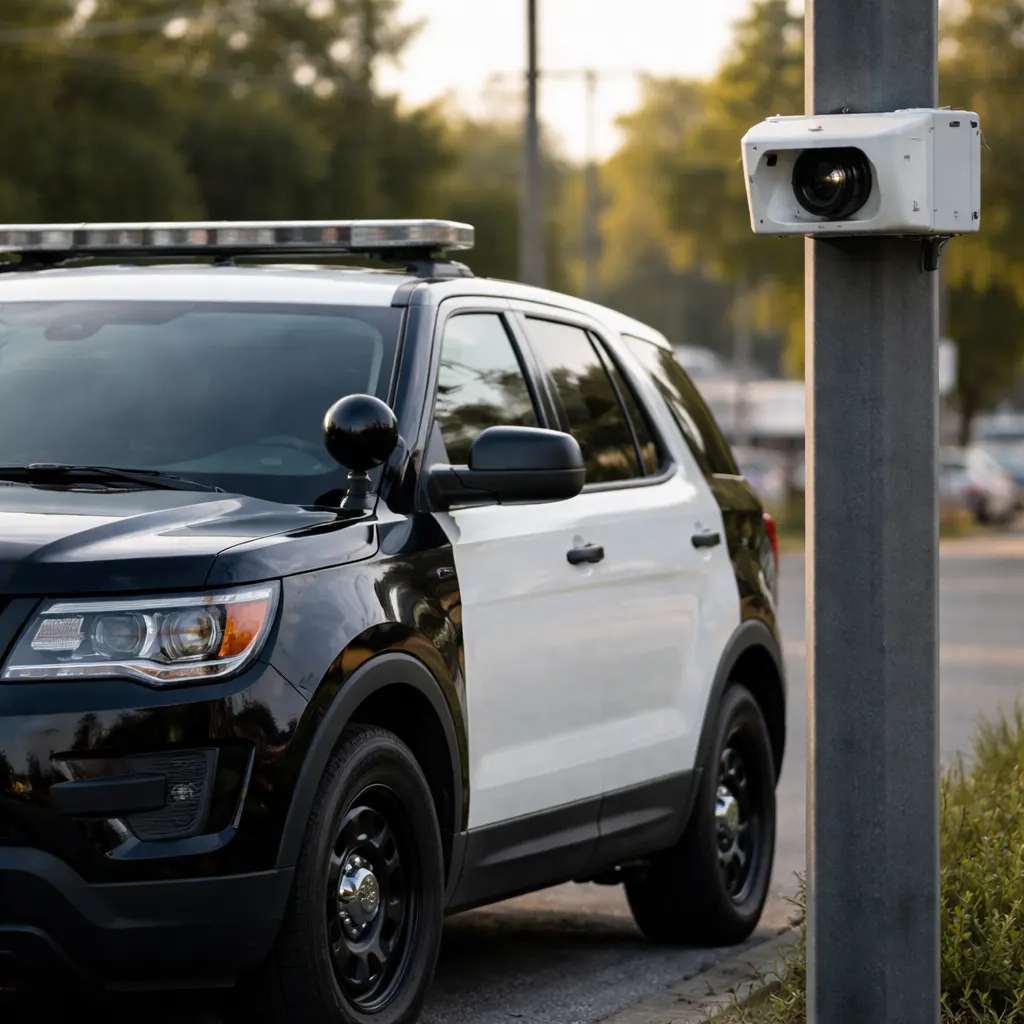
Fall River police officers conducted more than 15,000 searches of Flock license-plate cameras in 2025, frequently entering vague or nonsensical explanations for their queries, according to an investigation published October 6, 2026 by The New Bedford Light. The examination of five years of usage records uncovered patterns similar to problems identified in New Bedford and other departments: minimal oversight as officers documented their search reasons with single letters, periods, or what appeared to be random keystrokes like "mnl;k." The findings emerge as police departments nationwide face growing scrutiny over privacy, misconduct, and accountability issues tied to Flock technology, which doesn't require reasonable suspicion or probable cause for searches.
More than half of Fall River's 15,000 searches in 2025 were labeled simply "investigation" or shortened versions such as "inv," the data shows. Earlier years followed similar trends, with most searches tagged with minimal detail. Officers entered search reasons including single letters (x, y, l, h, a, z, c), "gfgf," "Mmmmm," "123," and in some cases just a period—nearly all without accompanying case numbers. One officer used the code "99" more than 1,000 times last year as his search reason; another typed "inv" repeatedly but with varying numbers of Vs, sometimes more than a dozen, creating a vertical wave of text when scrolling through records. From 2021 through 2025, fewer than 3% of Fall River's searches included case numbers. In the first half of 2026, under 10% had case or call numbers, but by August that figure jumped to roughly 70% following new policies. The number of officers accessing the system grew from about 15 in 2021 to nearly 80 by 2026.
Fall River Acting Police Chief J.T. Hoar, who took the position in April, called the department's original policy "deficient." That policy was written in 2012—years before Flock existed—for a license plate reader mounted on patrol cars, and it remained in place until January when a revised version was implemented. "I think ultimately the public is going to want accountability on this," Hoar said. "You have to have a good policy in place." Dave Maass, director of investigations for the Electronic Frontier Foundation, argued that police departments are trading privacy for convenience. Flock created a system that's difficult to audit because it encourages frequent searches, even from officers' phones, he explained. "When you have a police chief saying it's unreasonable to go through [it] line by line, what he is saying is it is unreasonable for him to ensure that every single one of these [Flock searches] was legitimate," Maass said.
Critics contend that vague entries like "investigation" make meaningful oversight nearly impossible, and many departments haven't demanded substantial documentation from officers conducting searches. That's starting to shift. Flock announced in August that case numbers will be mandatory for all searches by year's end, with exceptions for emergencies. The company also introduced a drop-down menu for search reasons late last year, eliminating typos and single-character inputs, though Maass warned these menus give the "veneer" of legitimacy and can still be misused—as happened when a New Bedford officer selected "traffic infraction" hundreds of times to track an ex-girlfriend. Fall River now restricts sharing to Massachusetts, Connecticut, and Rhode Island after previously allowing nationwide access, and the department banned searches for immigration purposes in December. Hoar said he's reviewing logs daily with a captain and plans another policy update, searching for the "sweet spot" for audit frequency between too often and too rare. Despite the oversight gaps, he maintains Flock is valuable for solving crimes—from robberies and shootings to illegal dumping—though at least one area resident appears to disagree: three of Fall River's 41 cameras were allegedly vandalized over the summer, with wiring pulled and connectors broken, and they remained offline as of last week.