
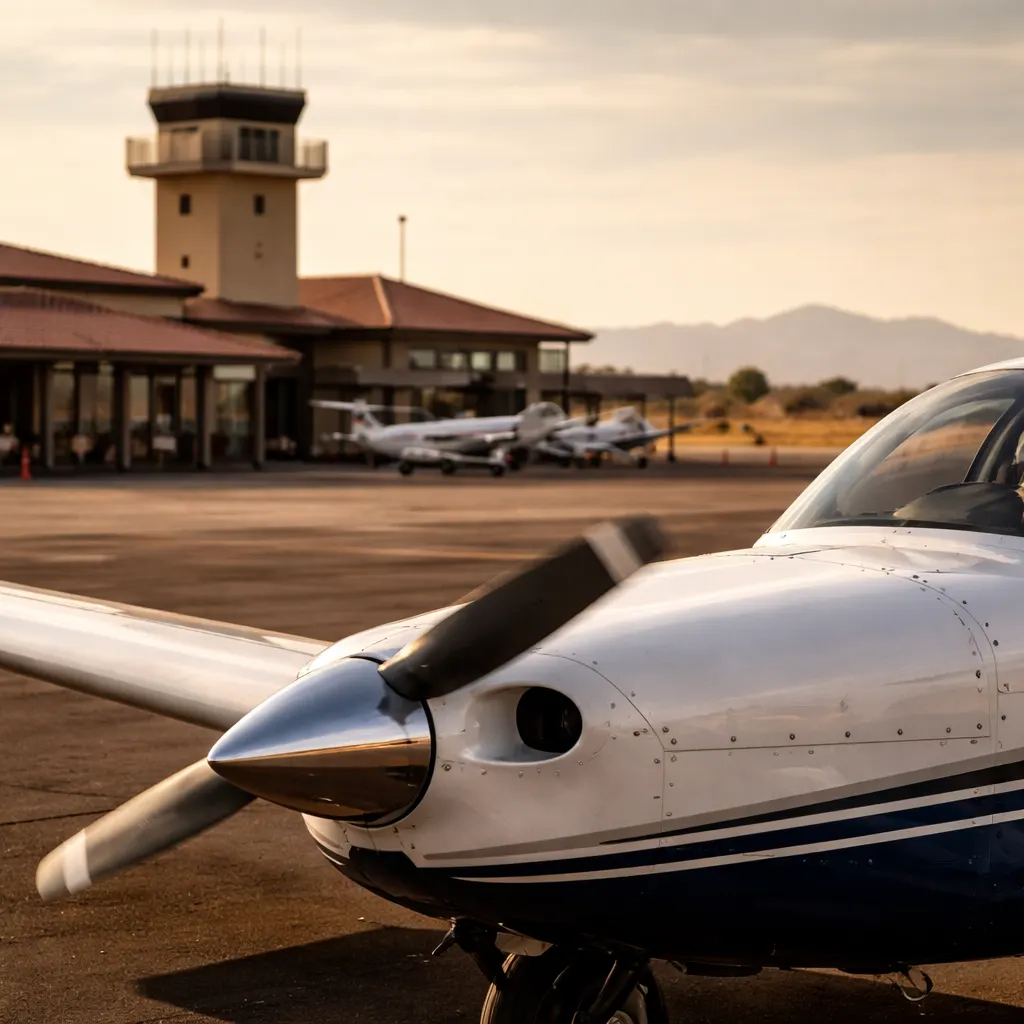
The city of Mesa has revised its controversial landing fee proposal for Falcon Field airport, but the Aircraft Owners and Pilots Association remains deeply concerned about the new structure. Under the updated plan released October 9, aircraft owners would pay $4.14 per 1,000 pounds of their plane's maximum landing weight—working out to $10.35 per landing for a typical Cessna 172 or Piper Archer with a 2,500-pound weight limit. The association argues the city is using "creative accounting" to justify fees that aren't federally required, while Mesa says the charges are needed to cover a multimillion-dollar airfield shortfall and fund deferred maintenance.
The revised fee structure differs sharply from the original plan approved by Mesa's city council in March, which has been delayed multiple times and is currently set to take effect in late October. That earlier version would have charged aircraft based at Falcon Field and weighing 6,000 pounds or less $20.35 per landing after their first 10 free landings each month, while transient aircraft of the same size would pay $24.35 per landing. The new proposal eliminates the distinction between based and transient planes and removes the free landings for based aircraft entirely. The city's financial justification, published October 14 after initially missing an October 12 deadline, divides the airport's operations into three separate cost centers. By separating runways and taxiways from city-owned hangars, tiedowns, and ground leases—the airport's biggest revenue generators—Mesa claims airfield operations produce only $400,000 in revenue against $3.1 million in costs, creating a $2.6 million gap. The city then distributed this net airfield cost across the estimated weight of every operation over a year to calculate the per-pound fee.
"This creative approach to accounting by engineering separate cost centers all but guarantees a landing fee, and is highly misleading," AOPA General Counsel Fernando Campoamor said in a statement released October 13. He compared the accounting method to separating an elevator in an apartment building into a different cost center and charging separately each time someone uses it, adding that "any claim or suggestion that the FAA requires this creative accounting approach is flat-out wrong." The association acknowledged that Mesa recognized the original fee structure wouldn't work and returned to reconsider it, but Campoamor said the new structure raises additional concerns even as the group continues reviewing the city's newly released methodology.
The dispute centers on whether Mesa's cost-center approach is legitimate under federal grant requirements or an accounting maneuver designed to create a deficit where none exists. The city's report shows Falcon Field brought in $5.6 million in revenue—including federal and state grants—during fiscal year 2024-25 but spent only about $5 million, leaving a $600,000 surplus. Mesa argues more money is needed to pay for deferred maintenance and essential capital improvements. But AOPA counters that isolating the runways and taxiways and declaring a multimillion-dollar shortfall is a choice rather than a necessity, noting the report mentions past grants but says nothing about pursuing additional grants for capital projects—the way most airports fund such work. The original fees triggered at least four Part 13 complaints to the FAA, sparking an ongoing investigation, and two flight schools at the airport filed both a complaint and a federal lawsuit against the city. AOPA, the Arizona Pilots Association, and the Aviation Safety Advisory Group of Arizona jointly wrote to the FAA in August arguing the city hadn't provided sufficient financial justification and that the landing fees appeared to be an attempt to regulate flight training rather than address genuine airport financial deficits.
The revised landing fee proposal, which Mesa says would "further ensure compliance with federal regulations," is scheduled for consideration by the city council on December 8. AOPA will continue reviewing the city's justification against federal grant assurance requirements and plans to provide an update once that evaluation is complete. The question now is whether the FAA's ongoing investigation will find Mesa's new accounting method complies with federal obligations—or whether the agency will side with pilots and flight schools who say the city is manipulating its books to impose unnecessary fees.