
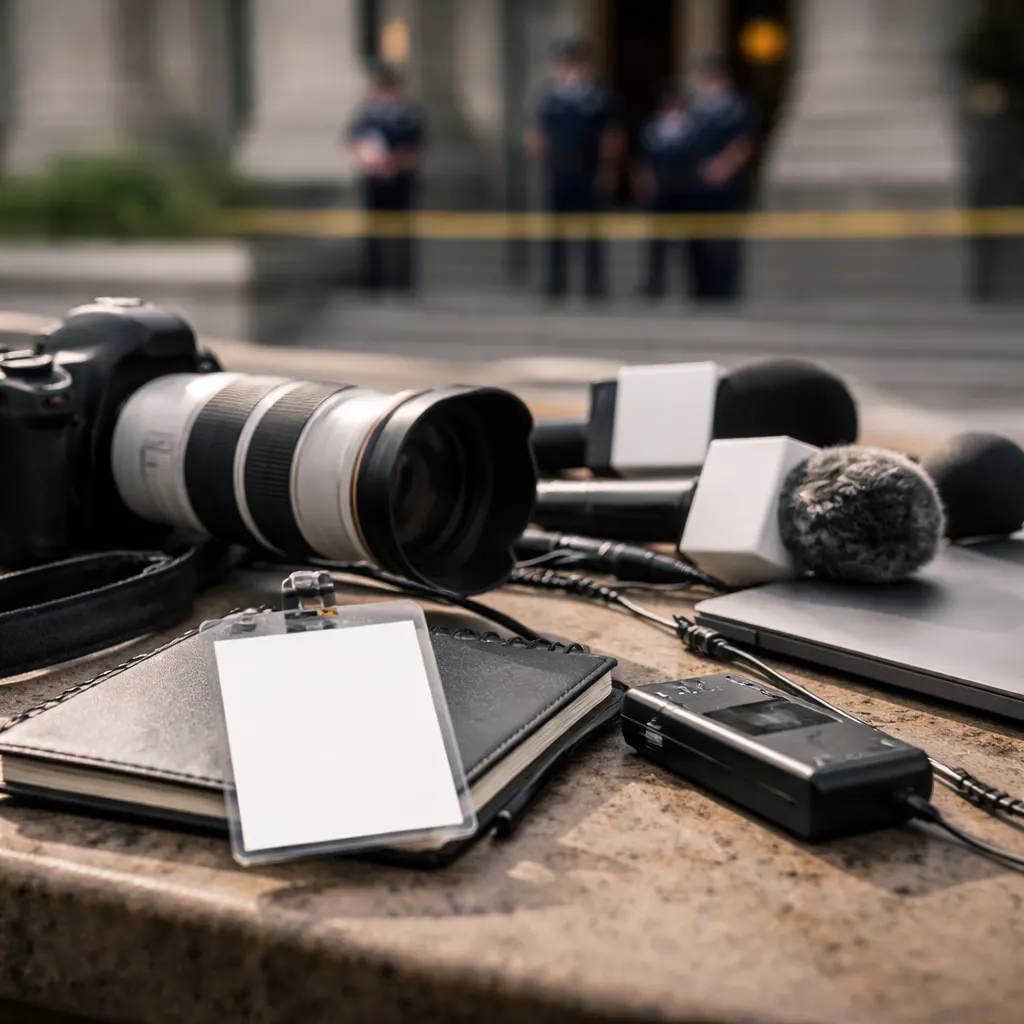
Journalists covering state and local government are being turned away from press conferences, stonewalled by politicians and excluded from spaces they previously accessed, according to a report published by Poynter this week. The restrictions mirror the White House's recent ban of CNN, Politico and MS NOW, but they've been playing out quietly in state capitols and city halls across the country for years. Longtime statehouse reporters say the relationship between the press and government has gotten significantly worse, with some pointing to 2016 and President Donald Trump's first term as the starting point, while others cite the pandemic.
The number of full-time local journalists has dropped 75% since 2002, according to a 2026 study by Muck Rack and Rebuild Local News cited in the report. In Kansas, committee hearings on major bills that once drew at least half a dozen reporters now sometimes have only one journalist in the room. The Miami Herald laid off its city hall reporter last month, leaving the city with fewer traditional outlets covering local government. When Sherman Smith started covering the Kansas Statehouse full-time in 2018, the press corps was far larger, he told Poynter. Independent journalists have filled some gaps left by shrinking legacy outlets, but they face their own obstacles as officials question whether they qualify as legitimate press.
According to the report, public officials have implemented specific policies to limit journalist access in recent years. In January 2025, Kansas House Speaker Dan Hawkins banned reporters from the House floor, forcing them to stand on the back wall where they could observe but couldn't take notes or approach legislators for interviews. Kansas House Republicans also closed their caucus meetings to the press, giving them a private space to discuss bills so they can cast votes without explaining their decisions. State Sen. Virgil Peck proposed raising rent for statehouse offices from $100 per year to $1 per square foot per month, which would have increased annual costs for six outlets collectively to $16,000. In Utah, Bryan Schott lost his press credentials after leaving The Salt Lake Tribune to launch Utah Political Watch, with legislative staff telling him "credentials are currently not issued to blogs, independent or other freelance journalists." Laura Belin of Bleeding Heartland applied for Iowa House credentials for five years before finally receiving them only after filing a federal lawsuit in January 2024.
The report finds that the decline of local journalism, the rise of social media and intensifying political polarization have emboldened leaders to shut out local reporters. With fewer journalists covering state and local politics, officials become less accustomed to interacting with the press and more comfortable bypassing traditional media entirely. The restrictions don't stop journalists from reporting, but they make stories take longer and cost more. Public records requests can drag on for months or more than a year, and some stories get shelved indefinitely when no one will talk and documents can't be obtained. When officials restrict access based on coverage they dislike, it's ultimately the public that loses information about the people governing them, journalists say. As David Villano of the Coconut Grove Spotlight put it, officials who refuse to speak to reporters are "basically choosing not to communicate to your constituents."