
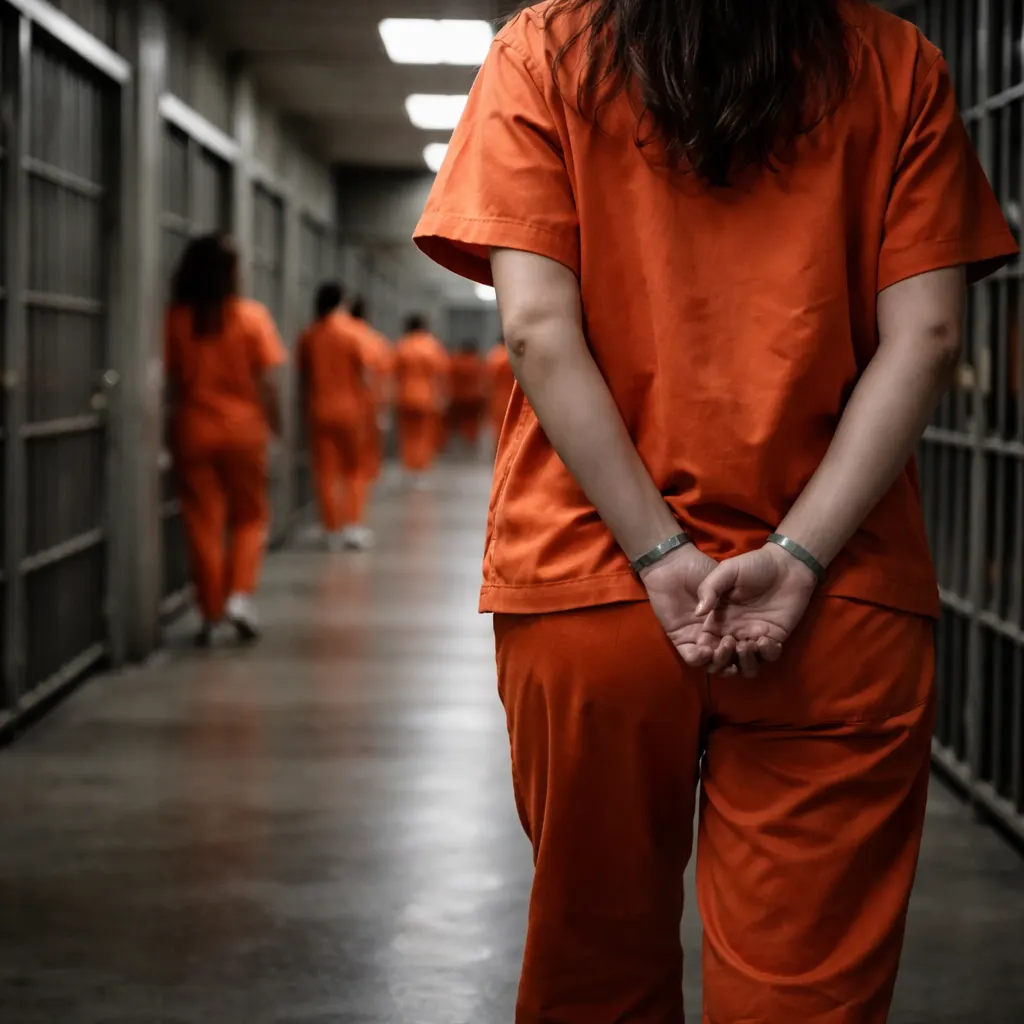
An estimated 198,800 women and girls are currently incarcerated across the United States, held in state prisons, federal prisons, local jails, juvenile facilities, immigration detention centers, and other correctional facilities, according to a report published October 14, 2026, by the Prison Policy Initiative. The report provides the first comprehensive breakdown of where women are confined and why they're there, revealing that jails—not prisons—hold the largest share of incarcerated women, with serious consequences for their health and families.
Local jails physically confine more than 92,000 women, a number higher than the roughly 99,000 women held in state and federal prisons combined. About 61% of women detained by local authorities in jails haven't been convicted of any crime and are awaiting trial, the report states. Among convicted women, 26% are serving their sentences in jails rather than prisons, compared to just 8% of all incarcerated people with convictions. Women make up roughly 25% of all individuals booked into jail annually. Over 5,000 girls are confined in juvenile justice facilities, immigration shelters, or adult jails and prisons, with nearly one in four girls in the juvenile system held for non-criminal violations like probation infractions or status offenses such as running away or truancy. Black girls represent 37% of all girls in juvenile facilities despite comprising just 16% of girls nationwide under age 18.
The incarceration data is just one slice of a much larger system of control. The report finds that 198,800 incarcerated women represent only 18% of the 1.02 million women under some form of correctional supervision nationwide. Nearly three-quarters of women under correctional control—about 740,000—are on probation, while roughly 80,000 are on parole. An estimated 7,700 women and girls are held in immigration detention by ICE, and about 2,900 women are involuntarily committed to state psychiatric hospitals and civil commitment centers due to underlying criminal charges. Authors Wendy Sawyer and Brian Nam-Sonenstein write that women in state prisons report alarming rates of childhood hardship: 12% experienced homelessness before turning 18, 19% spent time in foster care, and 43% came from families receiving welfare or public assistance. More than half of women in state prisons (58%) are parents of minor children, and they're more likely than men to have been single parents living with their kids before imprisonment.
The report explains that women's overrepresentation in jails stems from two interconnected problems: their inability to afford bail and the types of offenses for which they're convicted. The typical bail amount equals a full year's income for women, who have lower earnings than incarcerated men, making pretrial release financially impossible for many. After conviction, women face proportionally more sentences for property and drug offenses and fewer for violent crimes compared to men, leading courts to impose shorter jail sentences rather than longer prison terms. But jails prove especially harmful environments for women. Women die at higher rates than men in jails, with drug and alcohol intoxication deaths occurring at twice the rate, and suicides among jailed women increased nearly 65% between 2000–2004 and 2015–2019. Jails also provide fewer services than prisons, charge phone rates at least three times higher, and restrict mail more severely—barriers that hit particularly hard given that 80% of women in jails are mothers, most of them primary caregivers.
The authors argue that mass incarceration has ensnared vulnerable women by treating the criminal legal system as the default response to poverty, homelessness, mental illness, and drug use rather than investing in healthcare and housing. Women in state prisons report substance use disorders at a rate of 58% and mental health problems at 76%, yet just 47% received substance use treatment and 43% received mental health care while incarcerated. The report emphasizes that effective reform can't exclude violent offenses, which account for nearly one-third of women's incarcerations, especially since many survivors of domestic and sexual abuse have been imprisoned for violent acts committed in response to gendered violence. Black and American Indian or Alaska Native women remain consistently overrepresented in prisons, and one-third of incarcerated women identify as lesbian or bisexual, facing longer sentences and higher solitary confinement rates than heterosexual peers.
Looking ahead, the report calls for policy discussions to focus on changes that will deliver the greatest impact rather than the easiest wins, noting that probation—often billed as an alternative to incarceration—frequently delays rather than prevents imprisonment. One-third of women in state prisons were on probation when arrested, undermined by unrealistic conditions like steep fees women can't afford and meeting requirements that conflict with childcare duties. The authors also highlight new threats: 82% of women on probation or parole live in states that both restrict abortion and impose travel restrictions as standard supervision conditions, potentially blocking access to reproductive care in the post-Roe landscape. With nearly 2.5 million women and girls released from prisons and jails each year, the report concludes that ending mass incarceration requires addressing the unique pathways that funnel women into the system and the compounding harms that trap them there.