
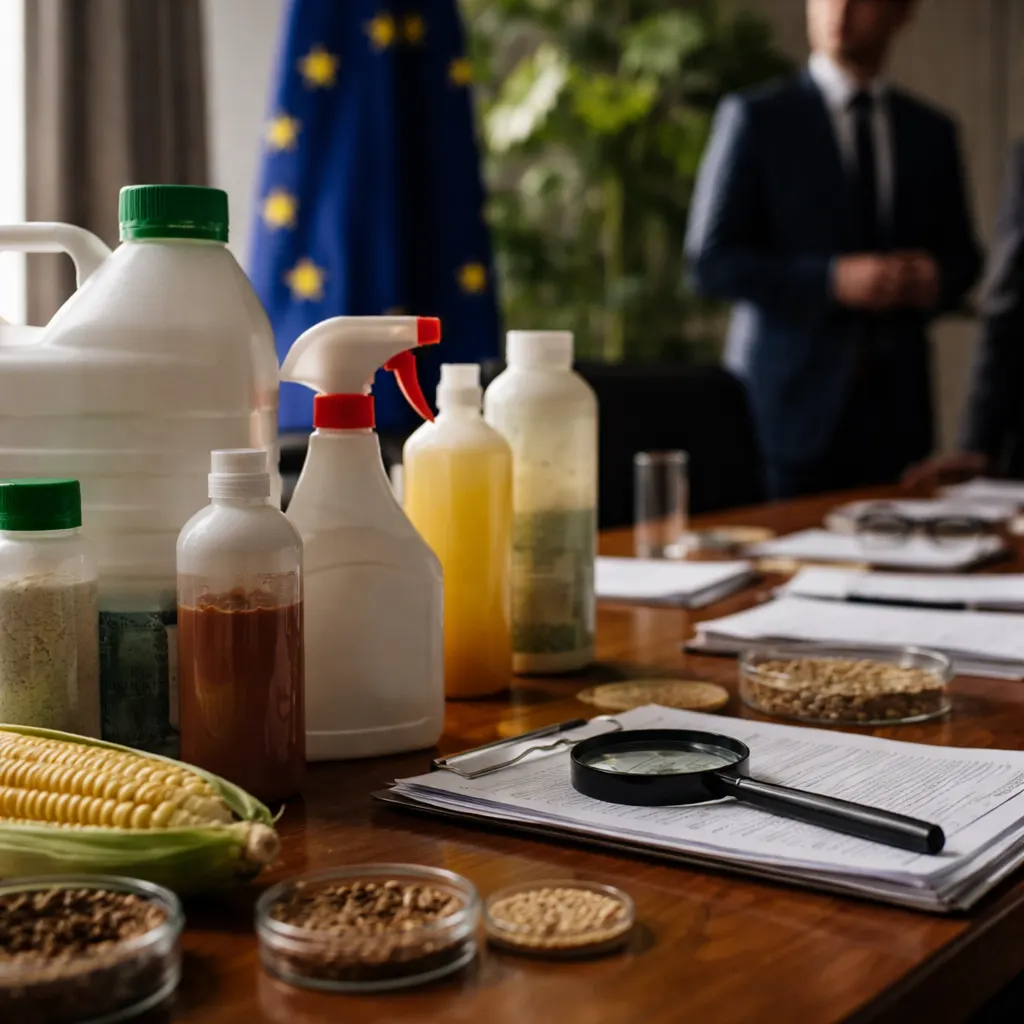
The European Commission is planning to significantly ease approval rules for pesticides, including a proposal to eliminate regular safety reviews for nearly all agricultural chemicals currently on the market. The controversial plan, presented late last year as part of a broader regulatory simplification package, would scrap the current system that reassesses pesticide safety for human health and the environment ten years after introduction and every fifteen years thereafter. For the handful of substances still subject to review, the Commission itself would decide when reassessments occur. The proposal also doubles the grace period during which farmers can continue using banned substances from eighteen months to three years, and allows harmful chemicals to remain available if a prohibition would damage crop yields.
Pesticide manufacturers and their lobby groups played a substantial role in shaping the Commission's approach, according to research by Corporate Europe Observatory, a lobbying watchdog. Through emails, presentations, and meetings with European officials, industry groups CropLife and Copa-Cogeca advocated against periodic reassessments and opposed banning substances that might affect harvests. The Commission's final proposal closely mirrors these industry requests. The stated goal is to reduce the workload of assessment agencies like the European Food Safety Authority (Efsa) and the Dutch College for the Authorization of Plant Protection Products and Biocides (Ctgb), freeing up capacity to evaluate newer, more sustainable alternatives. Approvals for such green pesticides can currently take ten to fifteen years due to backlogs, and the proposal gives them "priority" status. Agricultural organizations have complained that farmers face an "empty toolbox" as many chemical pesticides have been withdrawn from the market after reassessments revealed previously unknown harmful effects.
More than 500 scientists signed an open letter calling for an impact assessment of the plan, which the Commission did not conduct despite the proposal's sweeping nature. A group of Dutch researchers analyzing the proposal at the request of parliament concluded the changes would not "lead to accelerated innovation and approvals." Martina Vijver, a professor of ecotoxicology at Leiden University who authored the study and helped draft the open letter, argued that eliminating periodic reviews to help green pesticides "is not the way." She advocates for a separate approval procedure for sustainable alternatives, comparing it to creating a dedicated bus lane to clear traffic rather than removing all road rules. Efsa's director, Nikolaus Kriz, said his organization could eliminate waiting lists within three years with 15 million euros and fifty additional staff members.
The proposal still requires approval from member states and the European Parliament, both of which are pushing in opposite directions. Member states want to preserve reassessments every fifteen or twenty-five years rather than eliminating them indefinitely, and at Dutch insistence would allow Efsa to determine which substances need interim reviews. The Parliament, however, appears inclined to loosen restrictions even further than the Commission proposed, though it's unclear whether a majority supports such amendments. European parliamentarian Anna Strolenberg of Volt, involved in the file, said some colleagues prioritize "profit above the health of people" and called claims that the relaxation is needed to free up capacity "pure nonsense." Fellow parliamentarian Gerben-Jan Gerbrandy of D66 noted that just a few years ago, the EU committed to cutting pesticide use in half based on scientific evidence, and now "the red carpet is being rolled out for the pesticide industry, with the consequences for people and nature completely unclear."