
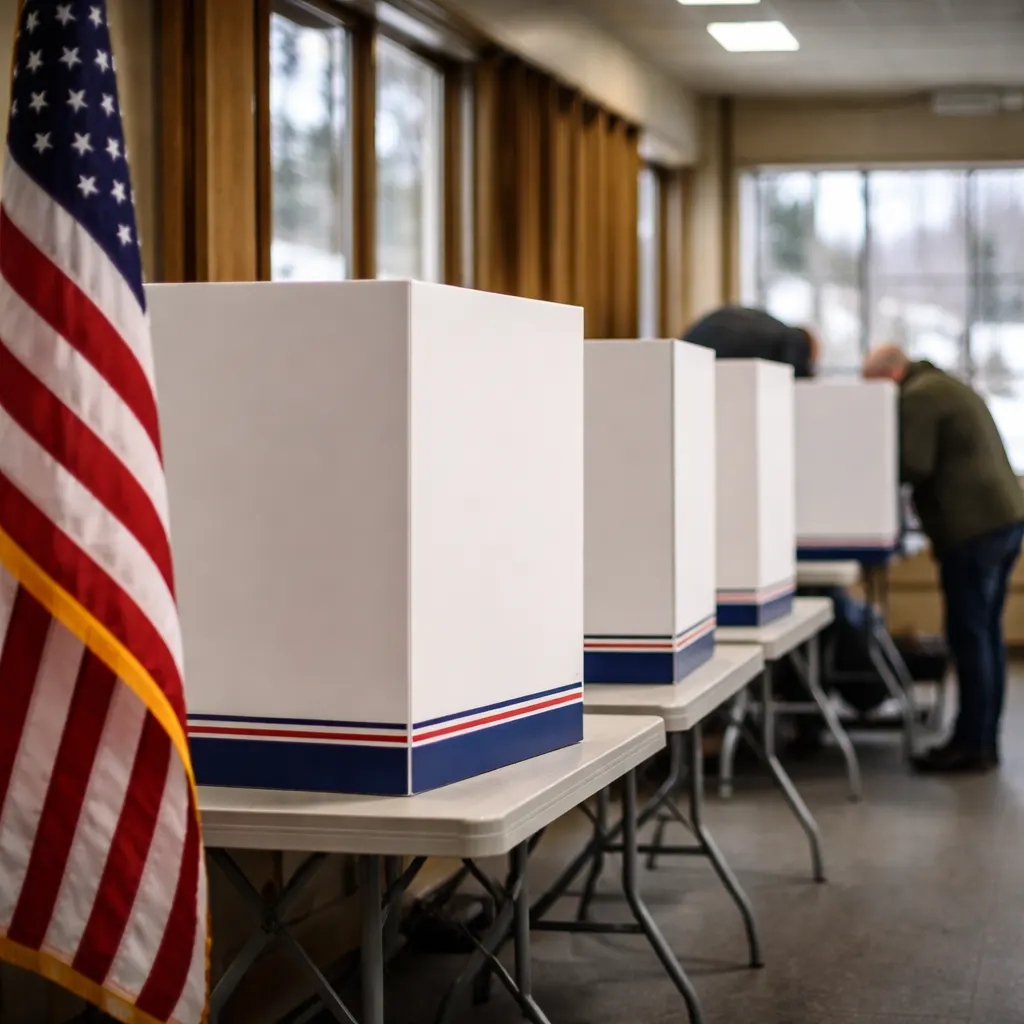
At a rally in Alaska on Tuesday, President Trump called for repealing the state's ranked-choice voting system as voters prepare to decide its fate on November 3, according to a new analysis from the Texas Public Policy Foundation published this week. The system, which Sen. Dan Sullivan, R-Alaska, described as causing "unnecessary confusion among voters," narrowly survived a repeal attempt by just 743 votes in 2024. Now Ballot Measure 2 puts Alaska's election system back before voters in three weeks, raising questions about whether the complexity is worth keeping.
Under Alaska's system, voters rank candidates in general elections rather than selecting a single choice. When no candidate receives more than half the vote, the lowest-performing candidate gets eliminated and those ballots shift to each voter's next preference until someone achieves a majority of the remaining votes. The state's upcoming Senate race has already sparked controversy involving two Republicans with nearly identical names: incumbent Sen. Dan S. Sullivan and Dan J. Sullivan Jr. Alaska Elections Director Carol Beecher tried to disqualify Sullivan Jr. in June, citing his request to appear as "Dan S. Sullivan" despite having a different middle initial, his recent switch to the Republican Party, and similarities between both candidates' campaign websites. Sullivan Jr. challenged the decision in court and stayed on the ballot. In August's primary, Democrat Mary Peltola finished with 49.5 percent, Sen. Sullivan took 41.4 percent, and Sullivan Jr. captured 2.5 percent. Despite his 2.5 percent showing, Sullivan Jr. advanced to the general election because Alaska's top-four system sends the four highest finishers forward.
The report notes that a voter intending to rank Sen. Sullivan first could accidentally rank Sullivan Jr. instead, causing their vote to initially count toward the wrong candidate. Alaska's 2022 Senate general election illustrated how rankings shift the count as the field narrows. That race included incumbent Sen. Lisa Murkowski, Buzz Kelley, Pat Chesbro, and Kelly Tshibaka. Kelley was eliminated first, then Chesbro, with some of their votes transferring to the remaining candidates and helping Murkowski win with 53.7 percent of the votes remaining in the final round. Some ballots became "exhausted" after Kelley and Chesbro were eliminated because those voters had no candidates left among the ones they ranked. Maine, which also uses ranked-choice voting, faced similar challenges during its June 9 primary. After several candidates failed to reach 50 percent, the system delayed results until June 19 as officials gathered election materials from across the state and spent days checking results before completing the count. Maine Republican Party Executive Director Jason Savage criticized the delays, stating, "We've seen it time and time again, Ranked Choice Voting delays results, and Maine voters deserve better than this."
The report explains that ballot exhaustion represents just one element of a counting process that can take days to complete. Voters can watch one candidate lead on Election Night, only to discover days later that someone else won after additional rounds of counting. Following what happens after a vote is cast proves far more difficult than the system's simple-sounding theory suggests. With two candidates named Sullivan on the ballot, voters must navigate both name confusion and the mechanics of how their rankings affect the final tally. The multi-day counting process and elimination rounds make it hard for voters to track what happened to their vote after they leave the booth.
The report argues that when Alaskans walk into the voting booth, they should feel confident in the election process from start to finish and shouldn't have to untangle elimination rounds just to follow what happened to their vote. Ranked-choice voting has been anything but simple for Alaskans, the analysis concludes. Ballot Measure 2 gives Alaskans another chance to decide whether those complications are worth keeping.