
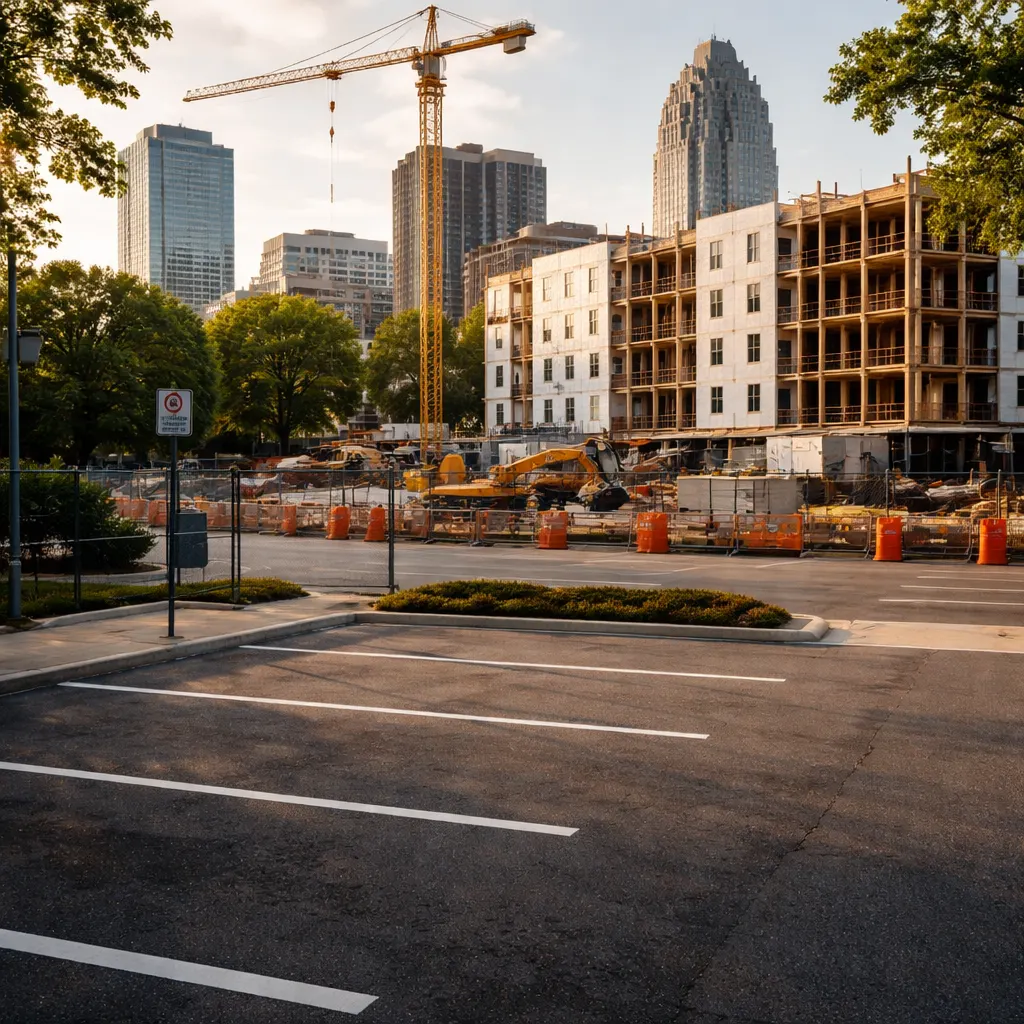
North Carolina became the seventh state to eliminate mandatory parking minimums for new housing developments when Governor Josh Stein signed HB 162 into law on July 7th. The legislation, published by Americans for Tax Reform this week, addresses the state's housing shortage by blocking local governments from requiring minimum parking spaces in residential projects. The bipartisan measure aims to reduce construction costs and expand housing supply statewide.
Building parking spaces adds substantial expense to housing construction, according to the report. Surface parking costs between $5,000 and $10,000 per spot, while apartment parking garages run from $25,000 to $50,000 per space. UCLA's Center for Parking Policy research shows these mandates increase monthly rents by $200 to $300 and raise condominium prices by $60,000 to $100,000. Parking infrastructure consumes massive land across North Carolina cities: 31% of Greensboro consists of off-street parking, compared to 28% in Raleigh and 26% in Charlotte.
Governor Stein stated HB 162 gives North Carolina "another tool in the toolbox" to build more homes and improve affordability. Republican State Senator Donnie Loftis, who sponsored the bill, highlighted how developers pass parking costs to buyers, saying surface spots costing five to ten thousand dollars aren't absorbed by builders but instead added to home prices. The report describes the measure as "YIMBYism" (Yes in My Backyard) legislation that encourages housing development.
The report explains that parking mandates force developers to use land for asphalt rather than dense housing, driving suburban sprawl and creating expensive infrastructure needs. Because parking requirements push housing farther from city centers, municipalities must build longer roads, extend utility lines, and spread services across wider areas—creating new costs for households and businesses. Low-porous asphalt used in parking lots increases flooding risk and urban heat island effects, leading to weather-related damages for residents and businesses. Local experiments have already shown results: Raleigh's 2022 elimination of parking minimums spurred construction of duplexes, townhomes, and accessory dwelling units, making the city one of America's most affordable metros and the top destination for recent college graduates.
The law lets developers and the free market decide parking options rather than following arbitrary regulations, according to the report. Some builders may choose not to include parking, while others can afford to construct it—resulting in more efficient land use, increased housing stock, and healthier communities. The report concludes that North Carolina's affordability attracts new residents, and this legislation reinforces the state's commitment to creating conditions where people can thrive and grow.