
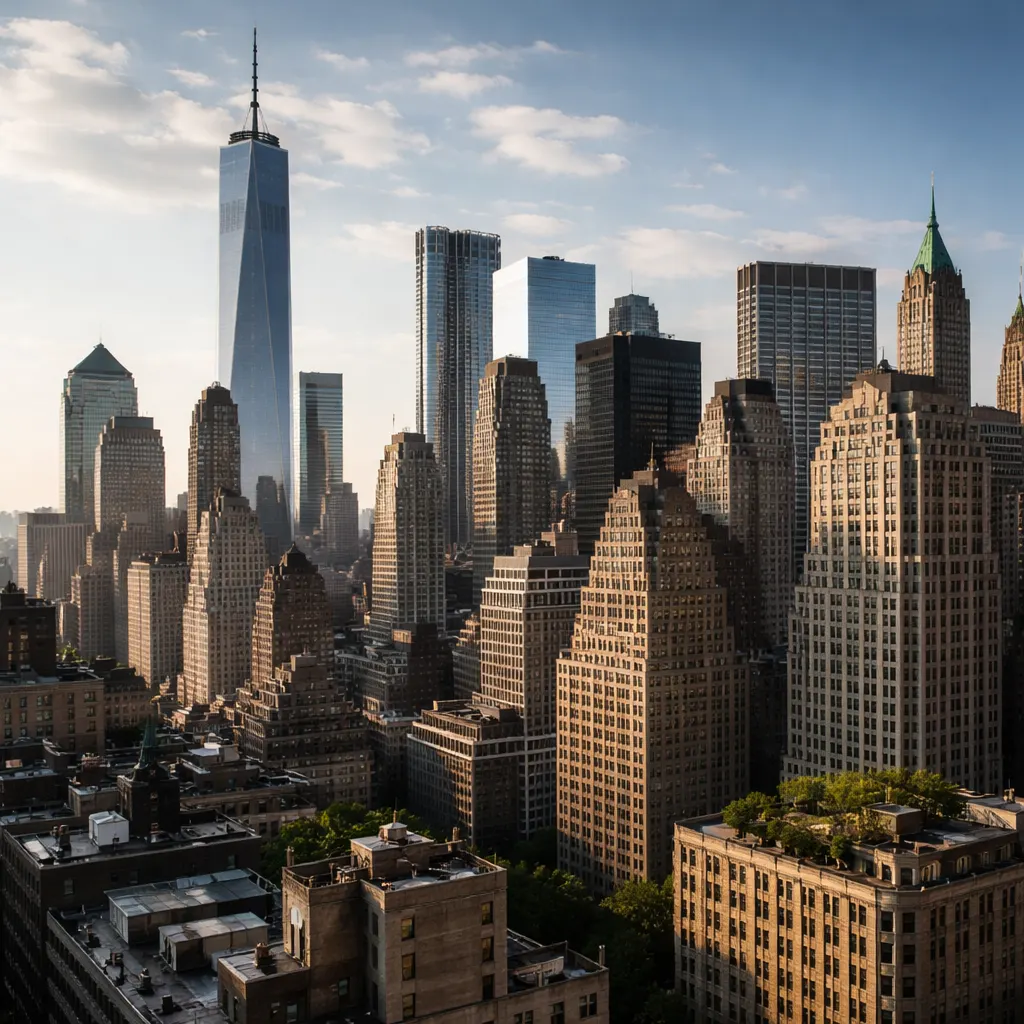
New York City recorded high compliance rates with Local Law 97 in its first enforcement year, with 95% of buildings that filed reports either meeting emissions limits or completing one-time upgrades, according to the city's Department of Buildings. The agency released its year one results on September 14, marking the completion of calendar year 2024, the first compliance period under the landmark climate law. Nearly all building owners filed their required reports, and the city has begun issuing notices of deficiency and fines to those that missed deadlines or exceeded emissions thresholds.
Of the 29,031 buildings required to report in the first compliance year, only 7%, or 1,911, failed to file by the August 29, 2025 deadline. The law covers most buildings over 25,000 square feet and includes two compliance paths: Article 320 for larger commercial buildings and Article 321 for houses of worship and affordable multifamily properties. Under Article 320, about 11,000 properties made up of nearly 17,000 buildings were required to report, with 45% being multifamily housing, 17% office space, 5% hotels, and another 8% split between K-12 schools and non-refrigerated warehouses. More than 9,950 of these properties met emissions limits for 2024, while only 470 exceeded their allowances. Of those over the limit, 32% exceeded by less than 10%, and just over 40%, or 197 buildings, reported emissions between 10% and 50% over limits. Many buildings improved performance through lighting upgrades, envelope work, heat pump installations, and energy management systems. Under Article 321, more than 83% of filing properties used the prescriptive pathway, which requires owners to implement at least 13 energy emissions performance improvements.
"This first year, we issued notices of deficiency, or NODs," said Laura Popa, deputy commissioner of sustainability at NYC DOB, during a webinar hosted by the Urban Green Council. "They were given to owners who didn't fulfill their obligations, like filing on time, and then basically gave them the opportunity to comply within 60 days." The city sent out 1,014 notices to Article 320 buildings for failure to file, with 239 properties filing after receiving a notice and another 111 resolved based on exemptions or exceptions. For emissions violations, the city sent 164 notices, with fines calculated based on emissions reports submitted by building owners and audited by the department. Local Law 97 imposes significant penalties on properties that don't meet emissions limits, up to $268 for every ton of carbon dioxide equivalent emissions above their annual allowance. So far, 15 owners have resolved their emissions notices through penalty payments, totaling around $270,000.
The high compliance rate surprised officials who had initially projected that 80% of covered properties would already meet the initial 2024-2029 limits based on historical benchmarking data. The jump to 95% compliance resulted from data refinement, changes between how the city modeled square footage versus how it actually measured compliance, and the availability of alternative compliance pathways. About 32% of those over limits requested penalty mitigation by showing good faith efforts to comply, with more than two-thirds choosing to submit decarbonization plans through 2050. Only a handful of properties used alternative compliance tools: 79 used Affordable Housing Reinvestment Fund offsets, 31 used solar, 10 used combined heat and power systems, and six used beneficial electrification credits that reward owners who replace fossil fuel HVAC systems with high-efficiency electric equipment. The AHRF offsets have pulled in $1.7 million that are being used to fund decarbonization efforts at buildings not otherwise required to comply, with funds allocated to two projects for deep electrification work like heat pumps.
The real test comes in 2030, when building owners must slash emissions by 40% and limits tighten significantly. "When we hit 2030, so many more building owners are going to have to do something to come into compliance," Popa said. The data refinement and alternative pathways that helped owners in year one won't provide the same cushion going forward. The Urban Green Council said in its own progress report that "the real test will come as emissions limits tighten in 2030, when more buildings will need deeper retrofits to comply." For now, the city continues pursuing enforcement against the roughly 600 properties that still haven't filed, with a goal of reaching 100% filing compliance this year.