
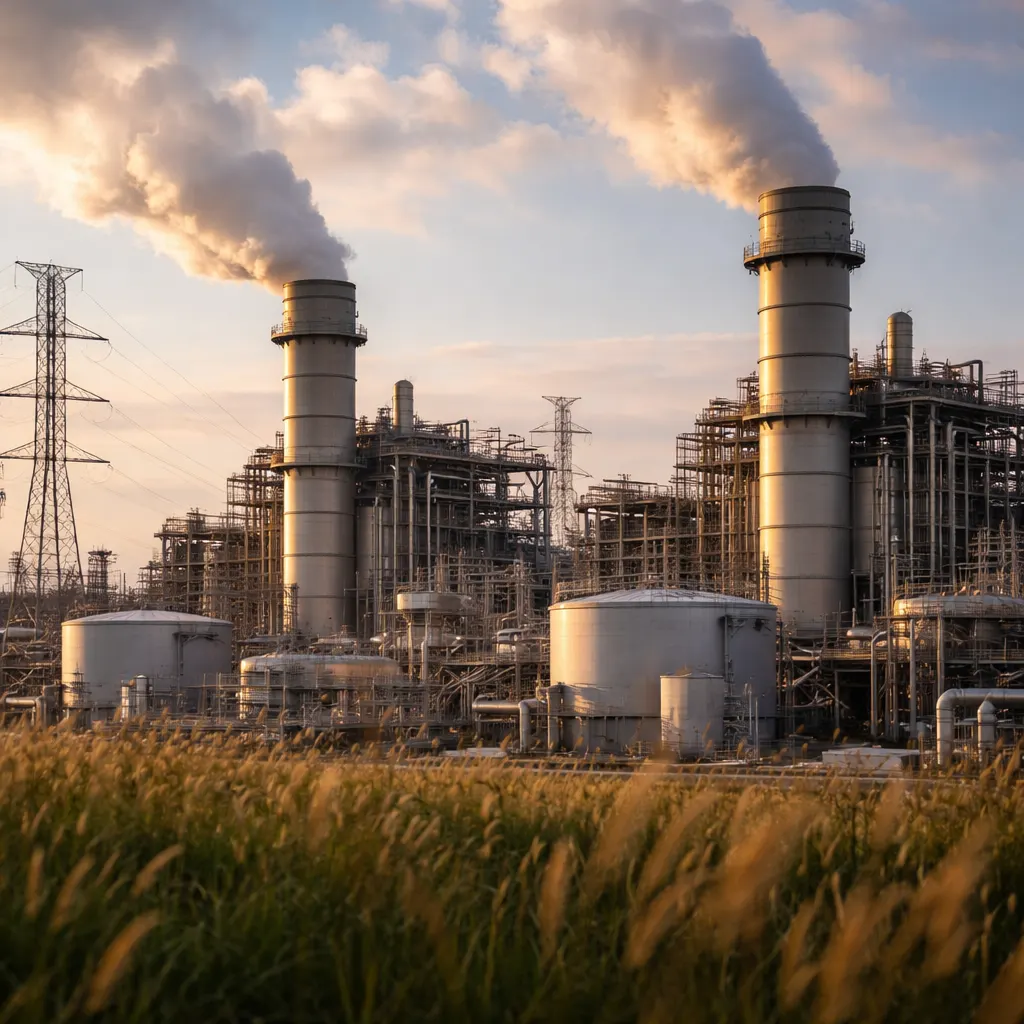
Ameren plans to dramatically shift its energy mix from about 5% natural gas today to 60% by 2045 while completely eliminating coal generation, according to a 20-year integrated resource plan filed Monday with Missouri regulators. The utility, which provides power to approximately 1.3 million customers in central and eastern Missouri, outlined a major expansion that includes 10.6 GW of new gas resources alongside renewable additions. Company leaders framed the proposal as necessary to maintain reliability and control costs as demand surges, though environmental groups criticized the heavy emphasis on fossil fuels.
The plan calls for adding 2,100 MW of combined-cycle gas generation by 2031, another 2,800 MW by 2035, and 1,400 MW more by 2042. Ameren also intends to build 1,900 MW of simple-cycle gas plants by 2029 and an additional 2,400 MW after 2040, plus 500 MW of natural gas fuel cells by 2030. Renewable additions include 1,300 MW of solar by 2030 and another 2,300 MW by 2045, along with 2,400 MW of battery storage by 2030 and 1,500 MW of wind after 2030. The utility expects to bring 1,200 MW of new nuclear capacity online by 2040, though it hasn't selected a location or technology yet, considering both advanced large-scale reactors and small modular designs. Coal retirements are scheduled for Sioux Energy Center by the end of 2035 and all four Labadie Energy Center units by 2042.
The aggressive expansion stems from anticipated demand growth driven largely by data centers. Ameren told regulators it's committed to serving 2.8 GW of combined large-load demand by 2030, nearly double the 1.5 GW it expected in 2025. The utility projects that adding these major customers will increase its base deliveries by 60% from 2027 to 2030, with annual sales climbing at a 5% to 6% rate throughout the planning period. Large-load deliveries are forecast to jump from roughly 1,400 GWh in 2027 to 44,676 GWh by 2046, representing a compound annual growth rate of 20%. Missouri law and the company's internal policies include provisions ensuring these large customers cover the infrastructure costs needed to serve them, according to the filing.
Company executives defended the diversified approach as essential given the scale of coming demand. "This plan provides a clear path for maintaining reliability," Ameren Corp. Chairman, President and CEO Martin Lyons Jr. said, explaining that it maximizes existing resources while investing prudently in multiple generation technologies. Chairman and President Aaron Melda added that "no single technology can meet every customer's energy needs on its own," emphasizing how different resources must work together to maintain reliability as customer use evolves. But environmental advocates sharply criticized the strategy. "The saying goes to stop digging if you're in a hole, but Ameren is still digging with its pollution-heavy plan even though it admits extreme weather events are increasing," said Jenn DeRose of Sierra Club's Beyond Coal campaign, calling the plan full of bad investments for families and small businesses. Critics also noted the proposal includes options for extending the life of Ameren's coal plants, citing regulatory uncertainty from the Trump administration's efforts to roll back emissions rules.
The utility files its integrated resource plan with the Missouri Public Service Commission every three years, though it may update more frequently. Ameren acknowledged in its filing that assumptions about future compliance measures remain subject to revision given the lack of certainty around regulatory programs. The company separately filed a $343 million rate increase in June that could raise residential monthly bills by about 10%, according to local reports. As data center demand continues accelerating across the power sector, Ameren's plan represents one of the most gas-heavy responses yet from a major utility facing the challenge of doubling its customer base in just a few years.