
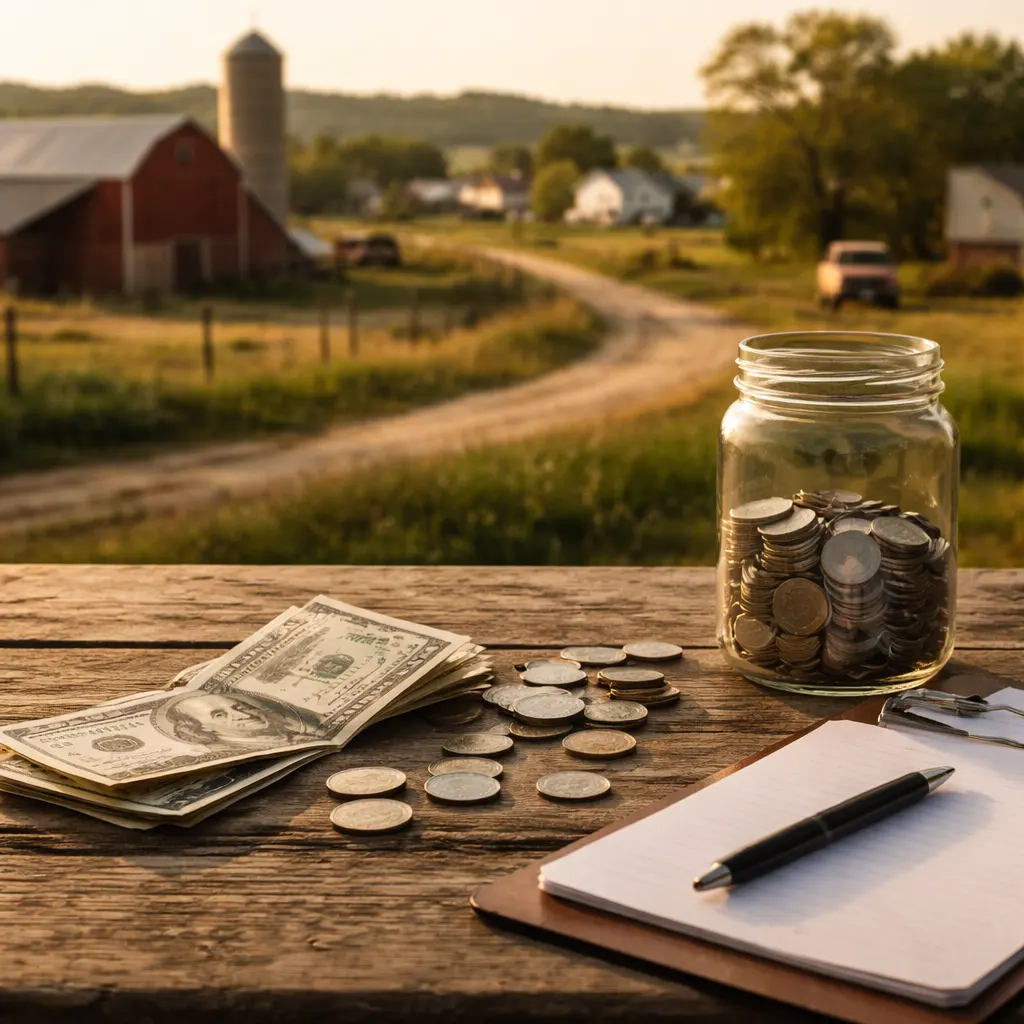
Rural communities across America receive just 22 cents per capita for every dollar that grantmakers invest in urban areas, according to a September 2026 report from the Federal Reserve Bank of St. Louis. The report, which analyzed investment data and conducted listening sessions in four small towns across the Federal Reserve's Eighth District, reveals how funding gaps combine with staffing shortages and housing challenges to constrain rural economies. Despite these obstacles, the communities visited demonstrated how strong relationships and local vision can stretch limited resources into meaningful development.
The disparity in per-capita investment affects regions across the Midwest and South, where the St. Louis Fed's District operates. Between 2014 and 2021, roughly one-third of rural counties had no locally based grantmaking organizations, according to a March 2026 U.S. Department of Agriculture report cited in the analysis. The Fed visited Fulton, Kentucky; Cleveland, Mississippi; Hope, Arkansas; and Buffalo, Missouri, holding conversations with 42 bankers, small business owners, city officials, economic development directors and community foundation leaders. All four communities identified insufficient attainable housing for working families and limited staffing for grant administration as universal barriers. Only 26% of remote rural counties had a paid economic development professional on staff in 2018 and 2019, compared with over half of metropolitan counties, according to survey data referenced in the report.
The listening sessions uncovered specific examples of how these gaps play out. In Lafayette County, Arkansas—near Hope—a volunteer coordinates the community's response to more than $2 billion in announced economic development opportunities tied to regional lithium resources. In Cleveland, an entrepreneur who successfully opened a business said they had just four or five months to modify a building but found no clear roadmap for permits or fire code inspections. "There's no manual when you walk in that says, 'If you want to start a business, here are the steps,'" the entrepreneur told the Fed. In Fulton, the USDA Rural Partners Network provided technical assistance that helped move stalled workforce development projects forward, but local leaders acknowledged their time in their positions is limited because of retirement or career shifts.
The report emphasizes that interpersonal trust and shared vision enable rural areas to overcome resource constraints, but warns that effective solutions must be place-based rather than standardized. As Federal Reserve Board Governor Michael S. Barr stated in an April 2026 speech quoted in the analysis, "A community's ability to attract and deploy capital is essential to its vitality and resilience." Buffalo's experience illustrates the principle: local leaders and volunteers invested $5,000 of their own money and labor to install a bathroom and replace windows at the municipal airport, which was once considered for closure. That demonstration of commitment unlocked state funding for fuel facilities and security fencing, eventually leading to a $3 million regional training facility. The St. Louis Fed says it will continue investigating these stories to identify opportunities that can strengthen rural investment, emphasizing that building a resilient economy for all Americans means understanding not just the numbers, but the people and relationships behind them.