
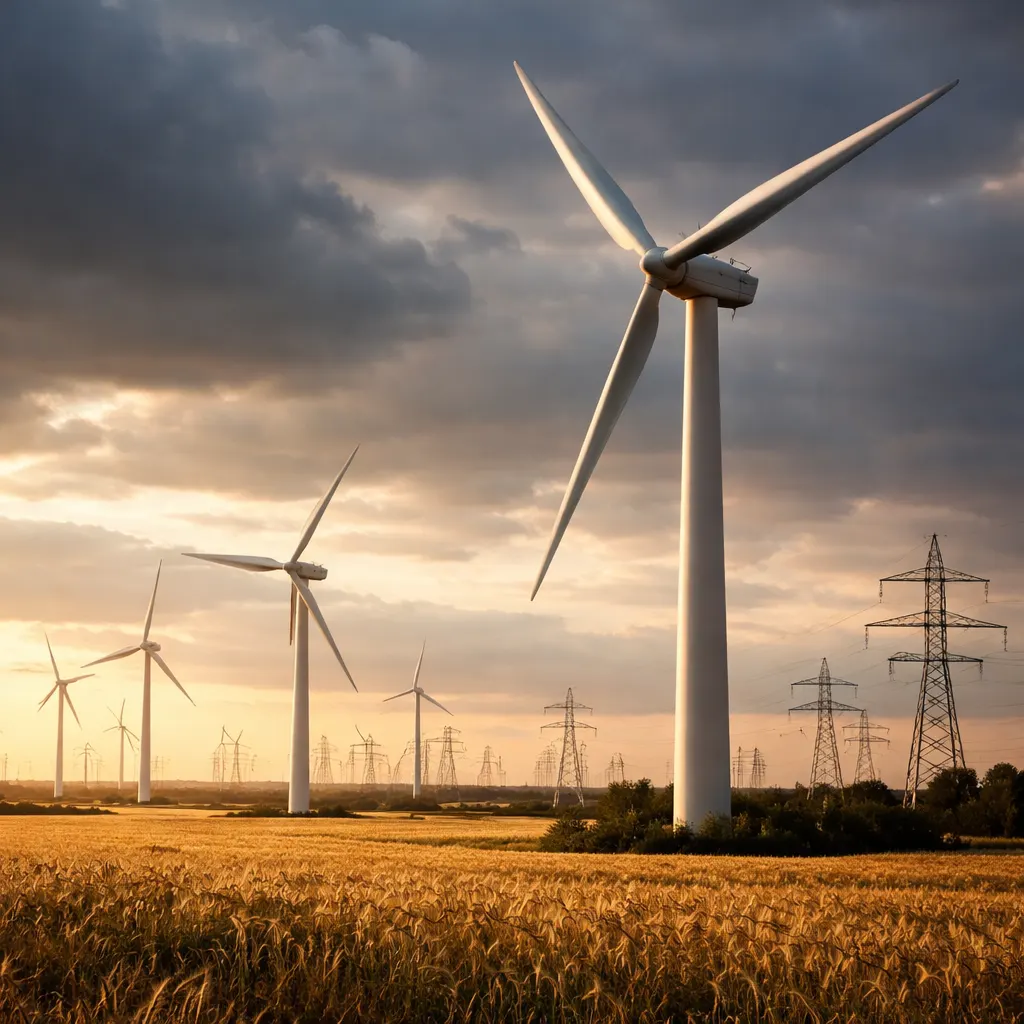
In a first-ever demonstration, General Electric and the National Renewable Energy Laboratory successfully operated a common type of wind turbine in grid-forming mode, allowing it to set grid voltage and frequency and potentially operate without power from the electric grid. The milestone, announced in a Spring 2022 newsletter from the Department of Energy's Wind Energy Technologies Office, marks a significant shift in how renewable energy can function within power systems. The work proves that wind turbines can deliver the same fundamental stability services traditionally provided by coal or natural gas generators.
The demonstration used GE's controls on a 2.5-MW type-3 wind turbine drivetrain, one of the most popular turbine technologies in operation today. Type-3 turbines are especially challenging for developing grid-forming controls because they use a generator directly connected to the grid, with electricity output managed by power electronics components. NREL powered the turbine using its Advanced Research on Integrated Energy Systems platform, which creates a replica grid environment for at-scale testing. A 5-MW research dynamometer acted as the prime mover for the turbine in the mock power system, letting researchers simulate different grid conditions and watch how the turbine responded. The team deployed controls that allowed the turbine to provide primary frequency and voltage support and restabilize the surrounding grid by adjusting its power in response to momentary electrical variances.
According to NREL Chief Engineer Vahan Gevorgian, "We have shown that a common variety of wind turbine can serve the same underlying voltage and frequency stability services that are often provided by fossil fuel power plants." The research team found that with GE's grid-forming controls, the turbine could stabilize power in ways similar to a thermal generator, a key feature for adding stability to the grid. Such capabilities generally aren't available with grid-following controls, which exist in most renewable energy devices like solar plants and battery storage systems and typically produce power that closely matches the grid frequency and voltage of the larger electric system. The demonstration is the first of several in the DOE's Wind as a Virtual Synchronous Generator project, which aims to research wind and storage inverter controls that electronically mimic the stabilizing features of conventional generators.
The work addresses a growing challenge as renewables claim a larger share of the power supply: they'll also need to shoulder more responsibility for grid stability. That responsibility includes the capacity to restart power following an outage, to restabilize after a transient electrical event, and to generally "form" the grid as baseline power resources. Large spinning generators have traditionally kept the power grid's frequency and voltage steady, but inverter-based resources like wind, solar, and batteries are now being prepared for that role in multiple DOE projects. The research team found that the grid-forming turbine provides underlying stability in cases where it's most needed: in systems with many inverter-based resources and few conventional forms of stability.
The demonstration opens new directions for investigation and potential markets. Within the WindVSG project, the research team will continue studying how the grid-forming turbine interacts with other devices on the power system and whether the grid-forming mode creates greater mechanical stress on the turbine. Future demonstrations will also test the grid-forming turbine when disconnected from the power grid. For wind turbine fleets and other resources like solar panels and battery storage, grid-forming controls could unlock a new market opportunity in the form of grid services—grid stability as another revenue stream for renewable resources. With NREL's ARIES platform, the laboratory can help partners prove such renewably sourced stability on their own systems.