
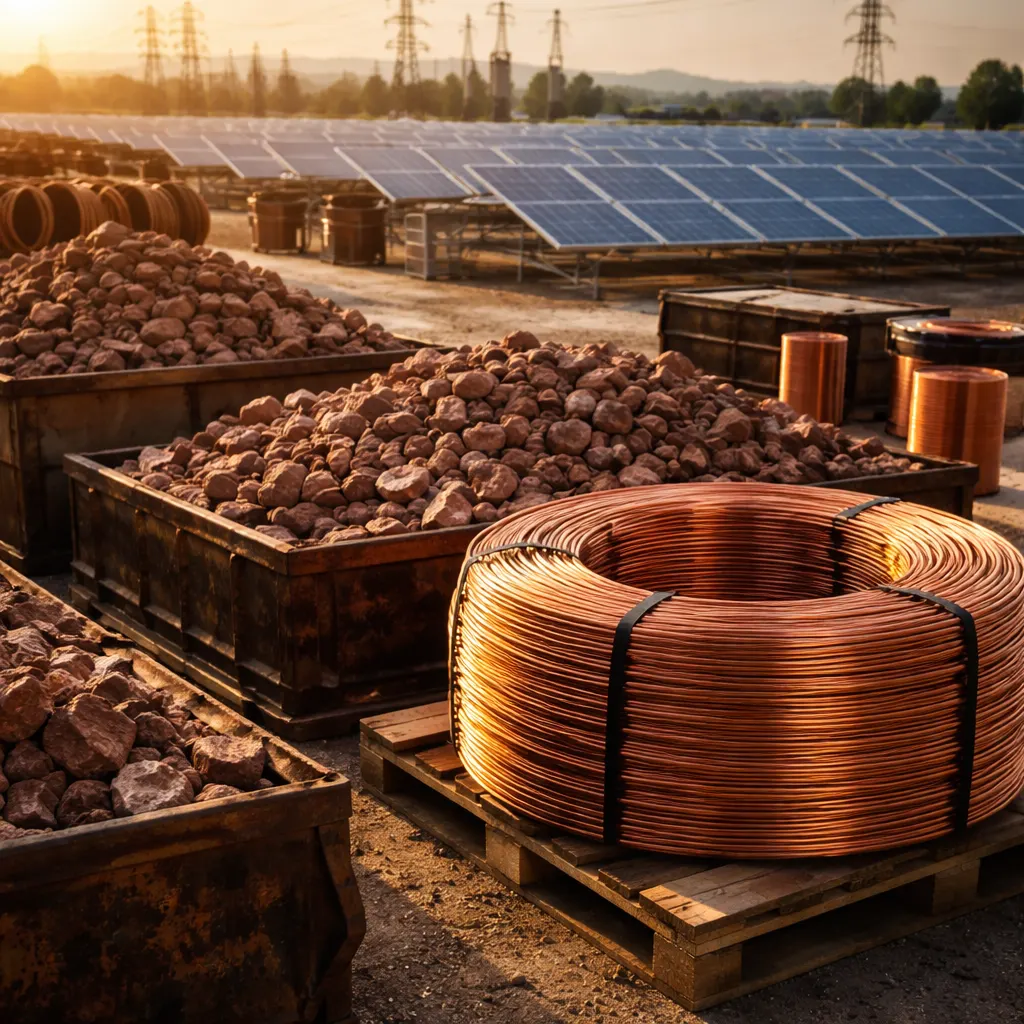
The solar power industry is heading toward a severe shortage of critical metals, with copper supply falling short by as much as 11.5 million metric tonnes by 2035, according to a new report from the International Energy Agency's Photovoltaic Power Systems Programme. The analysis modeled material consumption across scenarios ranging from 29 terawatts peak to 75 terawatts peak of worldwide solar installations by mid-century. The central finding: recycling retired solar panels and replacing scarce materials will be essential to sustaining the industry's explosive growth through 2050.
The report projects that copper demand for solar manufacturing and deployment could hit 7 to 15 million tonnes in the mid-2040s, representing 30% to 65% of today's global annual production. Silver requirements are expected to consume 15% to 30% of current worldwide reserves between 2025 and 2050, with yearly use for photovoltaic cells peaking at 9,000 metric tonnes—only slightly above the current rate of 8,600 metric tonnes. For indium, a rare metal used in transparent conductive coatings, the IEA PVPS found that demand will exceed global reserves by the mid-2040s under every deployment scenario examined. The report analyzed nine materials in total: aluminum, copper, indium, lead, silicon, silver, gold, tin, and zinc.
Dr. Malte Vogt, who co-authored the report from Delft University of Technology's Photovoltaic Materials and Devices group, told PV Tech that "recycling of end-of-life PV could contribute about 30-45% of all silver required for PV till 2050." He added that by 2050, the industry expects to recycle 50 to 80 times today's volume. The report emphasized that retired solar plants could serve as "an important secondary source of silver" for the sector. Industry efforts to substitute copper for silver in cell production—driven by cost and availability concerns—could "substantially reduce demand" over the coming decades, according to the analysis. The report also stated it will be "necessary" to replace indium use in transparent conductive oxides to achieve terawatt-scale annual solar deployments.
The underlying problem stems from solar power's transformation into the dominant electricity source of the century, which shifts material demand away from fossil-based systems toward metals like silicon, indium, silver, copper, and tin. While photovoltaic technology uses less total material volume than coal or gas infrastructure, it creates intense demand for specific metals that weren't previously bottlenecks in energy systems. The report noted that mining output predictions are uncertain and reserve estimates for metals like indium may change, but current expansion rates for copper mines won't keep pace with solar manufacturing growth. As countries including the United States, India, and the European Union work to build domestic solar supply chains—and as China's production capacity continues to outstrip annual demand—the report warns that material efficiency improvements and substitution strategies need to be factored into policy design alongside manufacturing incentives.
The IEA PVPS recommends that the global expansion of solar manufacturing capacity must account for material replacements and recycling infrastructure to meet long-term demand sustainably. The report suggests that policymakers supporting solar deployment should consider material efficiency and substitution when designing production incentives and processing support, both in regions with established supply chains and those building new ones. The bottom line: without aggressive recycling and successful material substitution, the metals crunch could cap how fast the world can scale solar power—even as the technology itself becomes cheaper and more efficient.