
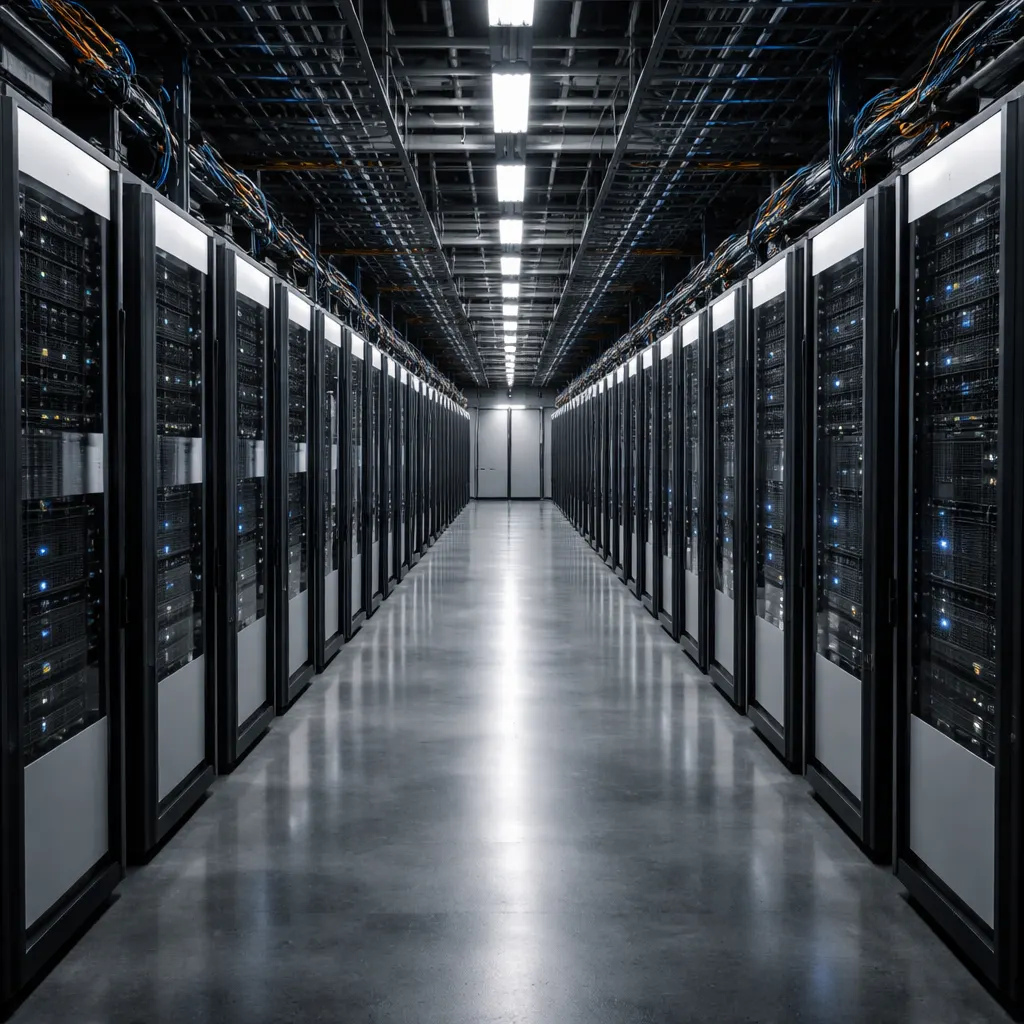
Building power plants directly next to data centers—a strategy called co-location—is gaining popularity as a way to supply electricity to massive computing facilities without increasing household energy costs, according to a new report from the Niskanen Center. But the report warns that while co-location may offer short-term relief for industries willing to pay premium prices, it won't scale to maintain reliable and affordable power for all customers. The nation's real need is interregional, high-voltage transmission lines that can move electricity over long distances to wherever demand exists.
Recent co-location proposals differ dramatically from traditional behind-the-meter setups in both size and intent, the report explains. Data centers frequently demand as much electricity as a small city—far more than typical residential or industrial on-site generation. These facilities are proposing to construct their own power plants or purchase electricity exclusively from nearby generators to avoid lengthy grid connection waiting periods. Yet like traditional behind-the-meter customers, data centers still want to keep a grid connection to boost their operations' resilience. The Federal Energy Regulatory Commission recently identified several co-location options ranging from traditional service—where co-located customers can draw grid power in any quantity at any time—to completely isolated arrangements with no grid connection whatsoever. Middle options include "firm" and "non-firm" service, which let co-located customers tap the grid only in restricted amounts or during specific times, such as off-peak hours or up to a predetermined limit.
Data center developers consider three factors when choosing their grid connection: cost, speed of connection, and reliability, according to the report. Traditional service offers the most dependable level of grid access but often requires years to secure and demands substantial, expensive system improvements. Isolated setups are typically faster but carry operational risks and very high maintenance expenses. Because of this, most customers choosing isolated or firm and non-firm arrangements rarely plan to bypass the grid permanently—they prefer to keep a route to traditional grid service available. The report states that co-location essentially serves as a method to obtain power immediately while waiting for complete grid access later, meaning "the long-term transmission buildout the country needs won't shrink significantly because of co-location."
The report characterizes co-location as a useful tool for delivering needed flexibility to the grid in the near term, potentially signaling to grid operators where future power demand will emerge. But since most data centers will eventually seek grid connections, co-location can't substitute for systemwide planning or solve long-term affordability concerns. At best, it's a permanent fix for certain industries located too far from grid infrastructure and a temporary solution for most others. Without careful use, co-location risks becoming yet another delay tactic that postpones necessary grid modernization.
The report's bottom line: the lasting solution is building more high-capacity transmission that can stabilize prices and maintain reliability by moving power from cheap sources to high-demand areas, serving all customers while enabling global competitiveness. Co-location might buy some time, but transmission infrastructure is what will actually fix the problem.