
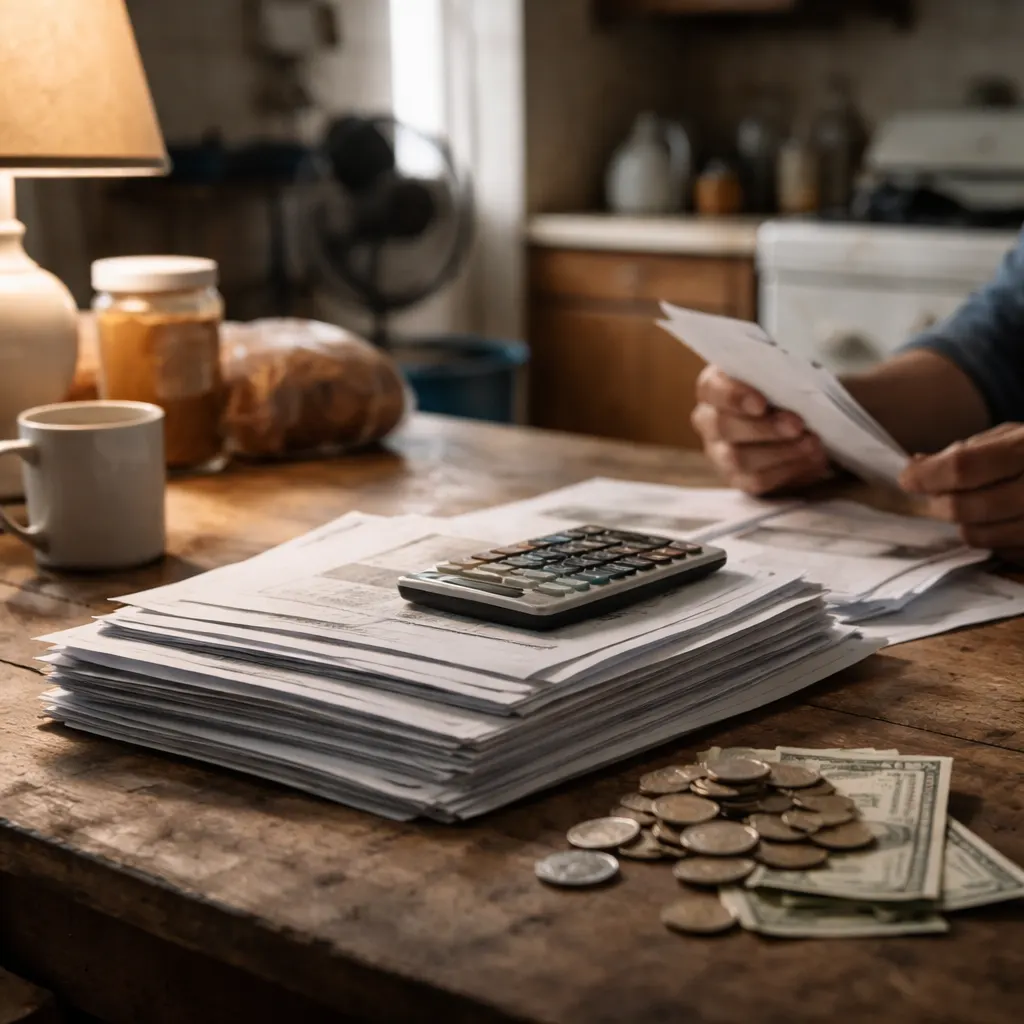
Low-income American households now spend 13.3% of their pretax income on utilities — more than five times the 2.5% that high-income households spend, according to a research analysis published this month by the Federal Reserve Bank of St. Louis. The analysis, which examined data from 2015, 2020, and 2024, finds that utility cost pressures have intensified particularly for low- and moderate-income families, with rising shares of households facing what researchers call "energy insecurity" — a term that includes cutting back on food or medicine to pay utility bills, enduring unsafe temperatures at home, or receiving disconnection notices.
Between 2015 and 2020, the burden of utility costs actually fell for low- and moderate-income households, likely driven by pandemic-era stimulus payments and protections against service shutoffs. By 2024, however, that trend had reversed, with cost burdens climbing back above pre-pandemic levels for these groups. The proportion of moderate-income households considered severely burdened — spending 10% or more of pretax income on utilities — jumped 6.3 percentage points between 2015 and 2024. Middle-income households saw similar deterioration, with those classified as severely burdened rising 2.7 percentage points and those considered cost burdened (spending 6% or more) increasing 6.0 percentage points over the same period. Electricity accounts for roughly 40% of total utility expenses for low-income households in 2024, a 19% relative increase from its share in 2020. Low-income households dedicated 5.4% of their pretax income to electricity alone in 2024, compared with just 0.8% for high-income households — nearly a sevenfold gap.
Energy insecurity rose sharply across the board. Between 2015 and 2024, the share of households experiencing at least one form of energy hardship climbed 8.3 percentage points for low-income families, 8.0 percentage points for moderate-income families, and 7.9 percentage points for middle-income families. In 2024, one in four U.S. households — 33 million in total — reduced or went without basic necessities to pay utility bills, while one in eight households (17.5 million) kept their homes at unsafe temperatures. For low-income households, the hardship was especially severe: 42% cut back on or skipped necessities, 23% maintained unsafe home temperatures, and 22% received disconnect notices. In the seven states of the St. Louis Fed's Eighth District — Arkansas, Illinois, Indiana, Kentucky, Mississippi, Missouri, and Tennessee — overall energy insecurity increased from 28.4% in 2020 to 34.0% in 2024, with Tennessee posting the sharpest rise, from 27.5% to 36.7%.
The report attributes the widening gap partly to the disproportionate impact of electricity rate increases on lower-income budgets, noting that higher-income households saw improvements in energy security while low- and moderate-income households experienced significant deterioration. When families have less money left over after paying for power and heat, they face barriers to affording childcare, transportation, and other essentials that could help them access job training or employment opportunities that might improve their economic mobility. The report frames these trends as a dual affordability crisis: rising cost burden shows the financial pressure building on household budgets, while energy insecurity reveals how that pressure forces difficult trade-offs — rationing medication, skipping meals, or enduring dangerous heat or cold.
The analysis is the first installment of a two-part series on utility cost pressures. The authors say the next blog post will examine approaches intended to ease these burdens, including assistance programs and energy efficiency initiatives. The takeaway is stark: millions of American households are choosing between paying the electric bill and meeting basic needs, and the problem is getting worse, not better.