
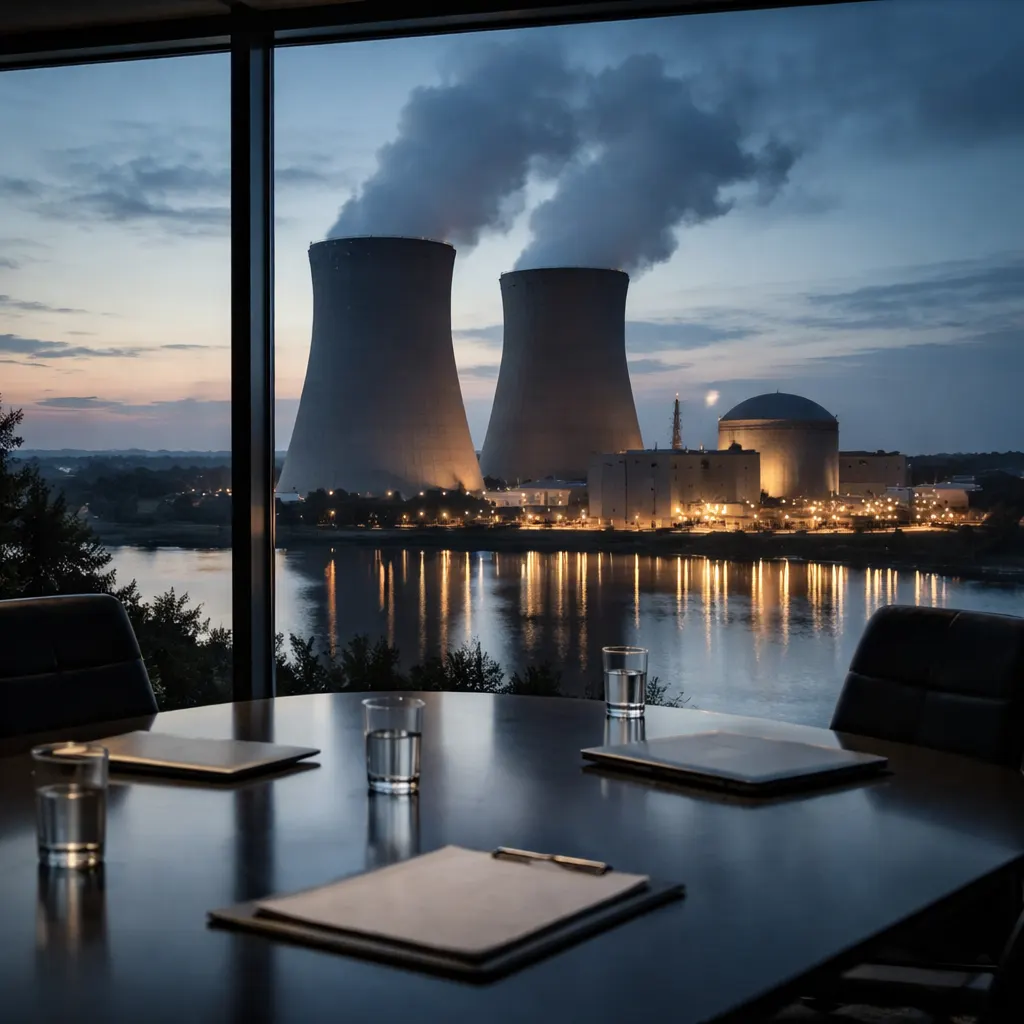
Constellation Energy announced a 20-year power purchase agreement with Google that will support the addition of 890 MW of new nuclear generation, according to a report published in Utility Dive on Oct. 6, 2026. The expansion will come through uprates of 11 existing units in the PJM Interconnection, backed by $4.3 billion in new investment. The deal marks the second major nuclear expansion Constellation has signed in a week, following a similar agreement with Amazon.
The 11 units slated for uprates are spread across six locations in Illinois, Pennsylvania, and New Jersey, with the first uprate expected to come online in 2028. Alongside the nuclear agreement, the two companies entered into a 15-year supply agreement for another 2,700 MW across the PJM market. The Google deal follows a 690-MW agreement Constellation struck with Amazon on Sept. 30, 2026, centered around a $3-billion, 190-MW expansion of the Calvert Cliffs nuclear plant in Maryland. That new capacity is expected to come online between 2030 and 2032. Across the six nuclear sites, the Google agreement is expected to help sustain roughly 4,400 existing jobs and create approximately 7,200 temporary construction jobs. Shares of Constellation were up almost 14% in morning trading following the announcement.
According to Constellation Chairman, President and CEO Joe Dominguez, "preserving and expanding the output of the existing nuclear fleet and developing new clean generation is critical to meeting our nation's growing energy needs." Dominguez added that the Google deal can "serve as a model for how technology companies and the energy industry can work together ... in a way that delivers grid-wide benefits for all, funded by private entities." The companies said the agreement will incorporate operational load-shaping and demand-response capabilities to reduce power consumption during grid stress.
The deal represents what Constellation called a "direct response" to PJM's Bring Your Own Power proposal and aligns with the White House's ratepayer protection pledge. PJM Interconnection is short about 6.8 GW of new capacity and is struggling to find resources as data center demand rises. The grid operator will delay a planned reliability backstop procurement auction following the Federal Energy Regulatory Commission's Sept. 29 decision to only partly approve it. The agreement also calls for deploying Google Cloud and AI across energy operations, with the companies planning to use AI for site selection, power flow modeling, permitting and interconnection planning, generation optimization, and infrastructure security under an expanded five-year technology agreement.
The dual agreements signal how tech companies are increasingly turning to nuclear power to meet AI and data center demands. By pairing commercial investments in nuclear uprates with advanced technology, the companies said the agreement supports the rapid growth of artificial intelligence and digital infrastructure. The deals offer a path for expanding clean energy capacity without relying on ratepayer funding or waiting for new plant construction, instead tapping existing nuclear sites that can be expanded more quickly.