
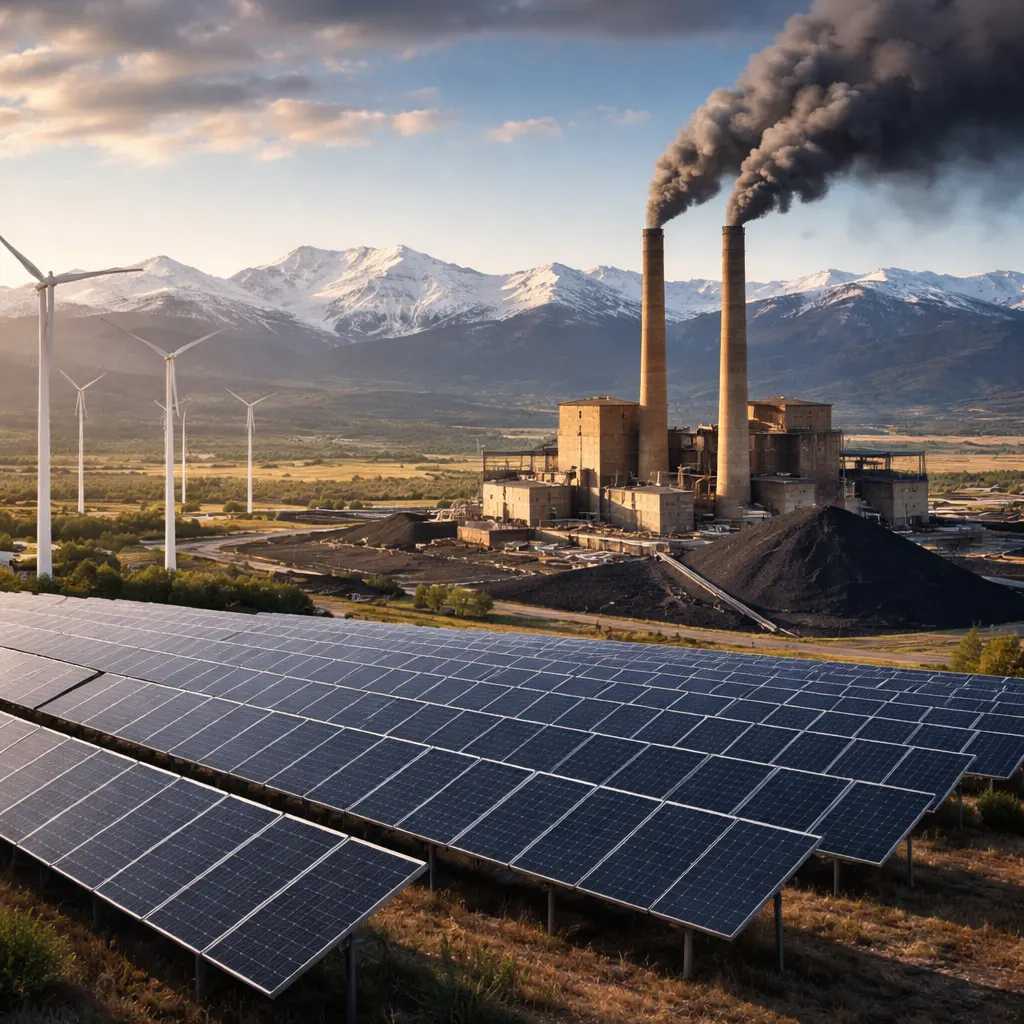
Colorado reached a milestone during the first quarter of 2026, with renewables generating 53% of the state's electricity, up from 43% the year before. But an analysis published by the Independence Institute argues that this achievement owes far more to collapsing coal generation than to new wind and solar coming online. The report, based on U.S. Energy Information Administration data released June 25, 2026, shows that the percentage shift masks what's actually powering Colorado homes.
The numbers tell a lopsided story. Renewable utility-scale generation rose 15.8% year-over-year, climbing from 5,934 gigawatt-hours in Q1 2025 to 6,872 GWh in Q1 2026—an increase of 938 GWh. Coal generation, however, plummeted 62% over the same period, dropping from 4,342 GWh to just 1,643 GWh. Overall, Colorado's total in-state generation fell by 922 GWh in Q1 2026 compared with the same quarter the previous year. Renewables' share of utility-scale generation reached 51.5% in the first quarter, slightly below the 53% figure cited by blogger Allen Best, potentially due to EIA data revisions or differences in measurement scope.
The report identifies a single cause for coal's dramatic fall: Xcel Energy's Comanche Unit 3 has been offline since August 2025 for turbine repairs. The analysis runs a counterfactual scenario: if coal generation had stayed at its 2025 level of 4,342 GWh and total generation had increased with renewables added on top, the Q1 2026 renewable share would have been just 42.9%, not 51.5%. That would represent only a marginal improvement from the previous year and match the full-year 2025 generation percentage—despite what the report calls "Colorado's largest single-year Q1 renewable addition on record."
The report warns that the milestone is likely temporary and could reverse when Comanche Unit 3 returns to service in August 2026 as planned. The analysis also notes that EIA figures measure in-state generation, not consumption, meaning they don't count electricity Colorado must import or adjust for power the state exports during periods of wind surplus. Total in-state generation has hovered around 56,000 GWh over the past decade even as Colorado's population has grown, forcing the state to import more power as dispatchable generation retires. When the coal plant comes back online, the report predicts the EIA data will show a sudden "decline" in renewables' share—an occasion it doubts journalists will celebrate with the same fanfare.