
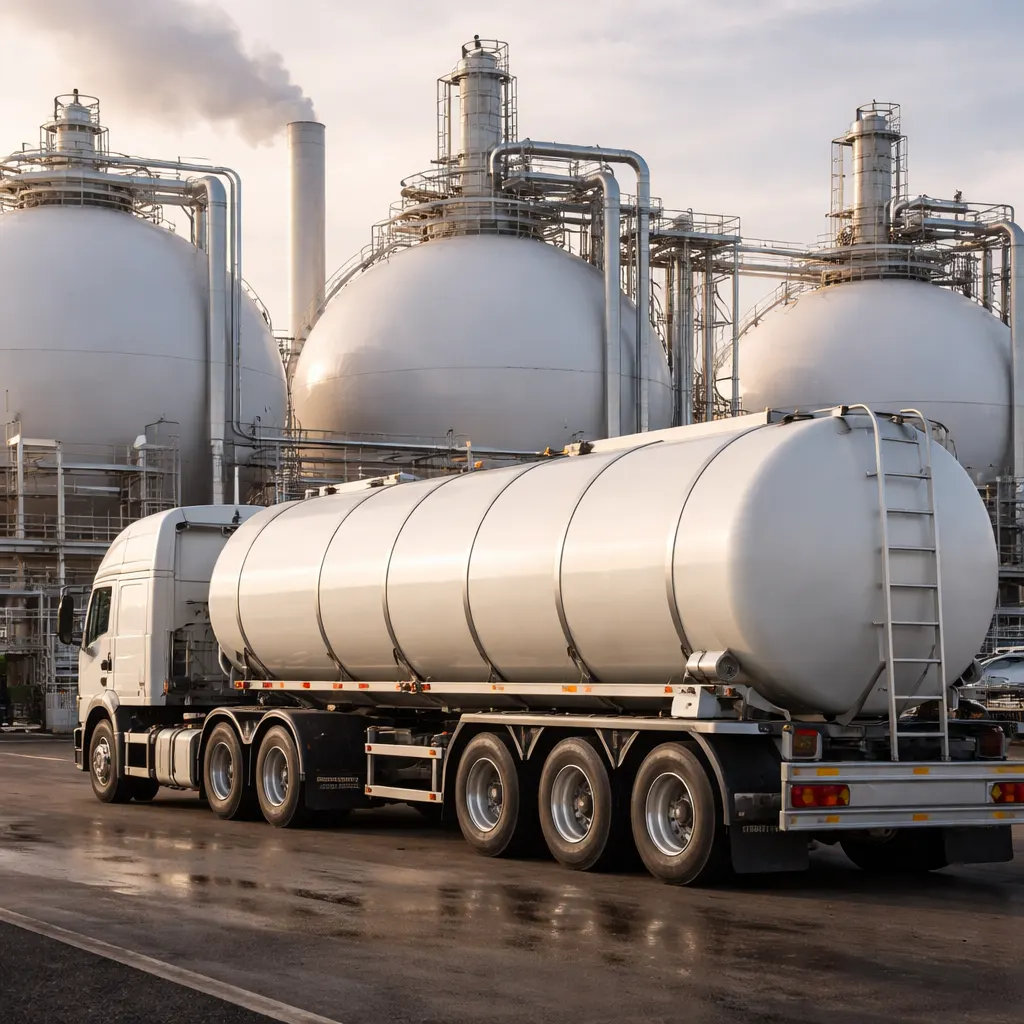
The global CO2 transport industry could be worth $211 billion by 2060, according to a new report from Wood Mackenzie, with the movement of carbon dioxide increasingly determining whether carbon capture and storage projects succeed worldwide. This investment would allow three gigatonnes of CO2 to be moved each year globally, with 200 million tonnes per year crossing international borders. The findings highlight how infrastructure decisions—whether to use pipelines or ships—will shape the economics of efforts to capture and store industrial emissions.
Asia Pacific dominates the investment landscape, accounting for roughly 60% of the total due to lengthy transport distances and substantial projected CO2 volumes, the report finds. North America and Europe follow. Pipelines attract more than 80% of global transport investment, linking emitters that are mainly located onshore to both onshore and offshore geological storage locations. But the gap between CO2 volumes and domestic storage capacity is spurring the rise of cross-border CO2 trade and liquefied CO2 shipping, especially in Europe and Asia Pacific. By 2060, demand for cross-border CO2 transport from Japan, South Korea, Singapore, and Taiwan is forecast at 164 million tonnes annually, while Australia and Southeast Asia hold 187 million tonnes of storage capacity. Australia, Indonesia, and Malaysia are expected to compete as the region's storage hubs.
"Geography sets the transport challenge, while economics determines whether CO₂ moves by pipe, ship or both," said Stephanie Chiang, senior research analyst for carbon capture at Wood Mackenzie. Pipeline and shipping costs are similar for distances up to 1,000 kilometres, but the economics hinge on factors like existing infrastructure, the report notes. Reusing old gas pipelines could slash capital spending by more than 60% and cut total CO2 transport costs in half, substantially improving pipeline economics compared to shipping. According to the report, pipelines carry high fixed costs for steel and construction and need high utilisation rates to recover the initial investment, while shipping is driven by operational costs, with fuel and electricity making up over half of levelised costs. Japan illustrates the scale of the challenge: to reach carbon neutrality, the country aims to store 120 to 240 million tonnes of CO2 by 2050, but domestic storage potential is limited, and the report estimates Japan may need to ship nearly 50 million tonnes across borders—close to its domestic liquefied natural gas import volumes of around 65 million tonnes per year.
The report explains that pipelines become more economical as volumes increase, but shipping offers the capital and operational flexibility that early-stage projects need to manage risk. For cross-border shipping, the choice of pressure configuration is significant: low-pressure vessels carry denser cargo in fewer, larger ships and can reduce costs by up to 34% over long distances compared to medium-pressure alternatives. This difference is small on shorter European routes but decisive over the distances typical of Asia Pacific cross-border shipping. Offshore pipeline and shipping economics in Japan show clear capacity thresholds—at five million tonnes per year, shipping becomes more cost-effective beyond 400 kilometres.
Policy will be the critical swing factor, the report warns. Permitting delays, land acquisition obstacles, and regulatory uncertainty can drive up pipeline costs. Persistent gaps in cross-border bilateral agreements, liability frameworks, and economic incentives continue to constrain cross-border carbon capture networks. These challenges are especially acute in Asia, where better policy coordination could reshape regional transport routes and project viability. Cross-border CO2 shipping alone could add $40 per tonne of CO2, contributing nearly 30% of Japan's total levelised carbon capture and storage cost.