
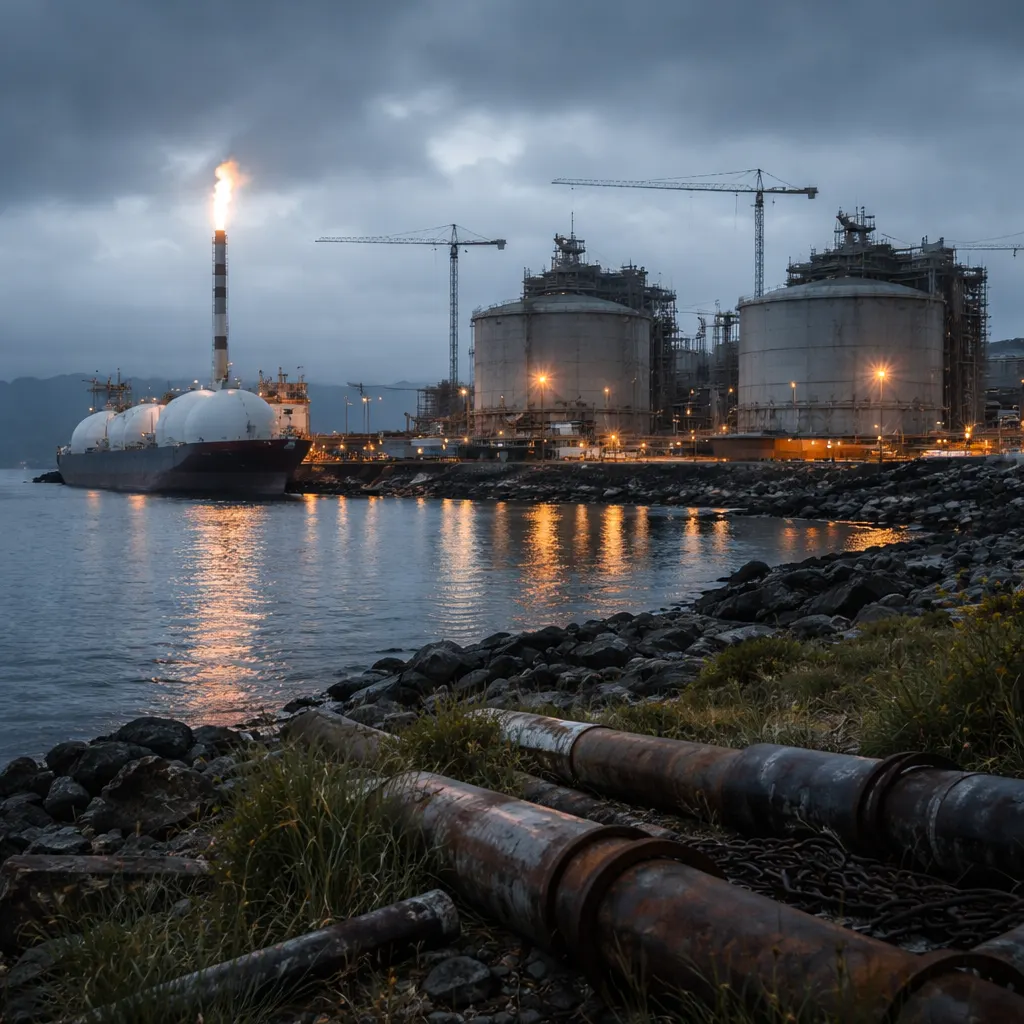
Of the 18 liquefied natural gas (LNG) export projects proposed in Canada over the past decade, only one has been built and just two more are under construction, according to a Fraser Institute commentary published June 26, 2026, by researchers Julio Mejía and Elmira Aliakbari. The commentary argues that despite the Carney government's recent approval of the $4 billion Sunrise pipeline expansion, Ottawa's regulatory framework continues to block Canada from becoming a leading natural gas supplier and is causing the country to miss major economic opportunities.
The recently approved Sunrise expansion—which took two years to secure federal approval—will add only about 8 percent to the Westcoast natural gas pipeline system's current capacity. The commentary notes that Canada's LNG potential could support up to three more large pipelines to the Pacific coast, yet these remain blocked by federal policies. Under the Impact Assessment Act of 2019 (Bill C-69), only one project completed the full assessment process in the first five years, taking about three and a half years, while 17 projects were assessed and approved in the first five years under the previous system. In December, Ottawa tightened federal methane regulations for the oil and gas sector, adding an estimated $14.6 billion in additional compliance costs for the industry. The federal industrial carbon tax will rise from $95 per tonne of CO2 in 2026 to $130 by 2035 and reach $140 per tonne by 2040.
According to the authors, developing 56 million tonnes of annual LNG export capacity in British Columbia alone could generate $11 billion in economic activity and support roughly 96,550 jobs annually over the life of the projects, based on Conference Board of Canada estimates. The commentary states that average earnings in the oil and gas sector are more than double the economy-wide average, meaning workers are missing out on higher-paying jobs and higher living standards when projects aren't approved. The report also highlights that the Carney government's Bill C-5 allows cabinet to fast-track projects deemed in the "national interest," but to date the government hasn't greenlit any of the 15 projects identified under this mechanism.
The commentary argues that Ottawa's regulatory regime creates the core problem strangling Canada's LNG sector. Bill C-69 introduced subjective criteria into project assessments such as "the intersection of sex and gender with other identity factors" and extends reviews well beyond environmental considerations, dramatically slowing approvals. Energy project proponents fear Bill C-5's fast-track process could actually expose proposals to additional legal challenges rather than speed them up, creating a less predictable system subject to cabinet whims. Meanwhile, the rising carbon tax and tightened methane regulations pile additional costs onto carbon-intensive LNG projects, scaring away investment precisely when the industry needs certainty. The Westcoast pipeline connects gas fields to consumers across British Columbia, Alberta, and the Pacific Northwest, and the Sunrise expansion will help meet growing demand including from the Woodfibre LNG export terminal under construction in Squamish, roughly 60 kilometres north of Vancouver.
The commentary concludes that while Energy Minister Tim Hodgson declared "Canada is building again" after approving the Sunrise expansion, one approval doesn't change the broader reality that Canada is building too little, too slowly. The authors warn that until the federal government scraps Trudeau-era policies and enacts a competitive framework, Canadians will continue watching opportunities to develop natural gas resources, grow the economy, and create prosperity slip away. With only one of 18 proposed LNG projects built in a decade, the gap between Canada's natural gas potential and what's actually being developed keeps widening.