
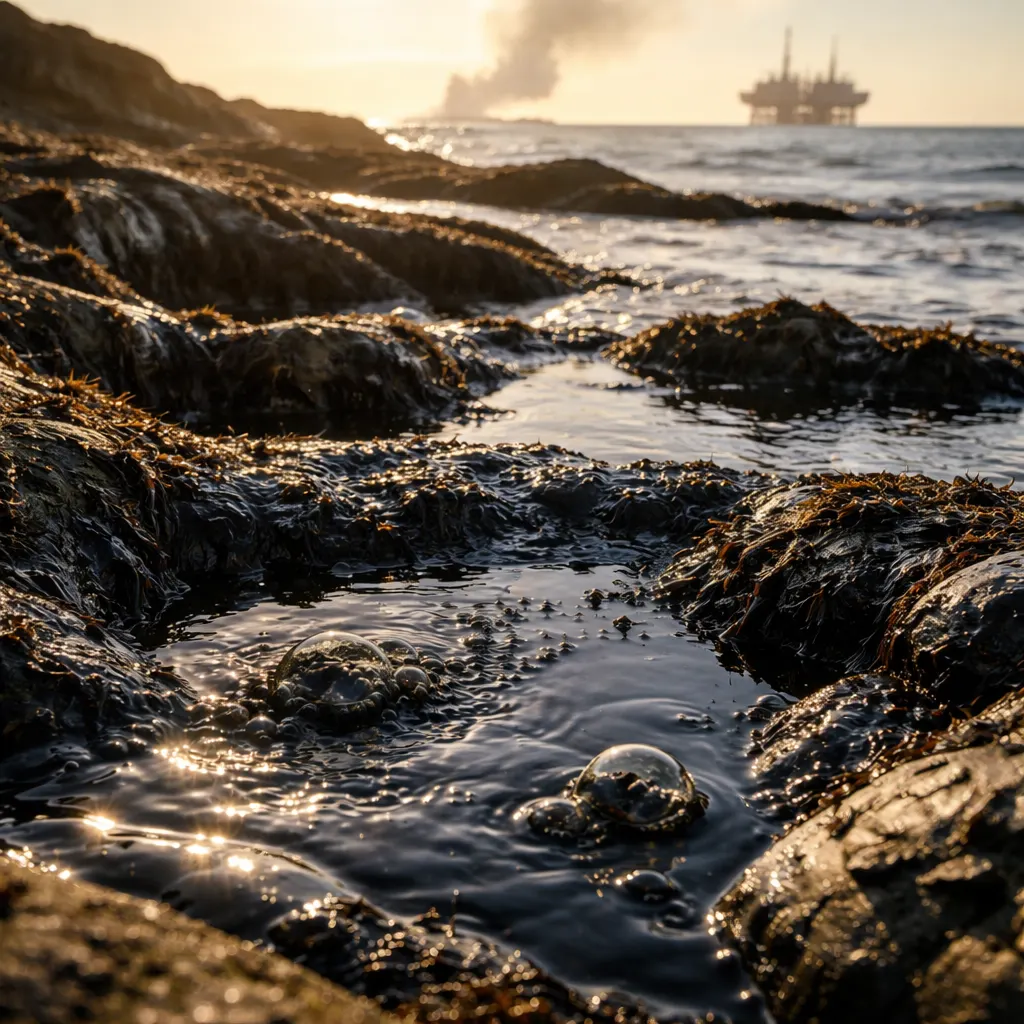
A new study from UC Berkeley finds that natural oil and gas seeps emit between 153 and 340 times more methane and volatile organic compounds than active oil production equipment in Southern California. The research, led by James Rector alongside a team of civil, environmental, chemical, and biomolecular engineers, was released on June 17 and challenges the assumption that shutting down oil production would eliminate oil-related air pollution in the region. The study's conclusion is stark: the only practical way to stop most methane leaks is to drill and deplete the underground reservoirs that feed them.
The study estimates that methane leaks from oil and gas production and gathering facilities represent between 0.65% and 2.21% of emissions from natural and orphaned well seeps. Los Angeles County oil production has fallen to barely one-tenth of its 1970s peak of nearly 100 million barrels per year, yet a 2013 U.S. Geological Survey assessment found that between 1.4 and 5.6 billion barrels of additional oil could still be recovered from just the ten major oil fields in the Los Angeles Basin. The county has over 25,000 identified abandoned wells, though the actual number is likely much higher, with wells scattered from Beverly Hills to Elysian Park that haven't been active for over a century. Capping these wells costs an average of $111,000 per well according to the California Legislative Analyst's Office, though Los Angeles city estimates put full site remediation at $361,232 per well—totaling between $2.8 billion and $9.0 billion countywide.
The study's title makes its findings explicit: "Emissions from natural seeps and orphaned wells are orders of magnitude greater than fugitive emissions from oil production equipment in Southern California." According to Rector, California's shifting geology and multiple active faults open pathways for the state's massive underground oil and gas reserves to vent naturally to the surface, explaining phenomena like tar seeping onto beaches and into the ocean, as well as the La Brea tar pits in downtown Los Angeles. The report concludes that "the only demonstrated way to reduce these emissions over time is by producing and depleting the reservoirs in the underlying oil and gas field." This finding represents a validation of current regulations in controlling emissions from active operations, but completely undermines the idea that stopping production and capping wells would eliminate oil-related methane and VOC emissions.
Rector explains that even if natural seepage wasn't the dominant source of emissions, it's impossible to locate and cap every abandoned well in a region as sprawling as Los Angeles County. In California's seismically active environment, plugging wells is "an exercise in futility" because underground oil doesn't stay inert—earthquakes and fault movements continually create new pathways for oil and gas to reach the surface. The report identifies two near-certainties: Californians will consume at least another 5 billion barrels of oil even if consumption reaches zero by 2045, and depleting oil reserves in Los Angeles, Ventura, and Santa Barbara counties is the most effective way to control oil-related emissions of methane and volatile organic compounds.
The study's conclusion flips conventional environmental wisdom on its head. Rather than being an environmental threat, drilling for oil in California—especially in the Los Angeles Basin with its world-class concentration of crude oil—emerges as an environmental solution. By depleting underground reservoirs, production eliminates the source that feeds natural seeps and reduces emissions that would otherwise persist for centuries. The report finds that drilling is no longer just an economic choice but is "guaranteed to help the environment" by preventing far larger volumes of methane and VOCs from escaping through natural pathways that can't be controlled any other way.