
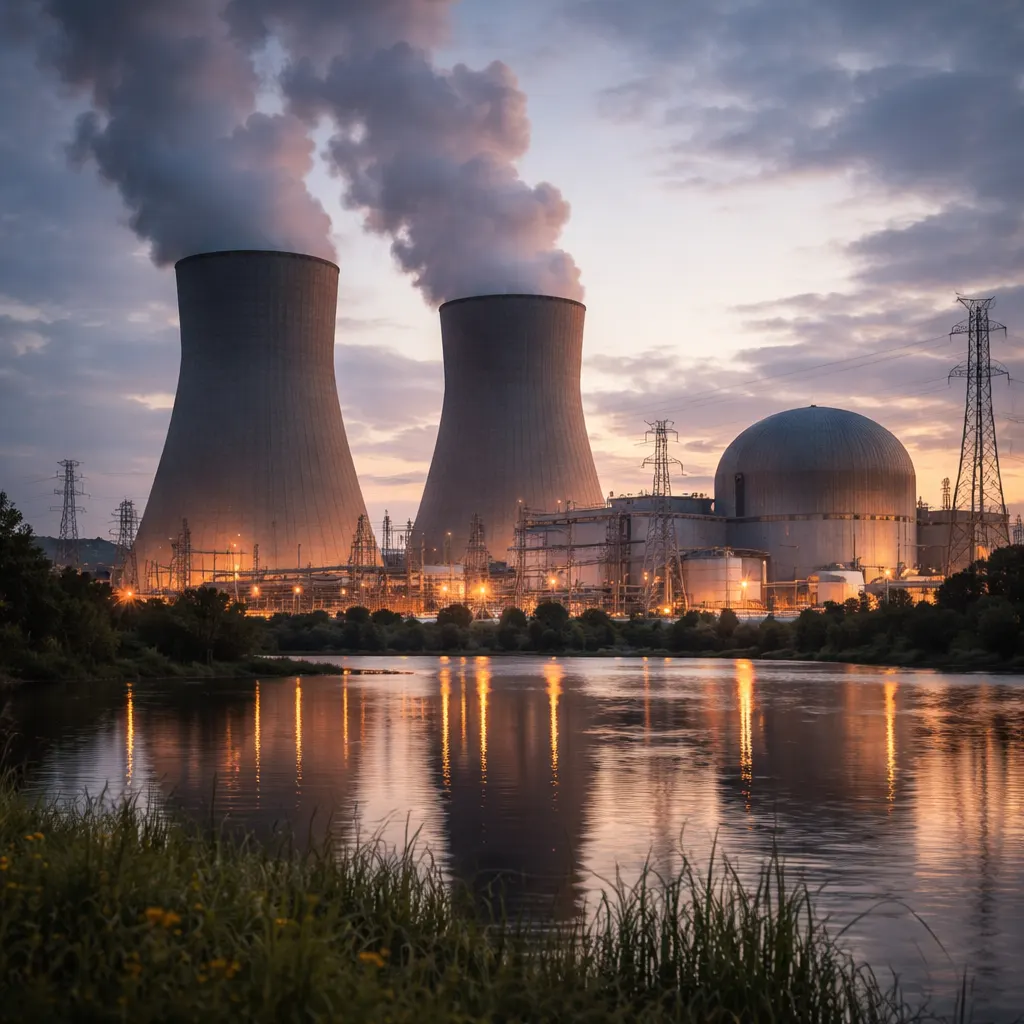
New Jersey has lifted its de facto ban on new nuclear power plants after decades of restrictions that contributed to electricity rates 20% higher than the national average. On April 8, 2026, Governor Mikie Sherrill signed legislation ending the state's nuclear moratorium, marking a sharp reversal in energy policy driven by a bipartisan coalition of state legislators. The move aims to tackle rising energy costs that have forced many residents to choose between heating their homes and buying food.
The state's nuclear restrictions had severely constrained energy supply. Previously, New Jersey's Commissioner of the Department of Environmental Protection couldn't issue permits for nuclear plants unless there was federal approval of a permanent high-level waste repository, even though on-site dry cask storage is safe and effective. In 2018, the Oyster Creek Nuclear Generating Station, one of America's oldest nuclear facilities, had to shut down due to the high cost of meeting state environmental standards. Despite the tough regulatory climate, the two remaining nuclear power plants in New Jersey still account for 40% of the state's in-state electricity generation.
According to the report, the new law modifies the Coastal Area Facility Review Act to allow nuclear power plants that comply with Nuclear Regulatory Commission standards, cutting burdensome red tape. Speaking at the Hope Creek Nuclear Generating Station in Salem County, Governor Sherrill explained: "One law required any new project to point to a method of disposal that, quite literally, does not exist. It was written in the 1970s, tied to a technological requirement that made sense then but not today." The legislation was pushed by Senate President Nicholas Scutari and Republican Budget Officer Declan O'Scalon Jr., showing rare bipartisan agreement on energy policy.
The report explains that New Jersey's energy crisis stems from multiple factors working together. As basic economics suggests, constraining supply while demand grows leads to high prices, which is exactly what the state experienced. The situation was worsened by PJM, the regional grid operator for Pennsylvania, New Jersey, and Maryland, which has been slow-walking connections of new energy projects to the grid. Additionally, New Jersey's participation in the Regional Greenhouse Gas Initiative (RGGI) effectively subsidized inefficient power plants in non-RGGI states, increasing both costs and emissions rather than reducing them.
The report concludes that other blue states need to recognize nuclear energy must be part of any clean energy movement and start cutting the red tape blocking it. At a time when regulations written in the 1960s and 70s continue to drive up costs, streamlining these burdensome rules represents a step toward making energy more affordable. With New Jersey residents paying a fifth more for electricity than the rest of the country, the state's decision to bring new nuclear capacity online could provide a blueprint for other states facing similar energy affordability challenges.