
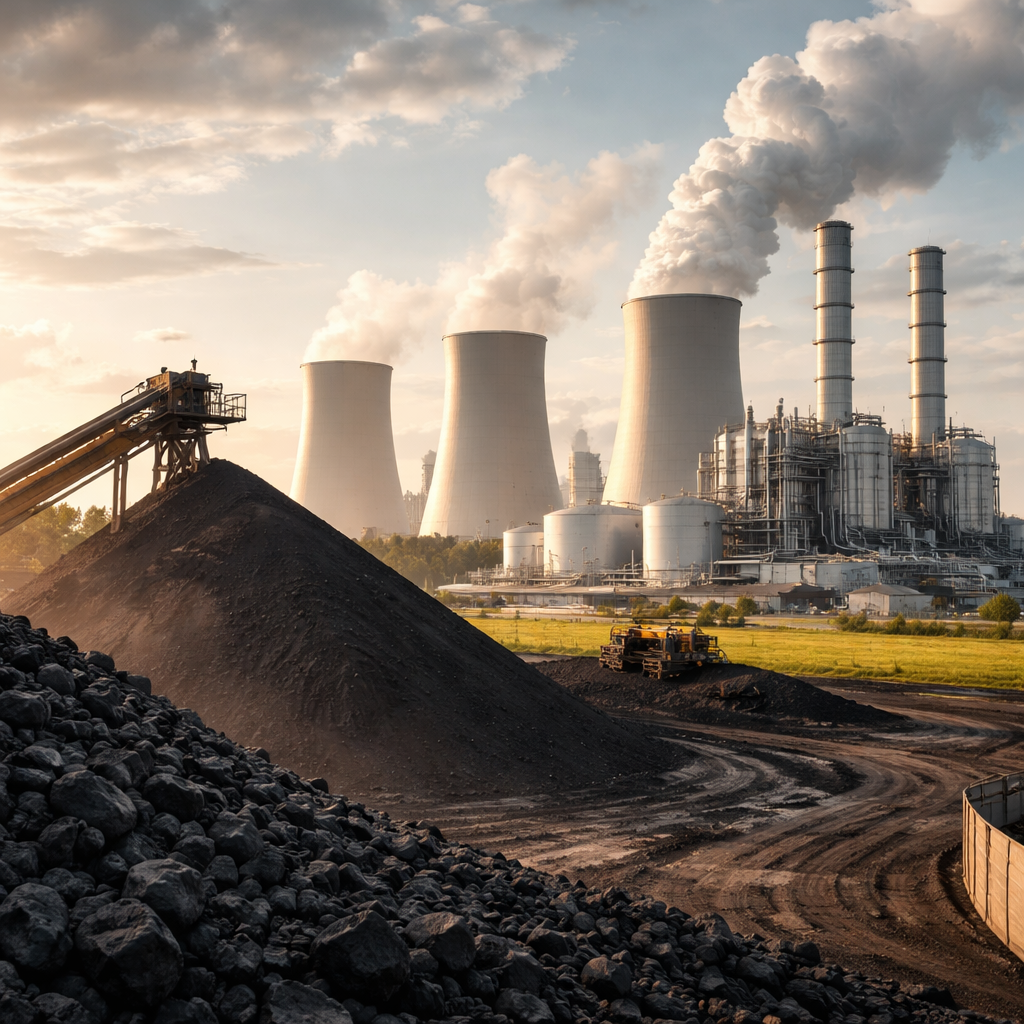
The United States' transition from coal to natural gas for electricity production since 2000 has eliminated 867 million tonnes of annual CO2 emissions—more than the combined total carbon output of Germany and France, the world's third and seventh largest economies. That's according to "Enemies of Energy," a research report published June 16, 2026, by the Capital Research Center. The report examines how hydraulic fracturing and the dramatic expansion of American natural gas production have reshaped the country's energy mix and carbon footprint, even as environmental groups have intensified their opposition to gas development.
Between 2000 and 2024, natural gas jumped from 16.2 percent of U.S. electricity generation to 42.6 percent, while coal collapsed from 51.7 percent to just 14.9 percent. The report states that America's total CO2 emissions fell from 6.02 billion tonnes in 2000 to 4.9 billion tonnes in 2024. Carbon emissions from natural gas rose by 520 million tonnes during that period, but coal emissions dropped by 1.39 billion tonnes—a net reduction of 867 million tonnes that accounted for more than 77 percent of the country's total emissions decline. By 2023, the International Energy Agency credited the U.S. with more than 25 percent of the world's natural gas production, surpassing the combined output of Russia and Iran. In contrast, Germany's total 2024 CO2 emissions—from all sources including transportation and industry—were just 572.32 million tonnes, while France's stood at 264.16 million tonnes.
The report emphasizes that natural gas "emits about half of the carbon dioxide emissions as conventional coal plants" when used for power generation, citing a 2010 Scientific American analysis confirmed by multiple U.S. Department of Energy reports. According to the report, this cleaner-burning characteristic made natural gas attractive even to left-wing publications in the 1970s: Ramparts magazine wrote in 1973 that "there was a particularly keen demand for the clean burning natural gas because of air pollution in big metropolitan areas." Today's environmental groups take a sharply different view—the report notes that Greenpeace called U.S. liquified natural gas terminals "climate Death Stars that will decimate both local communities and our planet" in a January 2024 news release.
The report explains that America's natural gas boom resulted from combining hydraulic fracturing with advanced geological mapping, technologies that unlocked vast domestic reserves and made the U.S. the world's top producer. This abundance enabled electric utilities to replace coal plants with gas-fired generation at scale, delivering the massive emissions reductions without requiring renewable energy buildout or major changes in electricity consumption. But the report warns that global emissions trends are moving in the opposite direction: China's CO2 emissions from coal burning jumped by 890 million tonnes between 2021 and 2024—completely wiping out the American coal-to-gas savings. The Financial Times reported in January 2026 that China planned to open more than 100 new coal-fired power plants during the year.
The bottom line: fracking turned America into a natural gas superpower and delivered climate benefits equal to eliminating two major European economies' entire carbon footprints. But China's coal expansion is erasing those gains just as fast as they were made.