
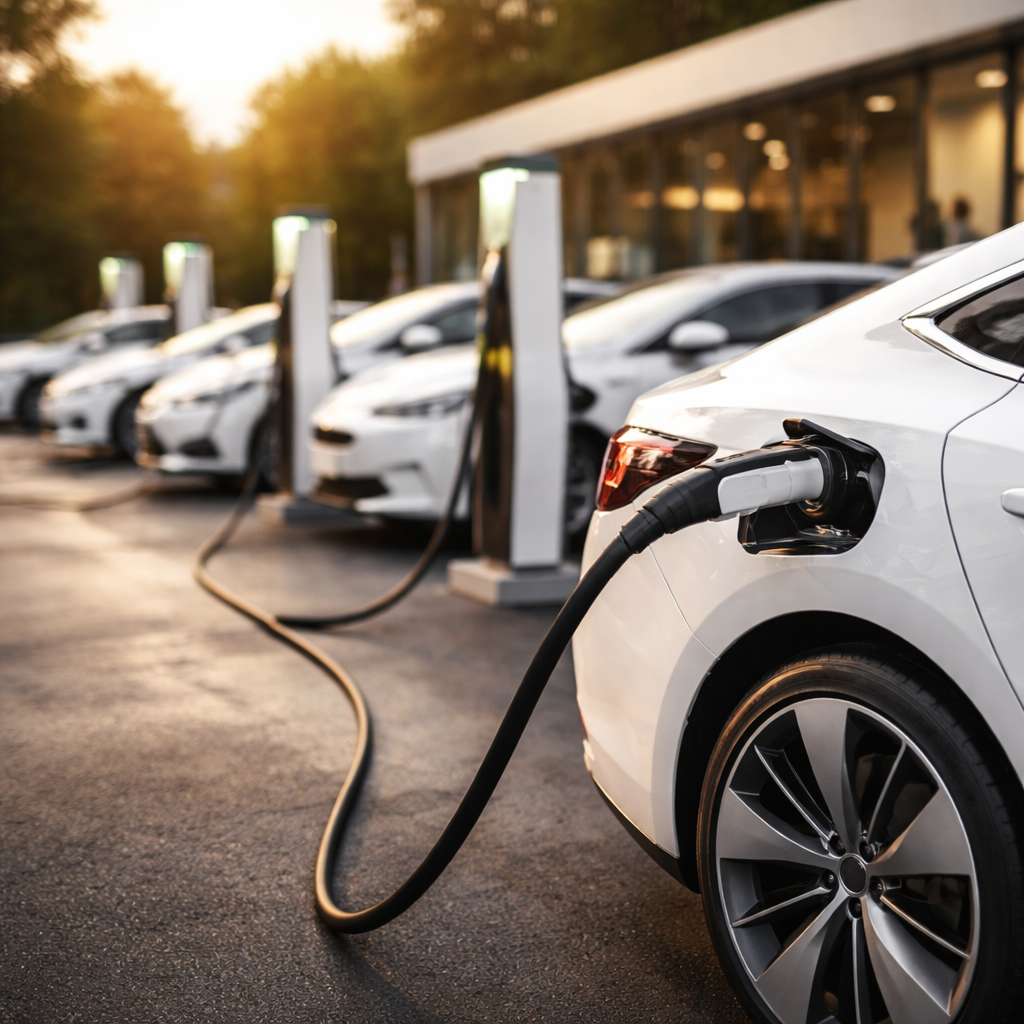
Electric car sales topped 20 million worldwide in 2025, with electric vehicles accounting for one in four new cars sold globally, according to the International Energy Agency's Global EV Outlook 2026 released this month. The 20% year-on-year growth marked the fifth straight year in which annual electric car sales increased by roughly 3.5 million units, a trend that began in 2021 after the Covid-19 pandemic. As a result, about 5% of the global car fleet is now electrified, displacing 1.2 million barrels of oil per day in 2025.
The surge was driven by diverging regional trends. China maintained its dominance with more than 13 million electric cars sold—six out of every ten globally—pushing its electric car sales share to nearly 55%. Europe saw electric car sales jump 30% to exceed 4 million vehicles after stagnating in 2024, thanks largely to stricter EU CO2 standards that came into effect in 2025. The United States saw its electric car sales share remain relatively stable at just below 10% across the full year, though sales fell sharply in the fourth quarter—down 45% compared to the same period in 2024—following the elimination of federal tax credits in September 2025. Outside these three major markets, electric car sales reached nearly 2 million in 2025, up 50% from the previous year, with emerging markets and developing economies other than China seeing sales surge roughly 80%. Southeast Asia demonstrated the largest absolute increase, with sales more than doubling to over half a million vehicles as affordable Chinese imports flooded markets like Vietnam, Indonesia, and Thailand.
The report finds that 2025 saw a boost for battery electric cars specifically, with their share of total electric car sales rising to 65%, reversing a two-year trend toward plug-in hybrids. Norway remained the world's leading electric car market by sales share, with about 97% of new car sales being electric in 2025, coming close to the country's target of selling only zero-emission cars by year's end. According to the IEA, more than half of the 2 million electric car sales outside the three major markets took place in countries across Latin America, the Asia Pacific, and the Middle East that have now reached an electric car sales share exceeding 10%. The report notes that in China, monthly electric car sales exceeded a 50% sales share in 11 out of 12 months in 2025, up from only five months in 2024, lifting the country's electric car stock to an estimated 44 million vehicles—representing around 13% of China's total car fleet.
The price competitiveness of electric cars improved markedly across major markets in 2025, driven by falling battery costs and manufacturer pricing strategies. In China, the average battery electric vehicle price dropped more than 10% despite upward pressure from larger SUVs entering the market, with nearly 70% of BEVs sold already cheaper than their conventional equivalents even before government incentives. Germany saw average BEV prices fall around 6%, supported by the wider availability of more affordable models, while the United States recorded a nearly 2% decline as Tesla and other carmakers slashed prices following the end of federal tax credits. The report explains that in emerging markets, affordability gains were primarily driven by low-cost Chinese imports—Chinese-made models accounted for over 85% of electric car sales in Brazil and Mexico, and about 75% in Indonesia and Thailand. In Southeast Asia specifically, Chinese imports represented 60% of sales in emerging economies, with many markets doubling in size compared to 2024. Government support remained substantial but shifted in composition: while total global spending reached about $60 billion in 2025—up roughly 20% from the previous year—support per vehicle declined to just under 7% of total electric car spending, down from over 12% in 2019, as purchase subsidies gave way to tax exemptions and import duty reliefs in most regions.
Looking ahead, the IEA projects that electric car model availability could exceed 1,100 globally in 2026, based on recent manufacturer announcements, with around 150 new electric models slated for release. However, policy changes are expected to reshape support structures: China's purchase tax exemption will be replaced with a 50% reduction tied to energy efficiency starting in 2026, significantly reducing per-vehicle government spending, while several European countries including Germany and Sweden have reinstated purchase subsidy programs. The report notes that in the United States, the elimination of tax credits is expected to result in virtually no government financial support for electric car purchases in 2026. Despite these shifts, the report's data shows that affordability is increasingly independent of subsidies in major markets—in China, purchase price parity between electric SUVs and conventional models was achieved for the first time in 2025, while just five battery electric car models accounted for about 20% of global BEV sales, demonstrating how economies of scale continue to drive down costs and accelerate the transition to electric mobility worldwide.