
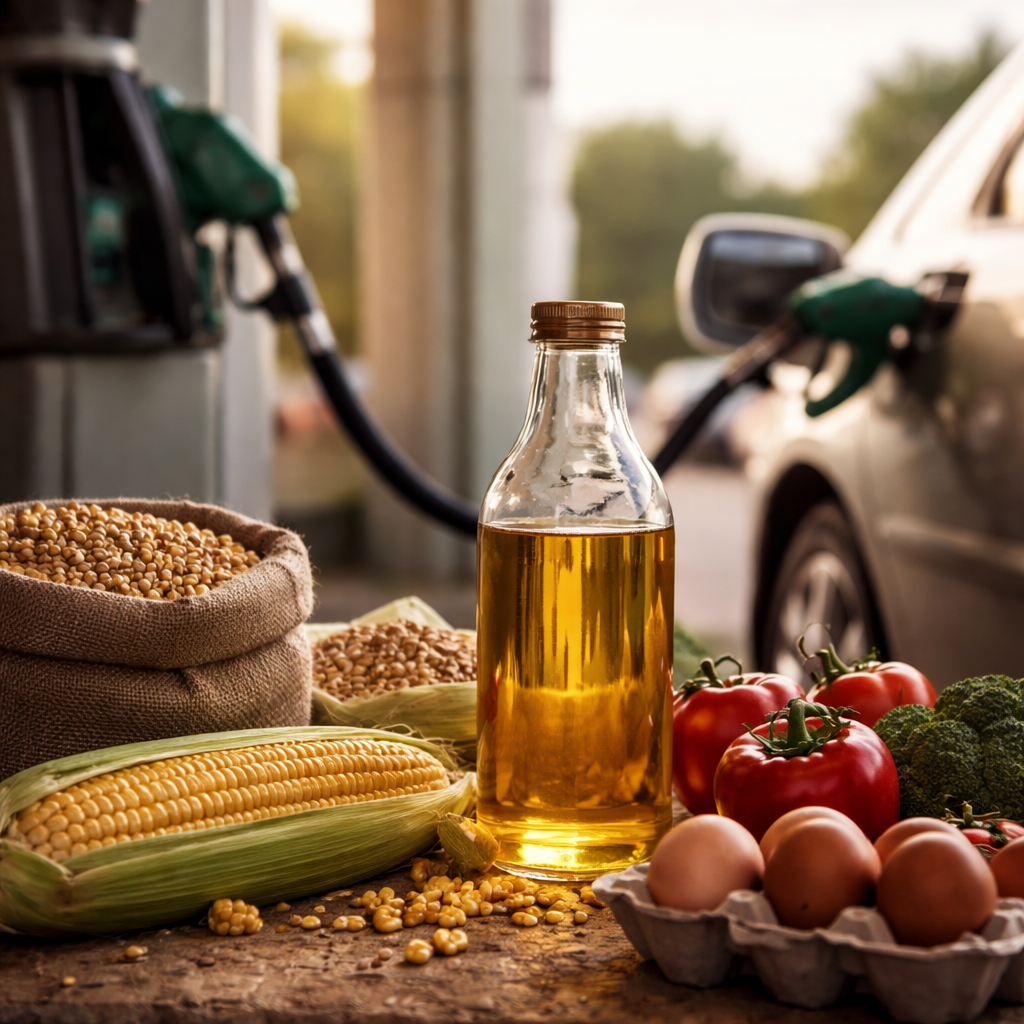
Over a third of all corn grown in the United States is diverted for ethanol production rather than food, driving up prices for corn products, meat, and dairy, according to a June 12, 2026 commentary by Josiah Neeley at the R Street Institute. The analysis examines how federal ethanol policies create a tangle of conflicting regulations that cost taxpayers billions without delivering meaningful environmental or energy independence benefits. The commentary focuses on a current congressional battle over year-round sales of E15, a gasoline blend containing 15 percent ethanol.
The federal Renewable Fuel Standard required 22.33 billion gallons of biofuels be blended into gasoline last year, with at least 15 billion gallons coming from corn ethanol. Ethanol producers can receive as much as $1 per gallon in subsidies through the Clean Fuel Production Credit. However, E15 faces legal restrictions during summer months because its higher vapor pressure produces smog-forming emissions at higher temperatures, conflicting with Clean Air Act standards. States must request waivers from the Environmental Protection Agency to continue E15 sales during summer, creating logistical headaches that prompted the House to narrowly pass legislation last month allowing year-round E15 sales, though the bill faces uncertain prospects in the Senate.
The report notes that ethanol's purported benefit of lowering gas prices "is something of an illusion" because ethanol is less energy-dense than gasoline, meaning drivers must fill up more often and don't ultimately save money despite lower per-gallon pump prices. Neeley writes that diverting over a third of U.S. corn to ethanol "raises the price not only of corn products but also many meat and dairy products that use corn as a feedstock," and can even drive up prices of other crops as farmers switch to corn in response to government supports. The analysis states that food price increases from ethanol are "not only bad for American consumers" but "can spark international unrest."
The commentary argues that the original justifications for the Renewable Fuel Standard have collapsed over time. When first instituted, the mandate was justified as environmentally friendly and a way to reduce dependence on foreign oil. But the environmental effects of ethanol "are not great to put it mildly," according to the report, and any alternative to gasoline in transportation is coming from electricity, not corn. The rise of fracking and the resulting boom in domestic oil and gas production has reduced concerns about foreign oil dependence. The report frames this as government literally getting in the way of itself—one set of regulations promoting ethanol while another restricts it due to air quality concerns.
Neeley concludes that "in a sensible world, instead of changing regulations that are in conflict with biofuel mandates, policymakers would reconsider the existence of those mandates." The current system costs taxpayers billions without providing real benefits, while creating regulatory conflicts that require constant waivers and legislative fixes. Rather than expanding ethanol use to year-round E15 sales, the report suggests the smarter move would be eliminating the mandates that pit food production against fuel production in the first place.