
Nearly 40 Japanese supertankers sit partially idle as disruptions at the Strait of Hormuz force the country's oil refiners to completely rework their crude supply chains, according to tanker brokers, owners and charterers who spoke with S&P Global Platts on June 9, 2026. Japanese refiners, saddled with time-chartered very large crude carriers (VLCCs) contracted before the Persian Gulf war began, are now improvising through ship-to-ship transfers in Malaysia and increased imports from the US to keep operations running. The region that once supplied 90% of Japan's crude has become largely inaccessible to the country's fleet.
Japanese refiners control about 50 VLCCs, with almost 40 taken on time charter from local shipowners now facing voyage restrictions due to Strait of Hormuz disruptions, according to estimates from tanker brokerages. These vessels can't call ports in the Persian Gulf, Red Sea, Fujairah, or the Gulf of Oman—only NYK permits loading at Mina-al-Fahal in Oman on a case-by-case basis, while MOL confirmed its tankers aren't loading cargoes in any of these restricted zones. Japan's crude refining capacity stands at about 3.1 million barrels per day, though part of it is now underutilized. Volumes equivalent to 10-14 VLCCs are being loaded every month from the US and Mexico, including shipments in smaller Aframax vessels, two chartering executives and brokers estimated. The global VLCC fleet totals about 885 tankers, including a dozen delivered this year, with another two dozen expected during the rest of 2026.
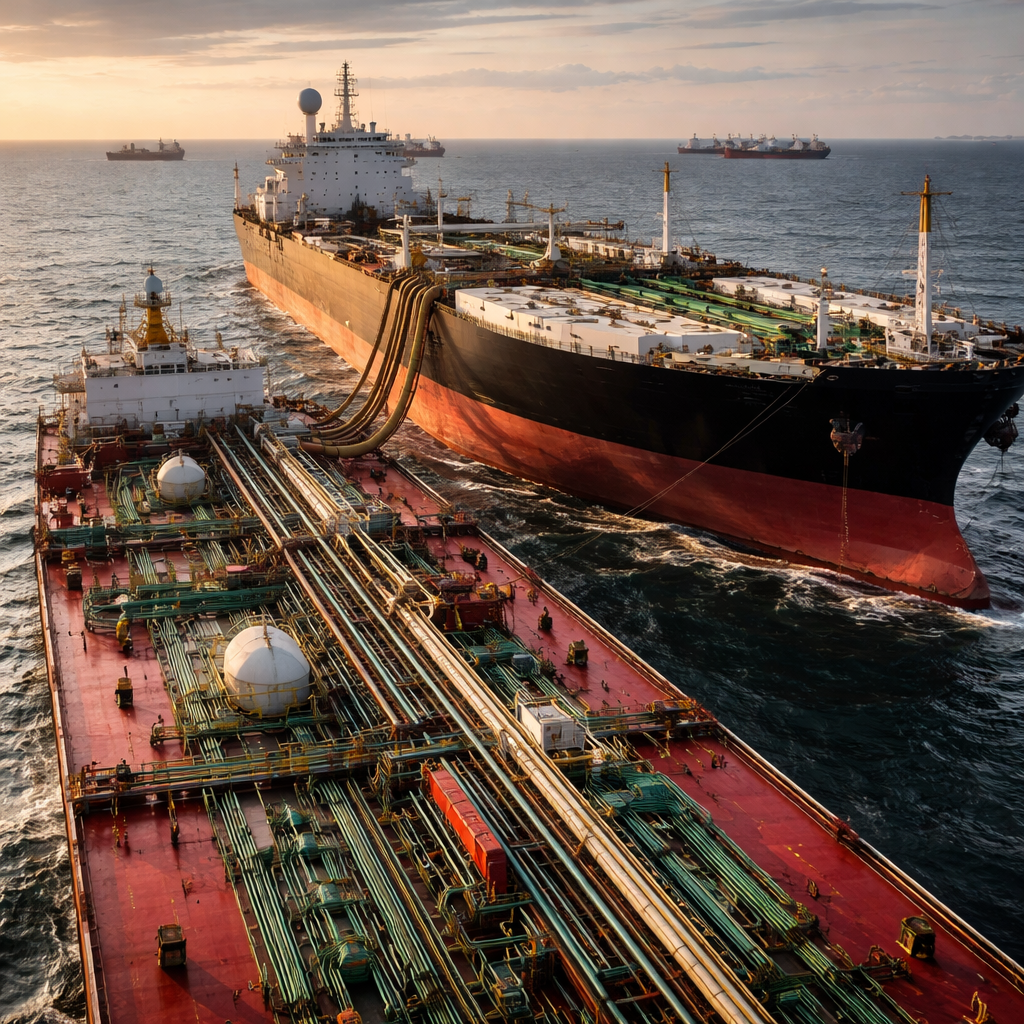
The challenging situation has upended decades of direct crude shipments from the Persian Gulf to Japan, sources told Platts. "It is a very challenging situation because Japanese tanker owners do not permit the VLCCs they have chartered out to call ports in the Red Sea, Persian Gulf and even Fujairah and Oman," a chartering source said. Four sources with tanker brokerages and chartering companies said Japanese refiners now hire tankers in the spot market to load cargoes in Yanbu, Fujairah, and Mina-al-Fahal, which then bring the crude to Malaysia for transfer to Japanese VLCCs at Linggi and Tanjung Bruas. Several cargoes of Arabian light crudes have been lifted from Yanbu on both delivered and free-on-board basis, with the oil moved from inside the Persian Gulf to the Red Sea via the East-West pipeline, brokers and charterers reported.
The report reveals why the improvised system emerged: Japanese refiners locked in time charters for dozens of VLCCs before the war started, when the Persian Gulf supplied nearly all of Japan's crude. Now those contracts are liabilities—the ships can't access their original routes, and there are few takers when Japan offers the vessels to charterers in China and South Korea due to a large tanker surplus amid global trade disruption. Ship-to-ship transfers have become essential workarounds, though for safety reasons such transfers aren't conducted at Malaysia's Tanjung Pelepas due to serpentine queues, congestion, and fully booked slots. The shift to US crude makes operational sense: Japan's refineries are typically designed to process lighter crudes, making American WTI grades more suitable for import than the heavier grades they once relied on, a dirty tanker broker explained. Two cargoes of relatively heavier grades have recently been sourced from Mexico as well, a refining source noted.
The restructured trade pattern looks set to continue as long as Hormuz remains disrupted and the Persian Gulf war persists. With refineries operating below capacity to meet requirements and the global tanker surplus offering no relief for idle vessels, Japanese refiners have diversified their sourcing to keep crude flowing. The bottom line: Japan's oil supply chain has shifted from direct Persian Gulf shipments to a complex web of spot-market hires, Malaysian transfers, and transatlantic voyages—a more expensive and logistically challenging reality born of geopolitical necessity.