
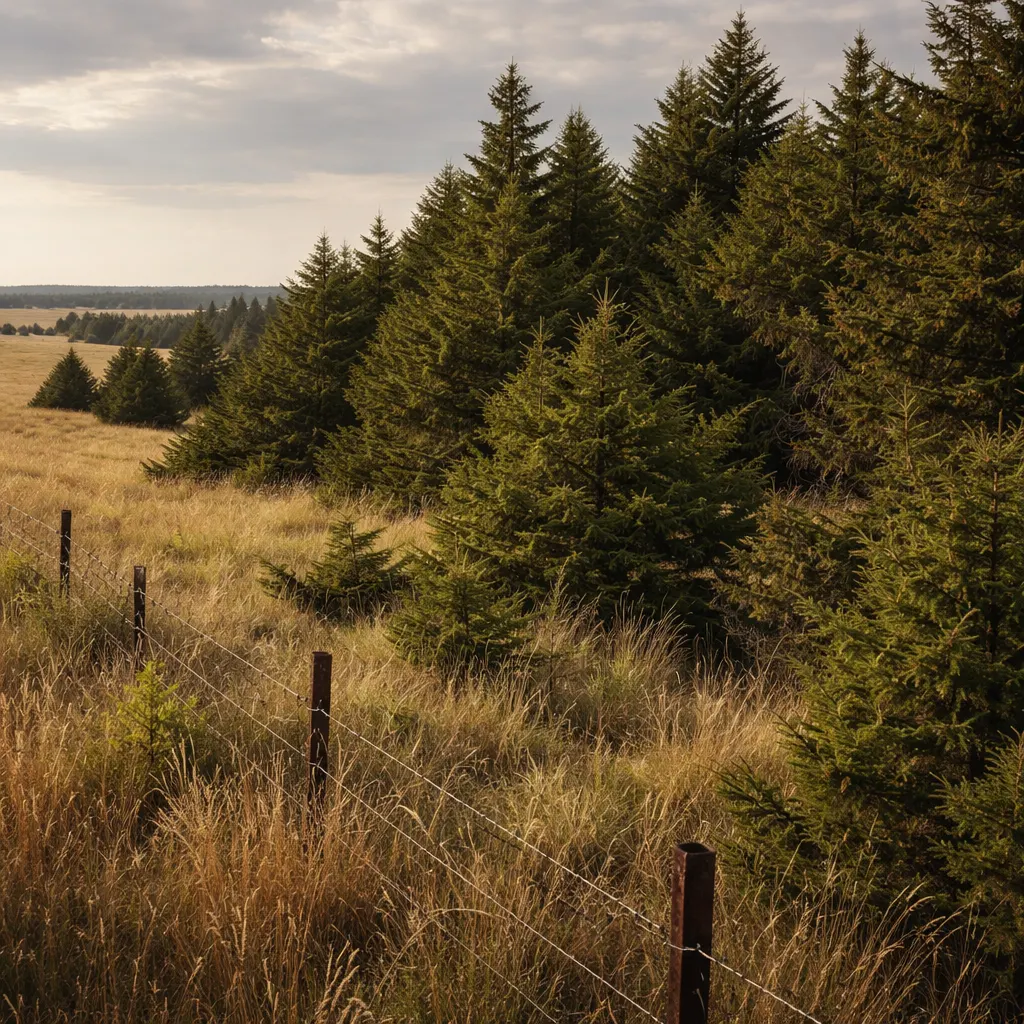
An advancing wave of trees is overtaking grasslands across the Great Plains, threatening biodiversity and costing ranchers an estimated $4 billion in lost grazing land, according to a report published by Grist and the Nebraska Examiner. The phenomenon, known as woody encroachment or the "green glacier," describes the slow spread of tree species—especially eastern red cedar—into prairie ecosystems that have thrived for centuries without them. Ecologists and ranchers across the 10 Great Plains states are now racing to control the invasion before it permanently transforms one of the continent's most important landscapes.
The issue is most visible in regions like Nebraska's Sandhills, a 19,500-square-mile expanse of grassy dunes where ranchers originally planted cedars as windbreaks to shield cattle from harsh weather. But these trees have escaped their intended rows, with seedlings spreading across a 200-foot radius from each mature tree. Once seedlings reach 5 feet in height, they begin dispersing their own seeds in another 200-foot circle, accelerating the takeover at a growth rate of 1 to 2 feet annually. Only 4 percent of tallgrass prairies remain today, making them the most altered landscape in North America by total acres lost, the report notes. The Flint Hills of Kansas and Osage Hills of Oklahoma now contain two-thirds of the nation's surviving tallgrass prairie.
"We're losing our biodiversity," said Shelly Kelly, executive director of the Sandhills Task Force, a conservation nonprofit established 33 years ago. "We're losing our resiliency." The report finds that fire suppression has allowed woody plants to establish themselves and develop thick bark that helps them survive future burns, while overgrazing has reduced the grassy competition that would otherwise keep trees in check. According to Brian Obermeyer, The Nature Conservancy's Great Plains grasslands strategy director, the persistence of prairie in Kansas and Oklahoma is largely due to a longstanding culture of prescribed burns dating back to the Chisholm Trail era, when ranchers would burn land to produce the nutritious new growth that fattened cattle.
The expanding tree cover poses risks beyond lost grazing land. Woody plants threaten the already strained water supply as they move from wetter eastern prairies toward arid western regions, the report explains. Trees also undermine grasslands' role as carbon storage: while woody plants store most carbon above ground in trunks and leaves that release it when burned, grasslands lock carbon safely underground in root systems that can extend 20 feet deep and rebound quickly after fire. Rising atmospheric carbon may further advantage trees, which use a different photosynthesis pathway than grasses and become more efficient in carbon-rich, warm, dry conditions. Climate change also rules out a hands-off approach, since grasslands have evolved alongside human management—from Indigenous peoples hunting bison to modern ranchers using prescribed burns and grazing patterns.
Solutions are emerging across the region. The Sandhills Task Force helps ranchers cover up to 75 percent of cedar removal costs through grants, spurring a growing removal industry. Eastern red cedar is relatively easy to eliminate: cutting it to the root typically prevents regrowth. State and federal programs also fund removal, though ironically some departments still subsidize tree planting for windbreaks, increasingly discouraging red cedars specifically. The Nature Conservancy is testing grazing patterns and plant mixes on its preserves to help private landowners balance burning, grazing, and restoration. Chris Helzer, Nebraska director of science and stewardship for The Nature Conservancy, emphasized that there's a critical threshold: "To some extent, you can have a prairie that has trees. But there's a line—when you cross that line, you have a woodland with clearings, not a grassland with trees." Despite the losses, Obermeyer said places like the Flint Hills and Sandhills offer hope, as more people recognize the ecological power of the plains and the chance to preserve what remains.