
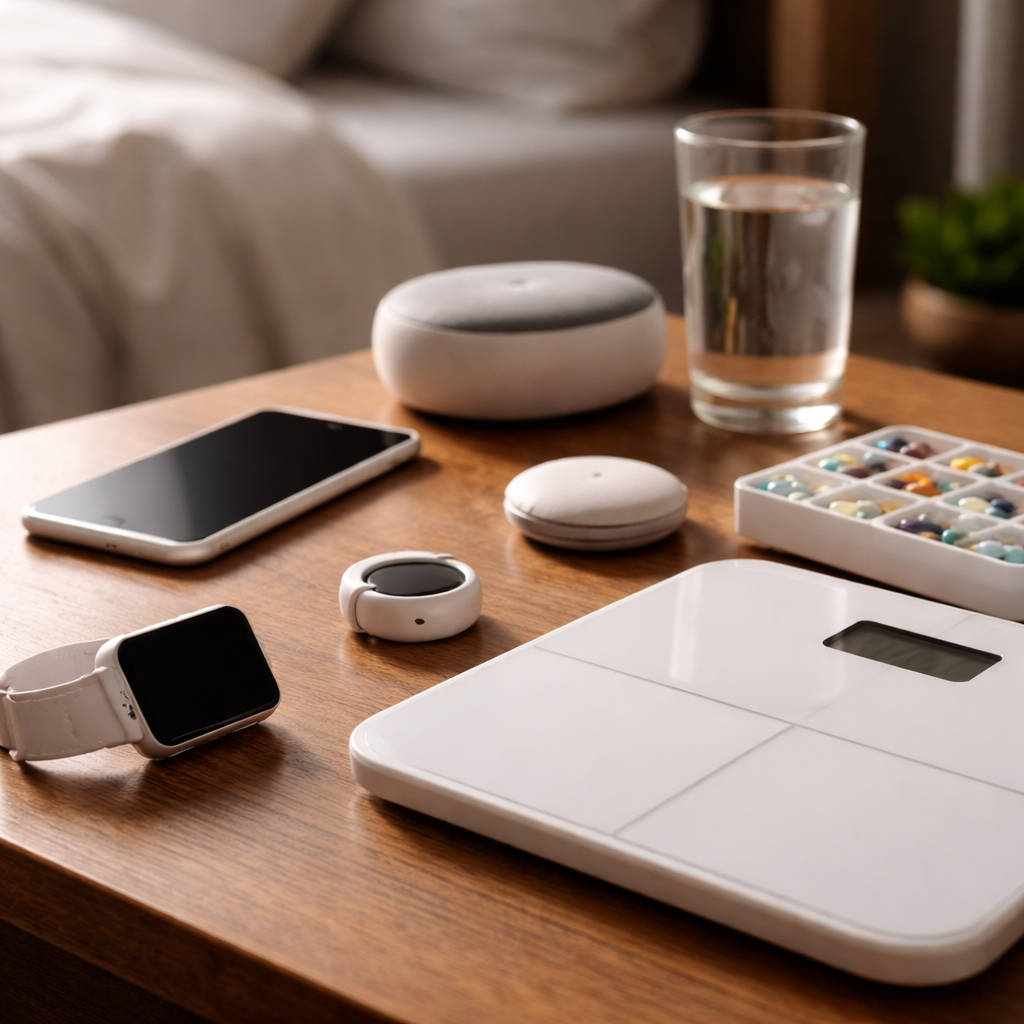
The popular strategy behind wellness technology—collect more data through wearables and blood tests, analyze it with AI, and deliver personalized coaching—largely amounts to "precision health theater" with limited scientific validity, according to a new analysis published June 8, 2026, by David Shaywitz, adjunct fellow at the American Enterprise Institute, in the Timmerman Report. If users follow these platforms as directed by intensively pursuing metric maximization, there's a decent chance they'll wind up feeling worse, not better. The analysis argues that any health benefit from these platforms comes not from data-driven optimization but from their effect on mindset—reinforcing users' sense that they're people who care about their health.
Several comprehensive academic reviews paint a modest picture of wellness tech's actual health impact. A 2022 review and another in 2025 found solid evidence that wearables increase physical activity slightly, but mixed results on actual health outcomes. Meanwhile, adverse consequences are mounting: users report orthosomnia (trouble sleeping from obsession with sleep metrics), orthorexia (obsessive pursuit of "perfect" eating), and what one New York Times feature called "Oura paranoia"—a debilitating fixation on wearable data where users constantly try to "make the ring happy." A large CVS/Aetna analysis found that members enrolled in a wearable-and-incentive program saved roughly $10 less per month in medical spending in the first year compared to non-enrollees, with savings coming almost entirely from fewer non-emergent emergency room visits and reduced specialist and mental-health visits—suggesting better decision-making rather than physically healthier bodies.
The analysis highlights research showing mindset's surprising power independent of actual behavior change. A classic 2007 Harvard study examined hotel workers who viewed themselves as inactive: one group was told their daily work already met criteria for an active lifestyle, while the control group heard nothing. Four weeks later, the informed group had significantly reduced body weight, body fat, and blood pressure despite no change in actual activity—driven simply by the mindset shift. National samples of over 60,000 adults followed for up to 21 years revealed that people who believed they were less active than their peers were far more likely to be dead at follow-up, even after adjusting for actual activity levels and other risk factors. A 2023 study with Apple Watch users received manipulated step-count feedback: those seeing deflated counts (40% below their actual ~7,000 steps) ate worse, felt worse, and showed higher blood pressure and heart rates after four weeks, while their actual walking stayed flat.
The analysis explains that wellness platforms work best when users engage with them as "proof" rather than precision—when a step count transforms an ordinary walk into visible evidence that you're someone who moves and pays attention. The palpability of this digital receipt makes the effort feel real enough to sustain, which is what these platforms actually offer rather than the optimization they advertise. Shaywitz notes that while today's data-driven personalization looks like theater, companies collecting biometric data may be building something genuinely valuable: a longitudinal asset that assesses each individual against their own trajectory rather than population norms, an approach championed by Nathan Price of the Buck Institute in his 2023 book "The Age of Scientific Wellness." The takeaway: if we're going to embrace tech wellness platforms, we need to make sure we're not holding on too tightly—and that the platforms are serving us, rather than the other way around.