
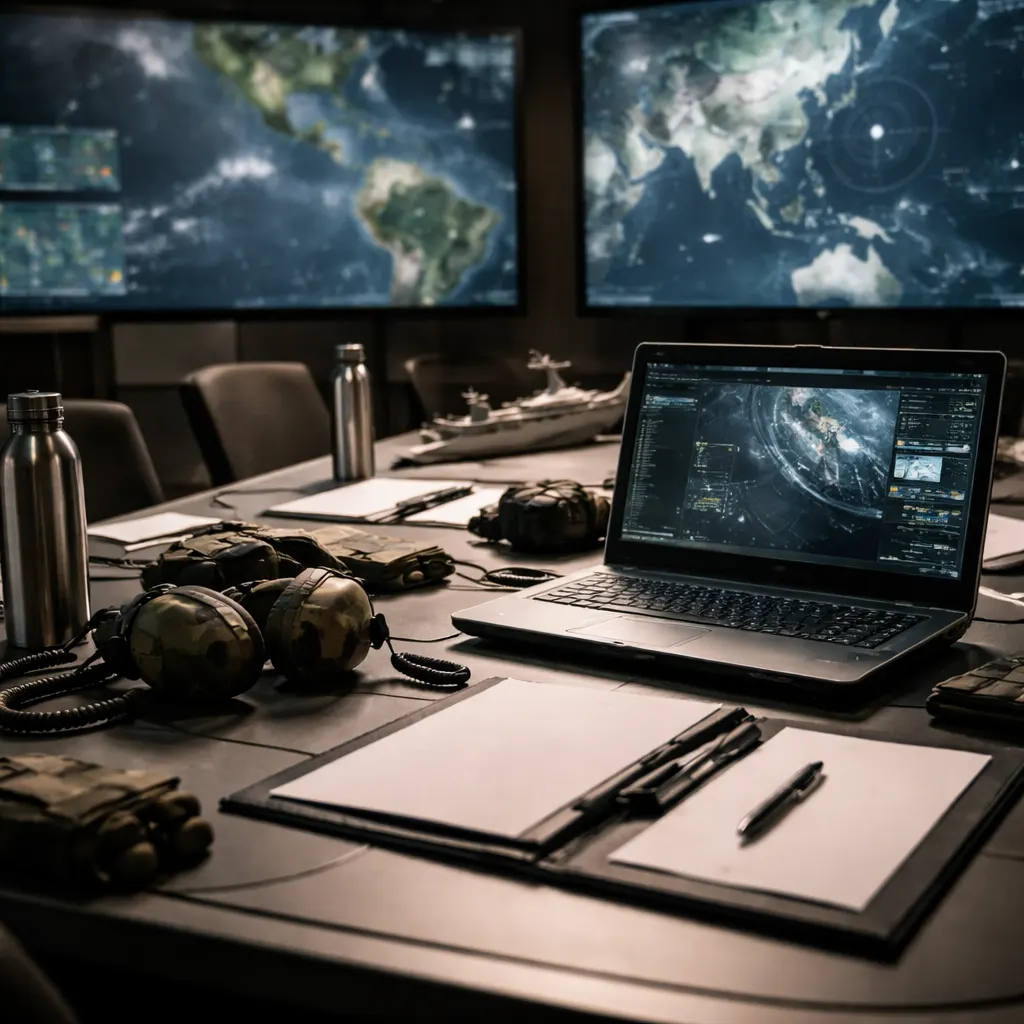
The United States launched precision strikes against more than thirteen thousand targets in Iran over thirty-eight days, powered by artificial intelligence that fuses drone footage, radar, signals intelligence, and friendly-force data to pick targets and suggest strike options. That capability will be critical in any conflict over Taiwan, but it creates a dangerous trap that could fracture America's Pacific alliances, according to a new report published by the Hoover Institution's Allied Coordination Working Group and Hoover History Lab. The report warns that allies haven't agreed on protocols for using algorithmic targeting, and when civilians are inevitably harmed by AI failures or deception, the political consequences could shatter the coalition at the worst possible moment.
The report describes a bleak munitions picture heading into any near-term Pacific conflict. US stockpiles were already depleted from supplying Ukraine, and the Iran war then consumed thousands of critical munitions in its first five weeks. The Pentagon is investing tens of billions in cheaper options like drones to supplement precision missiles, but ramping up production will take years. This forces the United States and its allies to rely even more heavily on algorithmic targeting than planners might have wished. Meanwhile, China's People's Liberation Army has built a force designed to confound AI systems: containerized missiles launched from commercial vessels, and the People's Armed Forces Maritime Militia—a fleet of dual-use boats that blur the distinction between military targets and noncombatants. The Philippines alone supplies a quarter of the world's mariners, meaning any strike that kills or injures Filipino seafarers could trigger a political crisis in Manila and backlash against Washington.
The militia vessels pose five distinct targeting challenges, the authors write. They're visually identical to civilian fishing boats, making it impossible to train algorithms to cleanly separate combatants from noncombatants. Engaging them wastes scarce munitions on low-value targets. Any strike risks killing civilian fishermen or refugees fleeing the conflict, which could fracture the coalition. Even accurate, lawful strikes will appear to observers as attacks on civilians. And if allied forces hold back instead, the militia becomes a shield for the PLA Navy and helps it target US carrier groups and allied vessels. The report frames this as "a real dilemma with no clean solution"—miss a genuine threat and allied ships are at risk, but mis-flag a fishing boat and civilians die.
The solution, according to the report, lies in allied coordination established now, in peacetime, because there won't be time during a fast-moving conflict. The authors recommend a shared target-value taxonomy built on three dimensions: value (what a target contributes to the campaign plan and how much cost and risk the coalition should accept to neutralize it), confidence (what level of certainty is required before each class of target may be engaged), and escalation sensitivity (which targets are politically permissible to strike from or within each ally's territory). Allies should embed personnel and civilian harm mitigation staff in the Pentagon offices overseeing unmanned and autonomous weapons. The United States and its partners should also predesign joint control measures—exclusion zones at sea and no-fly zones above them, announced to mariners and pilots in advance and coordinated with flag states and marine insurers. If exclusion-zone declarations are coordinated with the insurance market, compliant civilian traffic may exit risky areas on its own, making it more likely that ships remaining in the area aren't actually civilian.
These conversations must happen immediately, the report concludes, because "the algorithmic selection problem is ultimately an alliance problem." Declaring exclusion zones telegraphs allied operating areas to the PLA, but the alternative—using unannounced autonomous engagement zones in waters crowded with civilian traffic—is morally, legally, and politically unacceptable. The report acknowledges these are hard questions with no perfect answers, but warns that waiting until war breaks out will leave allies paralyzed by disagreements they could have resolved in advance. The bottom line: superior AI targeting won't deliver victory if it destroys the coalition first.