
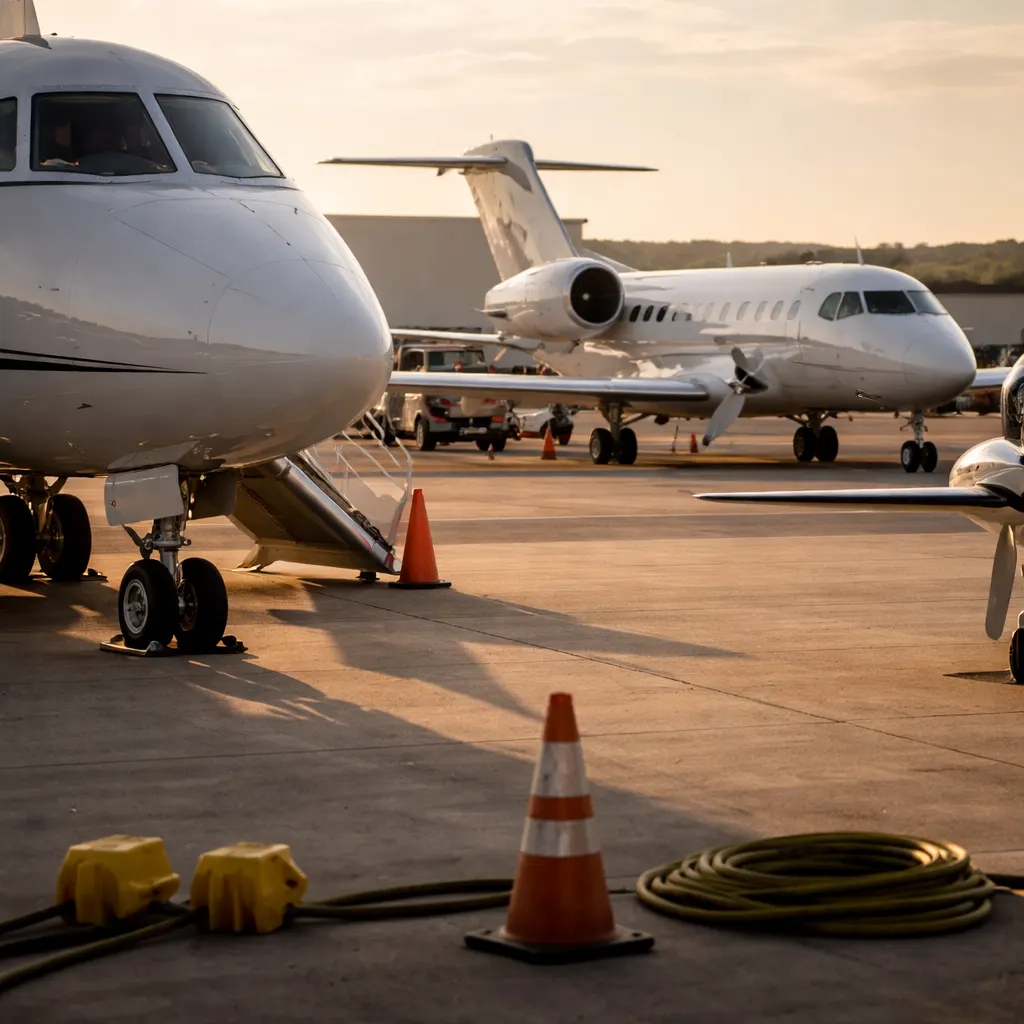
Austin will begin charging new fees on private and corporate aircraft at Austin-Bergstrom International Airport as early as Oct. 1, according to a report published by Austin Current on Sept. 4. City leaders say the move will force private aviation to cover more of the airport's infrastructure expenses as the facility undergoes a multibillion-dollar expansion. But the new charges will also hit smaller general aviation planes, raising concerns that a policy aimed at wealthy jet owners could burden recreational pilots, flight students, and others who fly at their own expense.
The changes include a $50 landing fee for noncommercial planes and a $100 landing charge during special events like F1 weekend, NASCAR weekend, South by Southwest, and University of Texas home football games, according to an Aviation Department memo obtained by Austin Current. Hangar rental rates for smaller aircraft will rise by 3%, and the fuel flowage fee at the airport will jump to 12 cents per gallon, then climb by 2 cents annually for five years until it hits 20 cents per gallon. The airport recorded 42,683 noncommercial aircraft operations in 2025. The fees are expected to generate hundreds of thousands of dollars in new revenue, though it remains unclear whether the fuel rate increase applies to both commercial and noncommercial planes.
Council Member Vanessa Fuentes, who authored the August 2025 resolution directing the city manager to explore these fees, said the goal is to make "private wealth work for public good." She added that the city wants to ensure "maintaining our airport doesn't just fall on everyday travelers," and that individuals with the means to fly privately should "pay their fair share." The Aviation Department recommended the fee adjustments to keep Austin competitive among Texas airports while generating new revenue, noting that peer cities like Dallas and San Antonio already impose private aviation fees and use the additional income to invest in airport infrastructure.
General aviation advocates warn the new fees could have unintended consequences for pilots who lack the financial resources of luxury jet owners. Tom Chandler, a regional manager with the Aircraft Owners and Pilots Association, which represents more than 25,000 members in Texas, said the proposed rules apply to small planes weighing less than 12,500 pounds—a threshold high enough to financially hurt owners of modest light aircraft. He noted that some airports with landing fees set the weight limit lower to address concerns about flight training costs. "To get a private pilot's license, you've got to have 10 takeoffs and landings at a controlled airport. Bam! There's $500 at $50 a piece," Chandler said. "That's a high dollar number for our members." He worries the fees could discourage pilots of small planes from flying to Austin, especially new pilots who need to practice at controlled airports. "Our folks don't typically get to pass along those costs," he said, noting that for the vast majority, expenses come directly out of their own pockets.
Chandler said he understands why airports raise fees for noncommercial aircraft but hopes some of the revenue gets reinvested in the parts of the airport those planes actually use. According to the report, the fees stem from Fuentes's resolution directing the city manager to determine whether Austin could raise fuel fees, collect weight-based landing fees, and impose surge landing fees during high-traffic events. While the airport couldn't confirm whether the rates outlined in the memo are final, the fees are expected to take effect at the start of October. "It's not that we don't want to pay our way," Chandler said. "It's making sure the fees are right-sized, and they're going to the right places."