
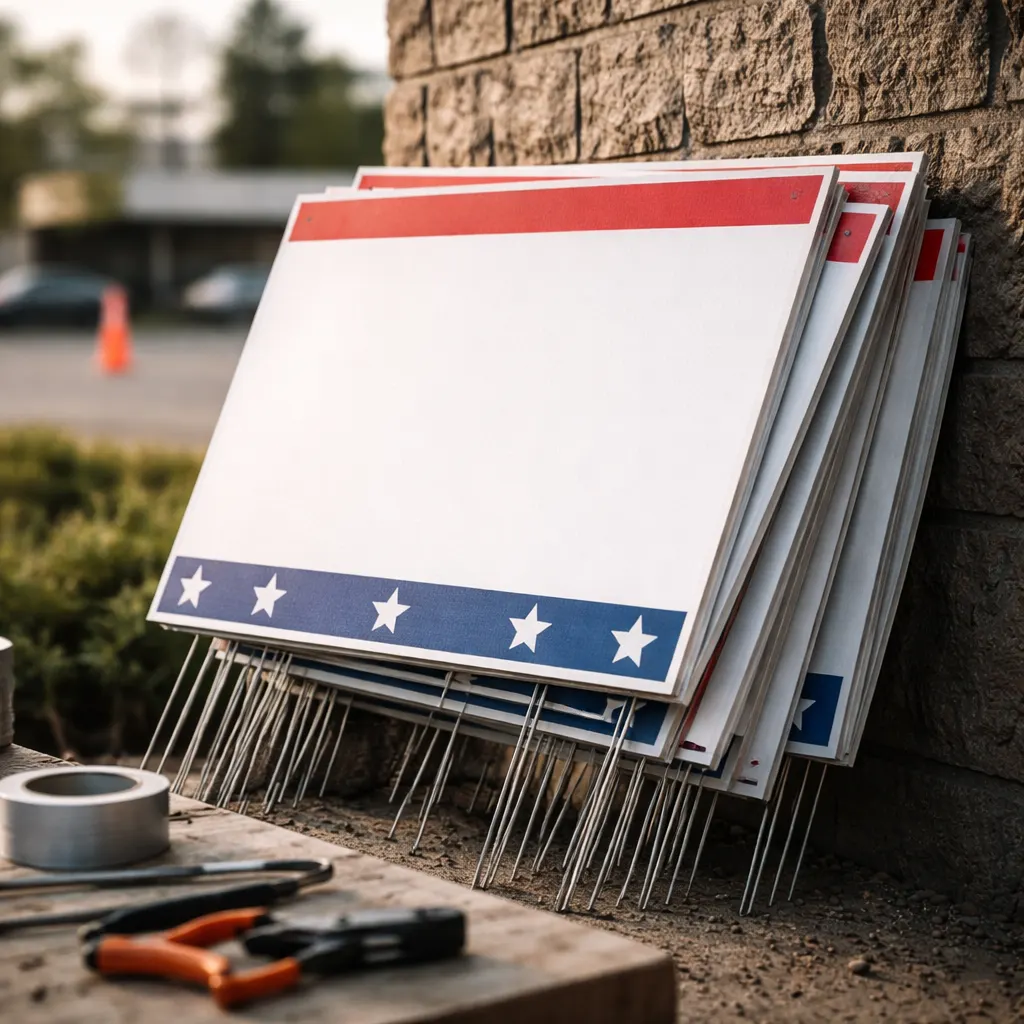
The Arizona Citizens Clean Elections Commission found "reason to believe" that Corporation Commissioners Kevin Thompson and Nick Myers broke election finance regulations when they reused campaign signs from a previous race. The commission announced its findings Thursday, September 24, 2026, after reviewing complaints filed against the two commissioners, who participated in the Clean Elections program during both their 2022 election and their 2026 re-election bids. While the panel rejected most of the allegations against them, commissioners unanimously determined that Thompson and Myers likely failed to comply with rules governing how candidates can reuse materials from prior campaigns.
The complaint centered on large campaign signs for Thompson and Myers spotted around the Valley early in the 2026 campaign. According to an analysis by Clean Elections Director Thomas Collins, the commissioners reported spending roughly $3,844 on signs, an amount that likely wouldn't have covered the cost of all the signs in question. Those expenses were reported after the signs had already been photographed in public. Thompson and Myers said the signs were leftovers from their 2022 campaign that had been fully paid for and reported during that cycle, and that supporters stored and reused them without their knowledge. However, at least one 2022 social media post from Myers showed they were collecting old signs and materials to save for future races.
Clean Elections rules require candidates in the publicly funded program to pay for any materials they reuse from old campaigns, with those payments going into the Clean Elections Fund. The regulations state that participating candidates may use assets like signs, pamphlets, and office equipment from a prior election cycle only after their current campaign pays an amount equal to the fair market value of those assets, which must be at least one-fifth of the original purchase price. An attorney for Thompson and Myers, Kory Langhofer, said his clients didn't knowingly break the rules. "I don't know whether it's in the training materials, but I'm confident that my clients didn't know about the regulation," Langhofer told commissioners. He indicated the candidates are willing to pay for what he estimates was 50 used signs to resolve the complaints.
The commission will now conduct an investigation into the situation, according to Collins. The rules give candidates the opportunity to come into compliance or reach a settlement with the commission within 14 days. Thompson wrote in a letter to the commission that his campaign is already removing the old signage and replacing it with newly purchased signs, though he contested the rule requiring him to pay "fair market value" for old signs, calling the formula "arbitrary." Myers lost his re-election bid in the Republican primary and is no longer a candidate. The violation matters because Clean Elections candidates receive public funding to run their campaigns in exchange for following restrictive campaign finance rules, including prohibitions on taking large private donations or contributions from political action committees and businesses.
Collins said the Thompson and Myers investigation could be resolved quickly if the candidates work with staff to settle the matter. Langhofer said they want "to sort of put this behind us efficiently for a price that's fair to everyone, kind of reflects the gravity of what's happened here." The commission will determine whether a violation occurred and, if so, what penalties or repayment requirements should apply. The case shows how even seemingly minor campaign finance rules can trip up publicly funded candidates who don't follow procedures for reusing old materials.