
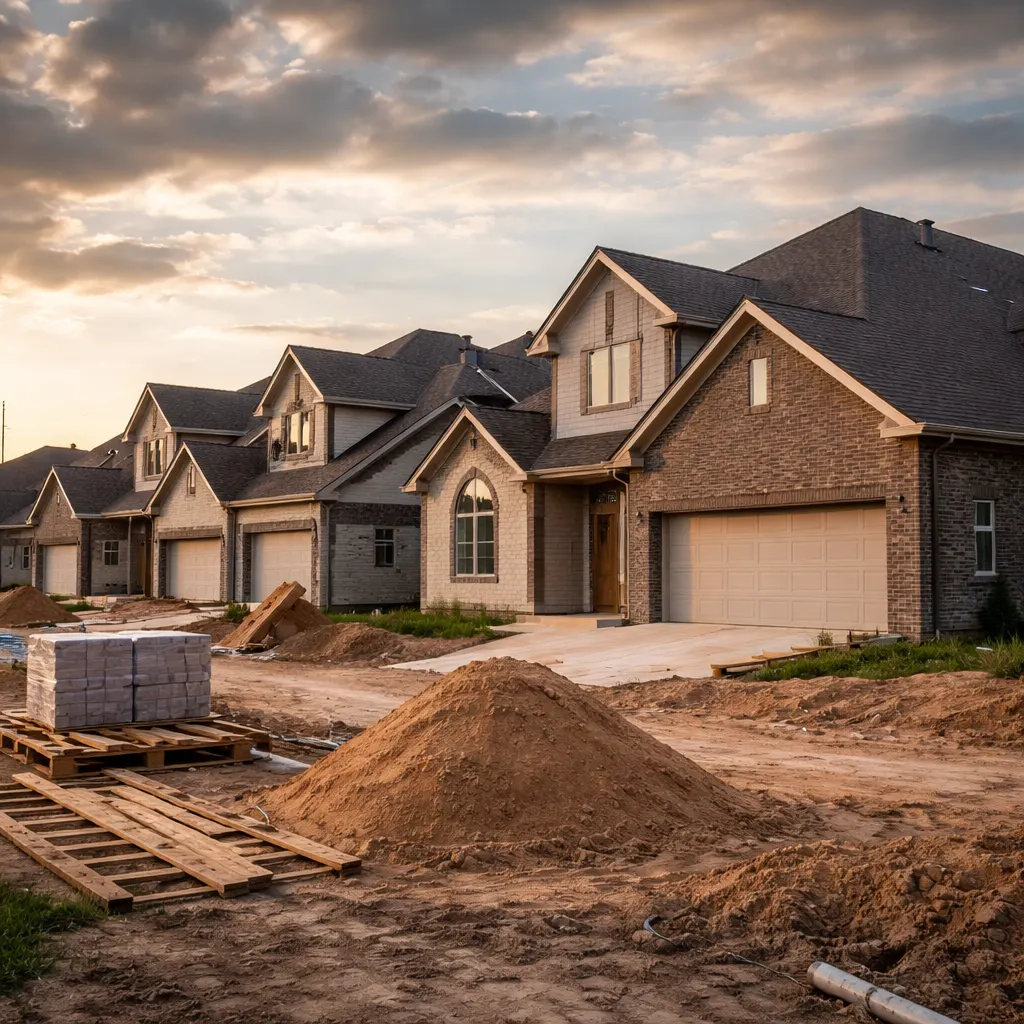
Texas confronted an estimated 306,000-home shortfall in 2021, driven by regulatory constraints that add nearly $94,000 to the price of a typical new single-family home, according to a comprehensive housing market report published by the Texas Public Policy Foundation. The report finds that 90% of Texans now view housing affordability as a problem in their area, with roughly half of the state's renters—about 2.1 million households—spending more than 30% of their income on housing. The analysis attributes the crisis primarily to supply-side barriers rather than demand or subsidy issues, pointing to restrictive zoning, large-lot requirements, mounting regulatory fees, and escalating property taxation as the chief culprits blocking construction needed to keep pace with population growth.
Government regulation accounts for 23.8% of a new single-family home's price, totaling roughly $93,870 per home, the report states. For multifamily developments, the regulatory burden climbs even higher to 40.6% of total project costs. Building code changes over the past decade alone add more than $24,000 to each new single-family home and 11.1% to multifamily project costs. Texas property taxes reached $89.4 billion across nearly 5,000 taxing units in 2025, representing a 364% increase since 1998—far outpacing the combined rate of population and inflation growth. The state's median home sale price stood at $321,000 in January 2026, down slightly from a 2022 peak near $360,000 but still well above levels most households can afford. Between 2015 and 2024, property tax valuations and levies in major Texas cities grew dramatically faster than population: Austin saw valuations rise 137% against just 17% population growth, while Dallas posted 113% valuation growth against 4% population growth.
The report identifies insurance premiums as an emerging threat to affordability, with the median Texas homeowner paying 60% more for property insurance in 2024 than in 2019—double the national rate of increase. Insurance now constitutes roughly 14% of the typical mortgage payment in 2025, up from 10% in 2013. Premium increases pushed approximately 31,000 mortgages into delinquency in 2022 alone, and continued growth could push an additional 203,000 mortgages per year into delinquency between 2025 and 2055, according to projections cited in the report. Texas authorized 225,756 new private housing units in 2024, more than any other state, but monthly permit data show a sharp deceleration from 17,624 units in September 2025 to just 13,365 in January 2026. The state added 391,243 residents in the year ending July 1, 2025—more than any other state for the 15th consecutive year—but the 1.2% growth rate marked the slowest pace since 2021.
The affordability crisis stems from regulatory accumulation across five distinct channels: building codes governing structural standards, land-use and zoning rules controlling density and form, subdivision regulations and impact fees, environmental requirements, and permitting procedures, the report explains. Lot development alone imposes 14.6% of a new home's final sales price, driven by impact fees, utility hookup charges, stormwater rules, and regulatory delays. The construction phase adds another 9.7%. In Austin, regulatory delays tack on an average of 3.5 months to an already four-month-long permit approval process, compared to three weeks in Denver and less than one week in Raleigh, North Carolina. Total development fees for a 322-unit apartment complex exceed $1 million in Austin but run only about $120,000 in Dallas for an identical project. The report frames housing costs through a "PITI+" lens—principal, interest, taxes, insurance, plus the regulatory premium embedded in each component—arguing that reducing sticker price by 5% through looser zoning means little if simultaneous insurance increases of 18% push monthly payments higher.
The report recommends that Texas policymakers focus on components the state can directly influence: property tax compression, regulatory streamlining, and insurance reform. It calls for extending the same limits on tax levy collection, debt issuance, and spending imposed on the state to cities and other local entities. The authors argue that durable affordability gains require expanding the naturally occurring affordable housing stock—homes available on the regular market without subsidies—rather than relying on subsidized affordable housing programs that distribute scarce public funding across limited populations. The 89th Legislature passed measures allowing mixed-use developments and office-to-residential conversions, but cities have resisted implementation by adding requirements the report characterizes as "poison pill" mandates. For every $1,000 increase in median home price, approximately 115,593 U.S. households can no longer afford a median-priced new home, the report notes, and for every quarter-percentage-point rise in mortgage rates, an additional 1.1 million households are priced out—making even modest policy changes consequential for market access.