
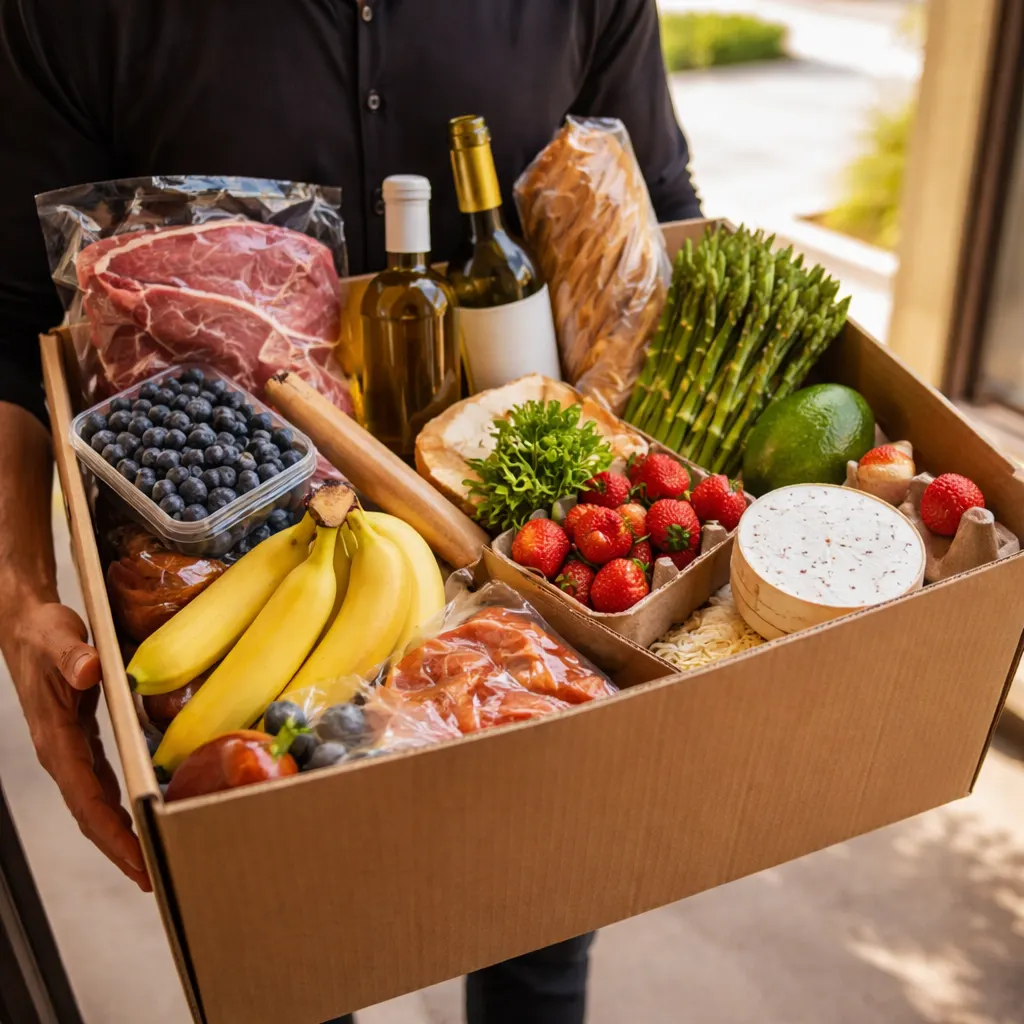
A California welfare program delivers free salmon, beef, organic produce, and prepared meals to recipients' doorsteps, costing taxpayers more than $1,500 per person over 24 weeks, according to a new report published by City Journal. The program, part of Governor Gavin Newsom's nearly $12 billion Medicaid reform package called CalAIM, provides "medically tailored meals" and grocery boxes to Medi-Cal enrollees, including illegal immigrants. The most popular offering under CalAIM's "Community Supports," the food delivery initiative was signed into law in 2021 and has since expanded rapidly across the state.
Eligibility for the program is straightforward, the report finds. Applicants need a qualifying Medi-Cal card, a provider's recommendation, and an eligible condition such as diabetes, pre-diabetes, cardiovascular issues, or mental health disorders including anxiety, PTSD, depression, or ADHD. Medi-Cal pays contractors to deliver the food for up to 12 weeks, after which eligible recipients can re-enroll for another cycle. The food itself includes items like Amy's Kitchen meals and burritos, beef, chicken, and organic vegetables that would cost ordinary Californians hundreds of dollars at grocery stores. Recipients can get these deliveries while keeping their existing welfare benefits, including CalFresh food stamps, which about 90 percent of the program's participants already receive. Companies nationwide made nearly $100 million between 2022 and 2024 billing Medicaid for medically tailored food, with California-based Project FoodBox alone receiving more than $67.8 million from Medicaid during that period.
According to the report's authors, Christopher F. Rufo and Madeleine Rowley, the program extends to illegal immigrants under California's "full-scope" Medi-Cal coverage for undocumented residents. The state froze new enrollment for illegal aliens but allows previous enrollees to maintain their coverage, meaning qualified undocumented individuals can access the luxury food boxes at no cost. One contractor, Bento Health (formerly Hunger: Not Impossible), which billed Medicaid more than $7.7 million, states on its website that eligibility "is not tied to immigration status, employment status, nationality, or any other factor" beyond insurance provider criteria. A former executive at Project FoodBox told a Los Angeles nonprofit in 2024 that officials "are not looking to push people away from the program, they're really looking for people to be on it."
The program is rooted in the "Food Is Medicine" movement, whose supporters argue that providing state-funded health foods will reduce hospitalizations and ultimately save taxpayer money. A Massachusetts study found that receiving medically tailored meals was associated with about 31 percent fewer hospitalizations, and the House Ways and Means Committee voted unanimously in September to create a pilot program paying hospitals to provide such meals to discharged patients. California's Department of Health Care Services claims the food programs have "resulted in a 10.5% net cost reduction." But the report raises questions about what happens after the state stops sending meals and whether this simply adds another layer to existing welfare benefits like federal SNAP benefits. Thirteen states now use federal waivers to divert funds to medically tailored food delivery, while California's middle class families struggle to afford groceries and simultaneously foot the bill for luxury foods sent to welfare enrollees. The program continues to expand even as its long-term effectiveness and fiscal sustainability remain unclear.